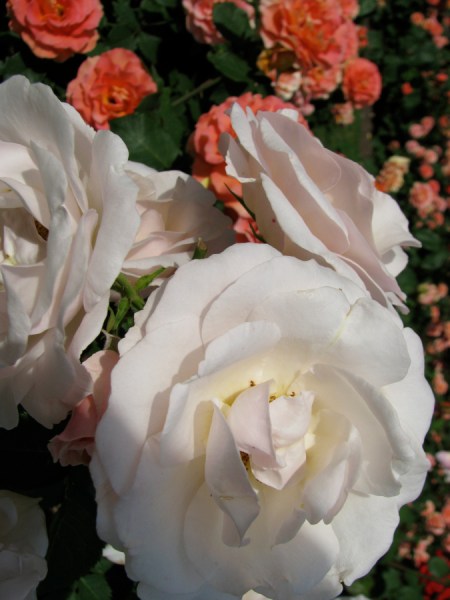
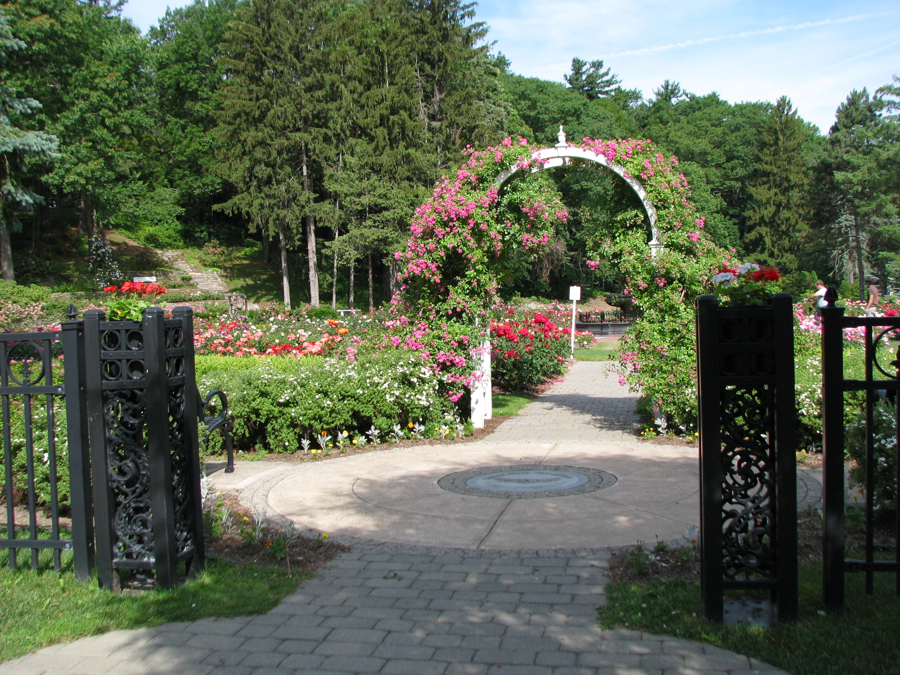
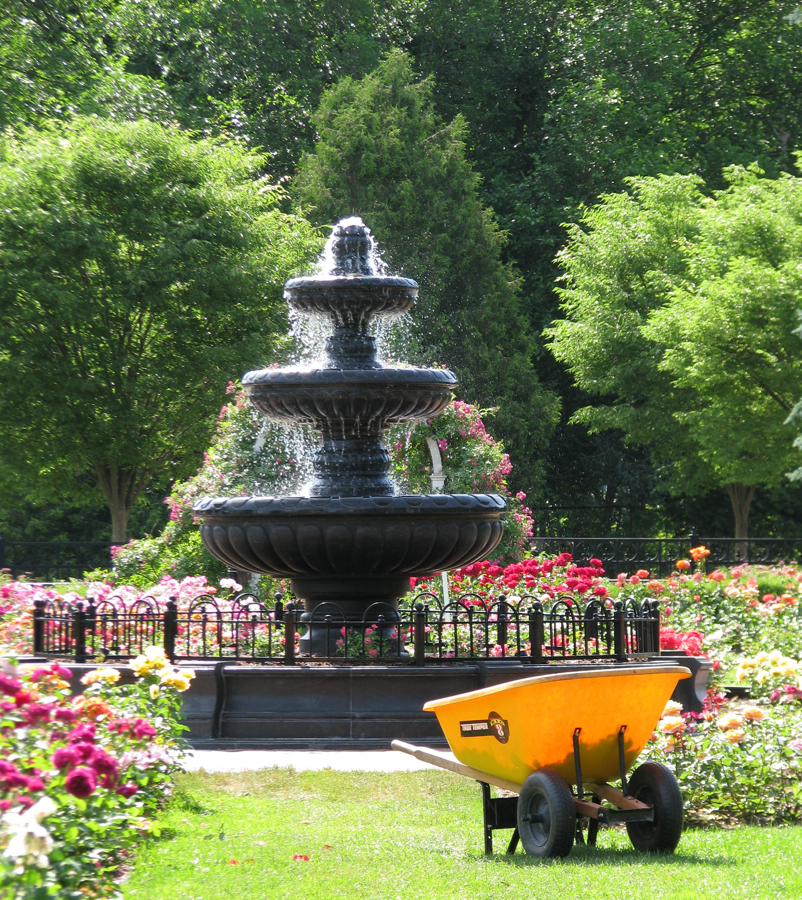
 Yesterday’s article and interview in the Sunday Gazette reminded me that the past two years I have visited Schenectady’s much-honored Central Park Rose Garden past its peak weeks, which are thought to be mid-June to early July. So, this morning I grabbed my camera and headed [or, as Carl Strock likes to say, “hied“] over to the Wright Avenue gateway of Central Park for a brief visit. I found a crew tending the flowers and a few other strollers in the garden.
– click on a photo for a larger version –
 The Gazette interviewed Matt Cuevas, president of the Rose Garden Restoration Committee, for yesterday’s piece. My continuing thanks goes out to the Committee for all of its hard work and fund-raising efforts to make the Rose Garden a special part of Schenectady.
My only gripe after visiting today: The little signs identifying each grouping of roses were not in evidence today. They are sorely needed by we who are florally-and-botanically- challenged.
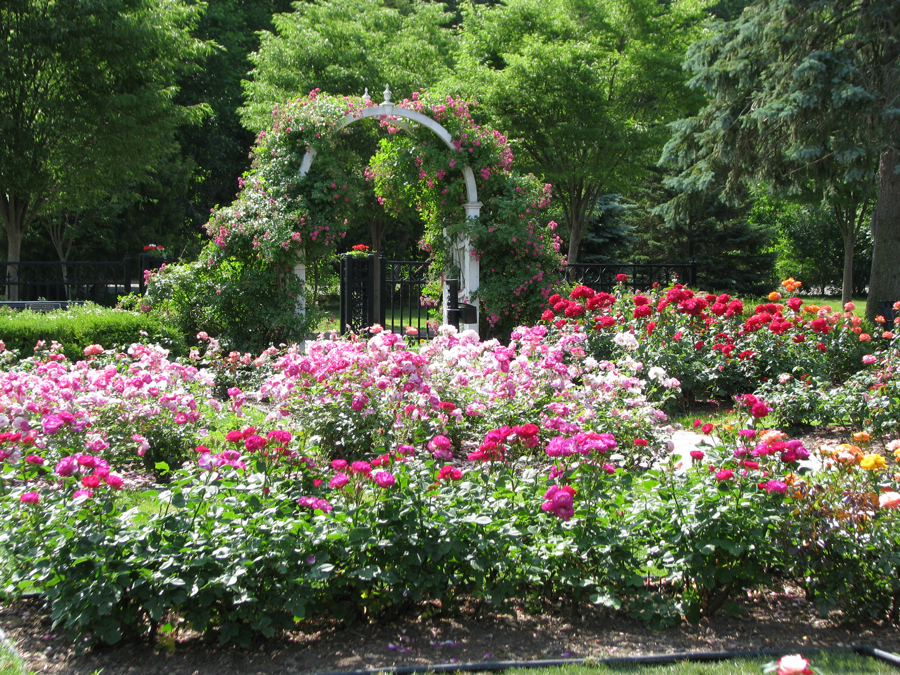
 I hope this short slideshow will encourage you to take the short trip (less than three miles from the Stockade) and see for yourselves.
This slideshow requires JavaScript.

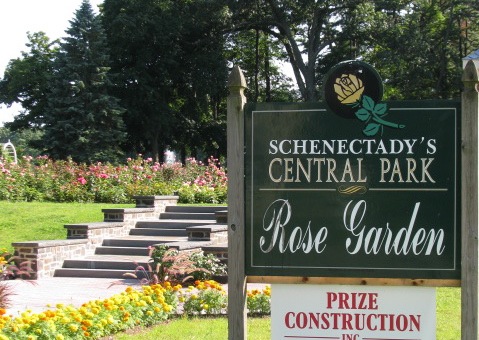
– former entryway sign (July 31, 2010) –
Last year’s posting here at suns along the Mohawk, “July ends gracefully at the Rose Garden” (August 1, 2010), and the 2009 version, “rose garden escape” (Aug. 4, 2009), have many more photos of the Central Park Rose Garden, and demonstrate that — like other forms of beauty — the Garden is lovely and inspiring even past its prime.
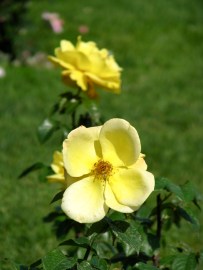
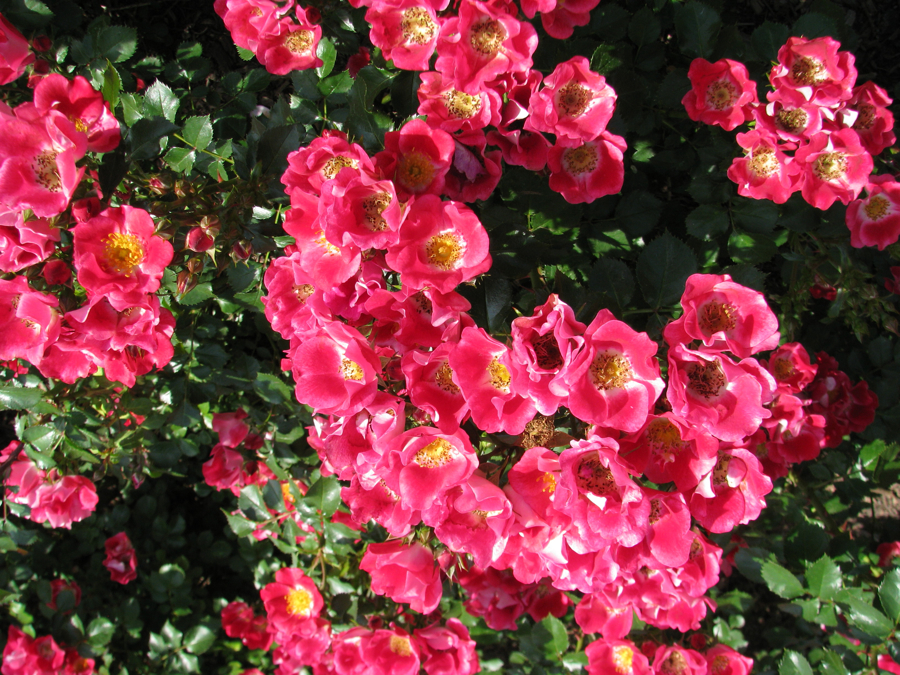
– here are a few more images captured on June 20, 2011 –

.
.
 . . .
. . . 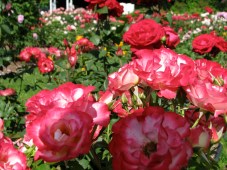
– click to see the bee (L) –
.

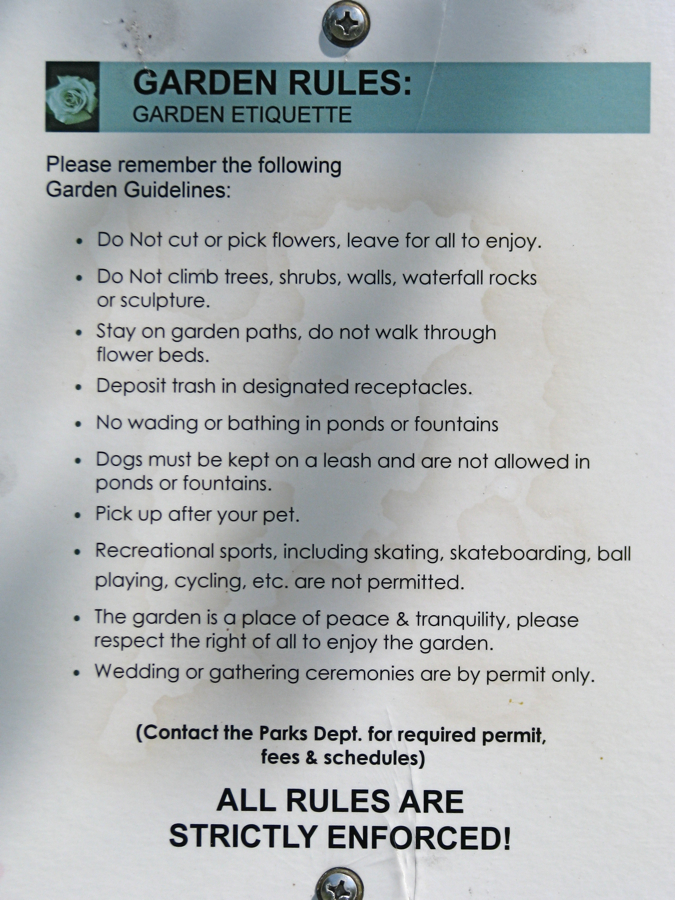
– if you go, don’t forget the Rules of Etiquette:
 . . .
. . . 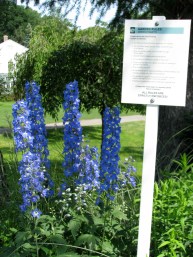
– click above to see the “Strictly Enforced” Rules/Guidelines –
 . .
. . 

 . . .
. . .  . . .
. . . 























 suns along the Mohawk
Recent Comments