Posted by: David Giacalone | July 29, 2017

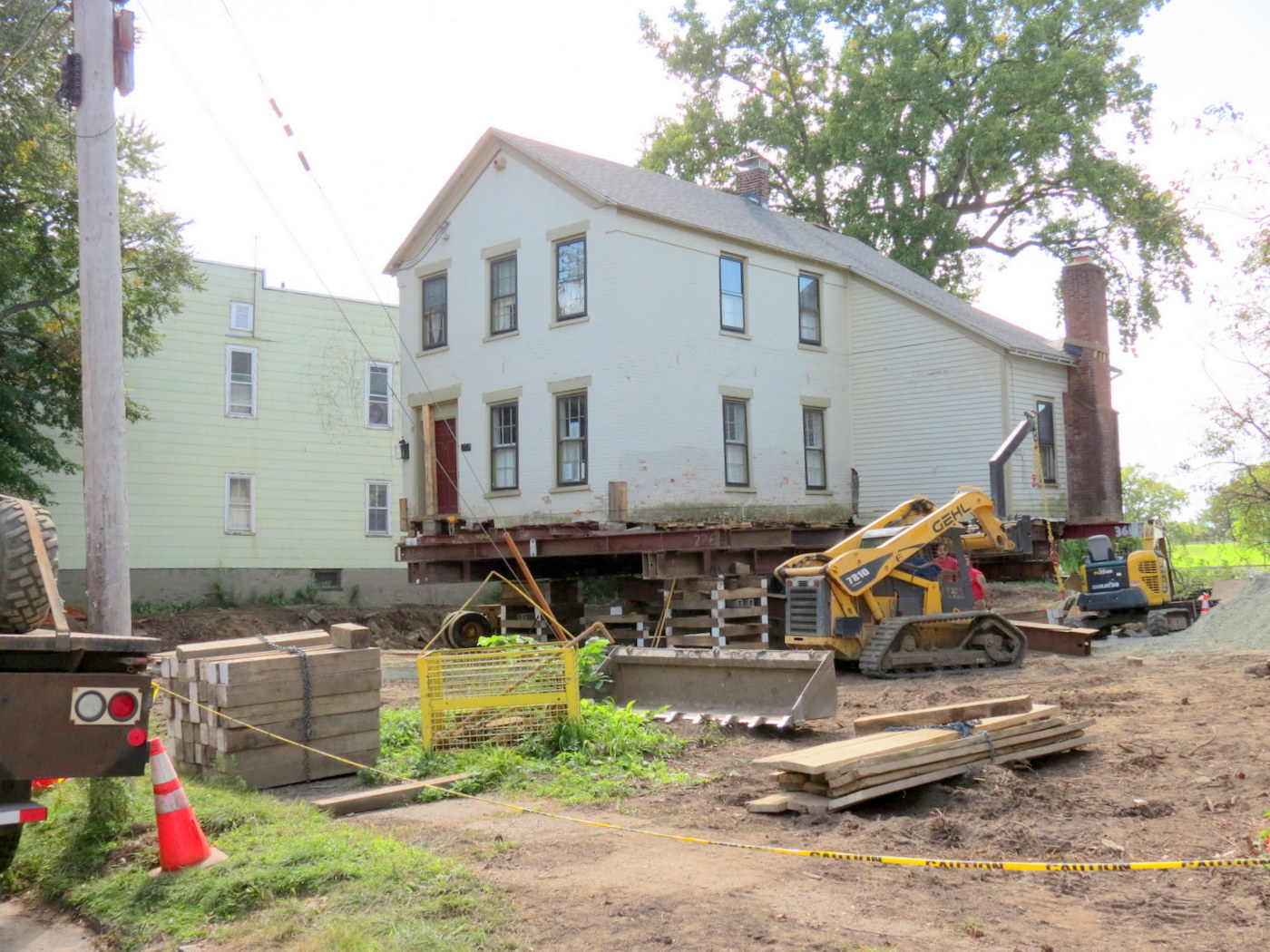
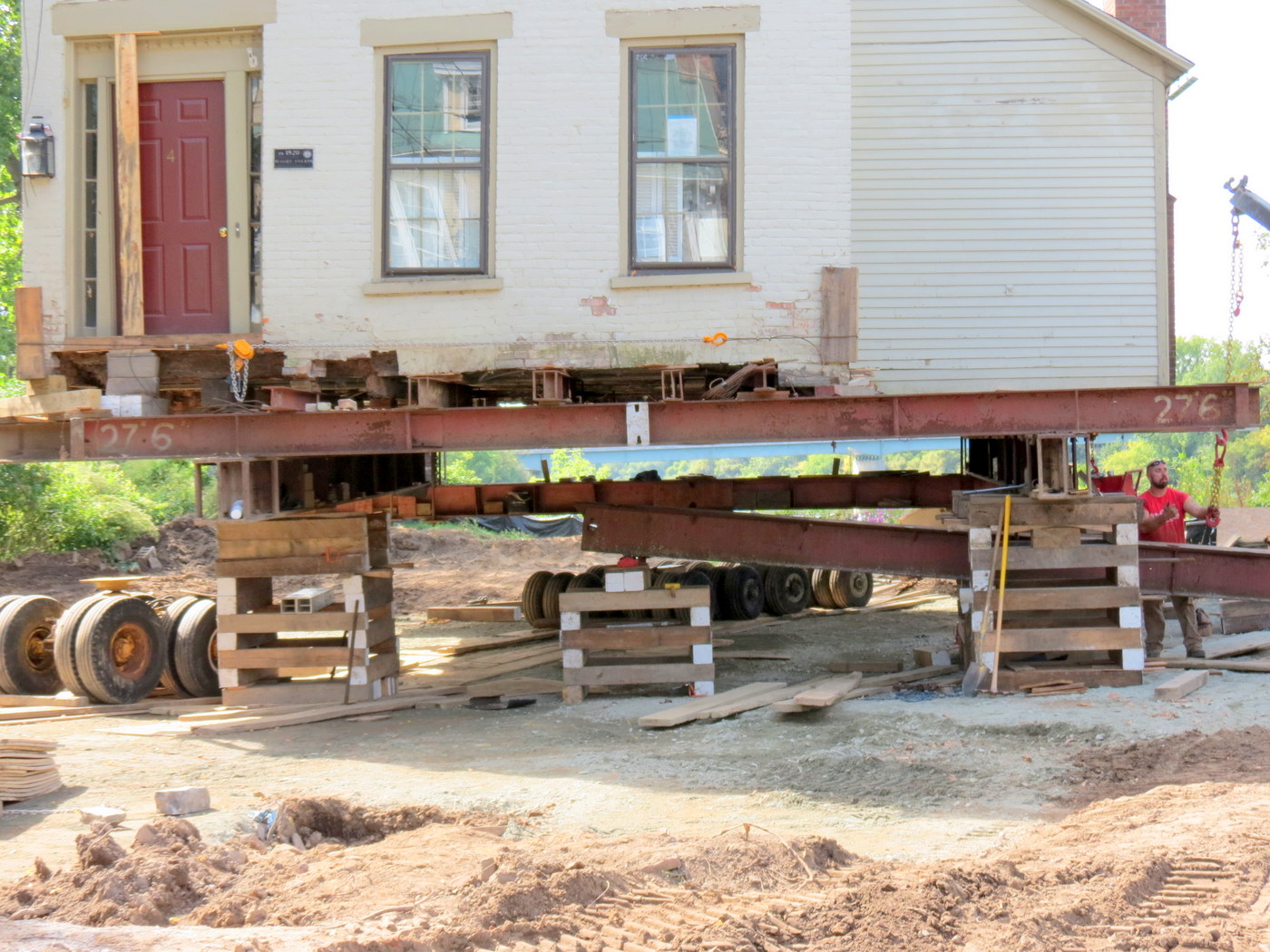
moving images of 4 Washington Avenue (with updates)

 . . share this post with the short URLhttp://tinyurl.com/moving4WashAv

QUICK SUMMARY in TWO PHOTOS:

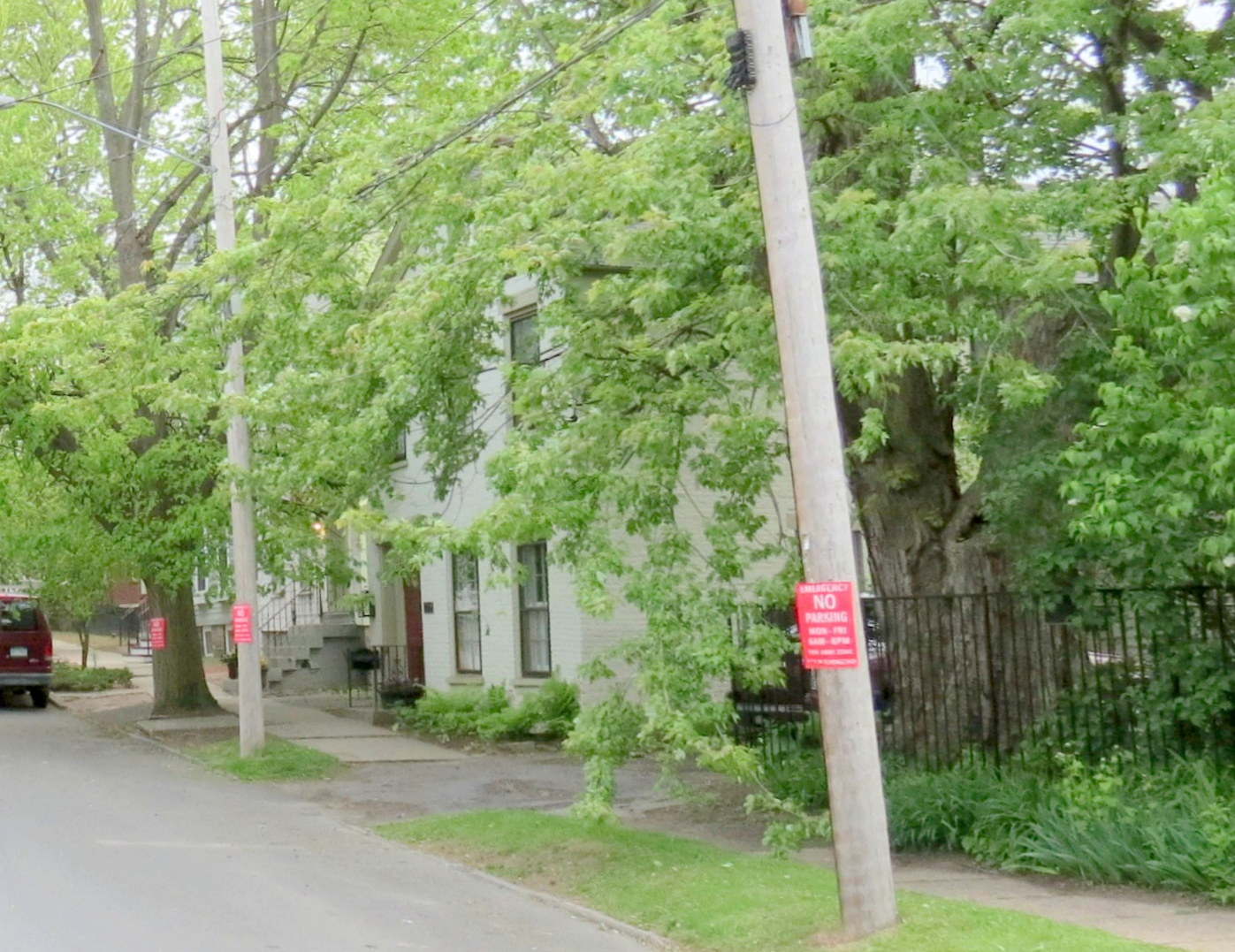
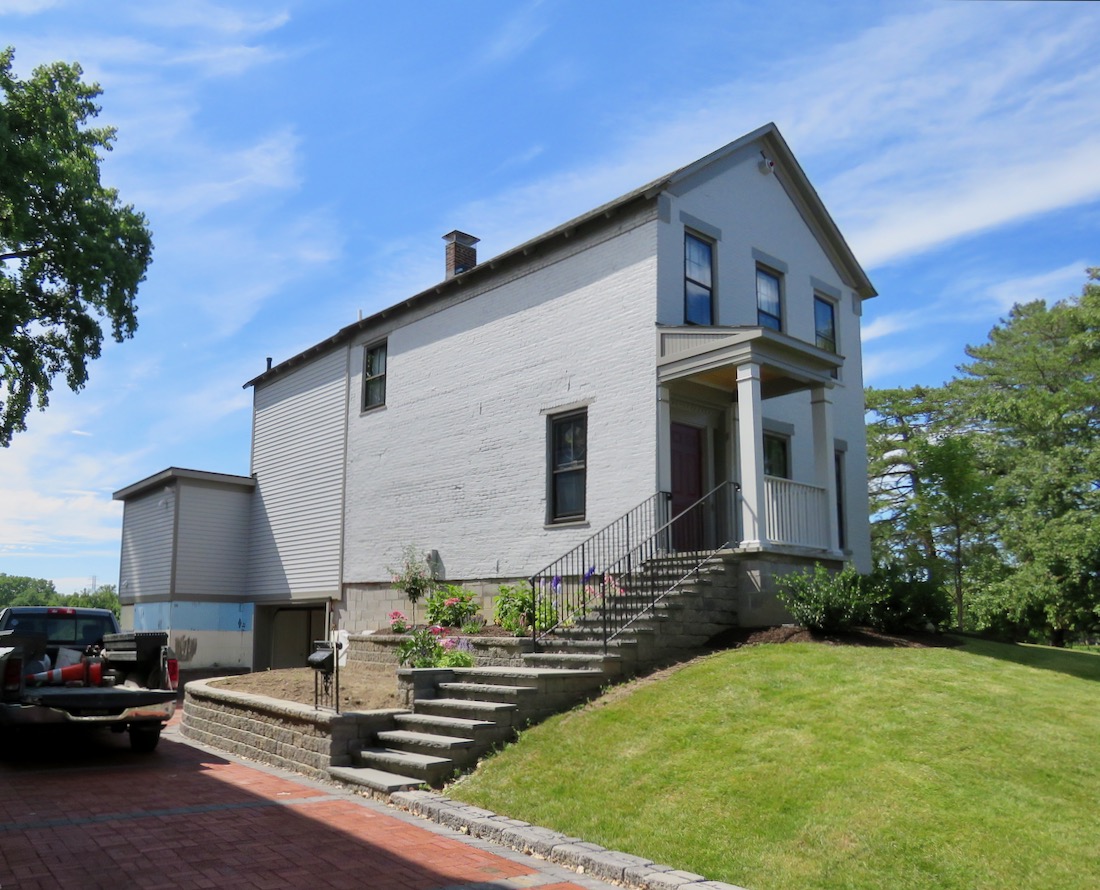
4wash16may2016.jpg . . 4Wash21Jul2018n

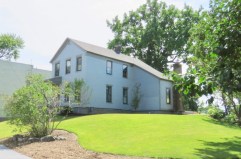
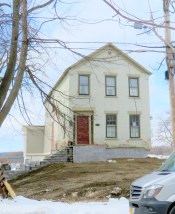
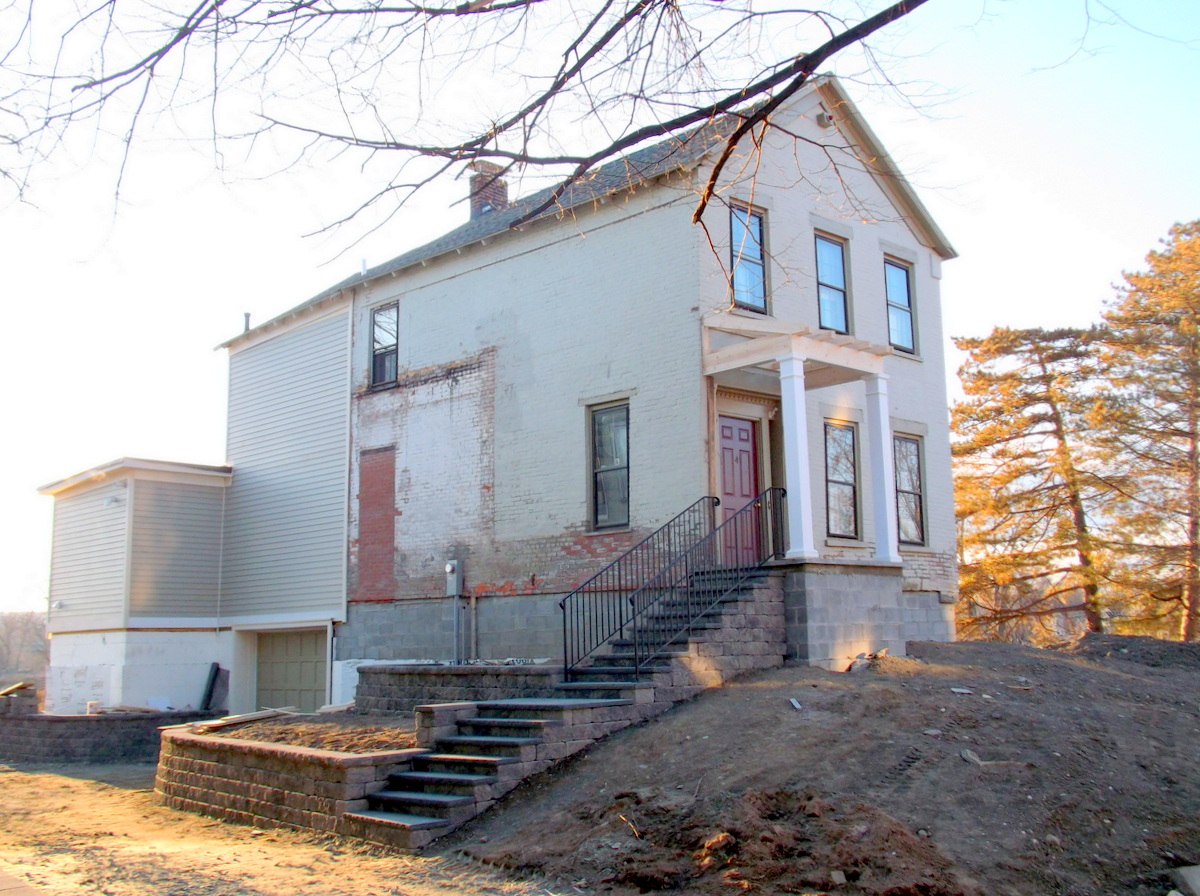
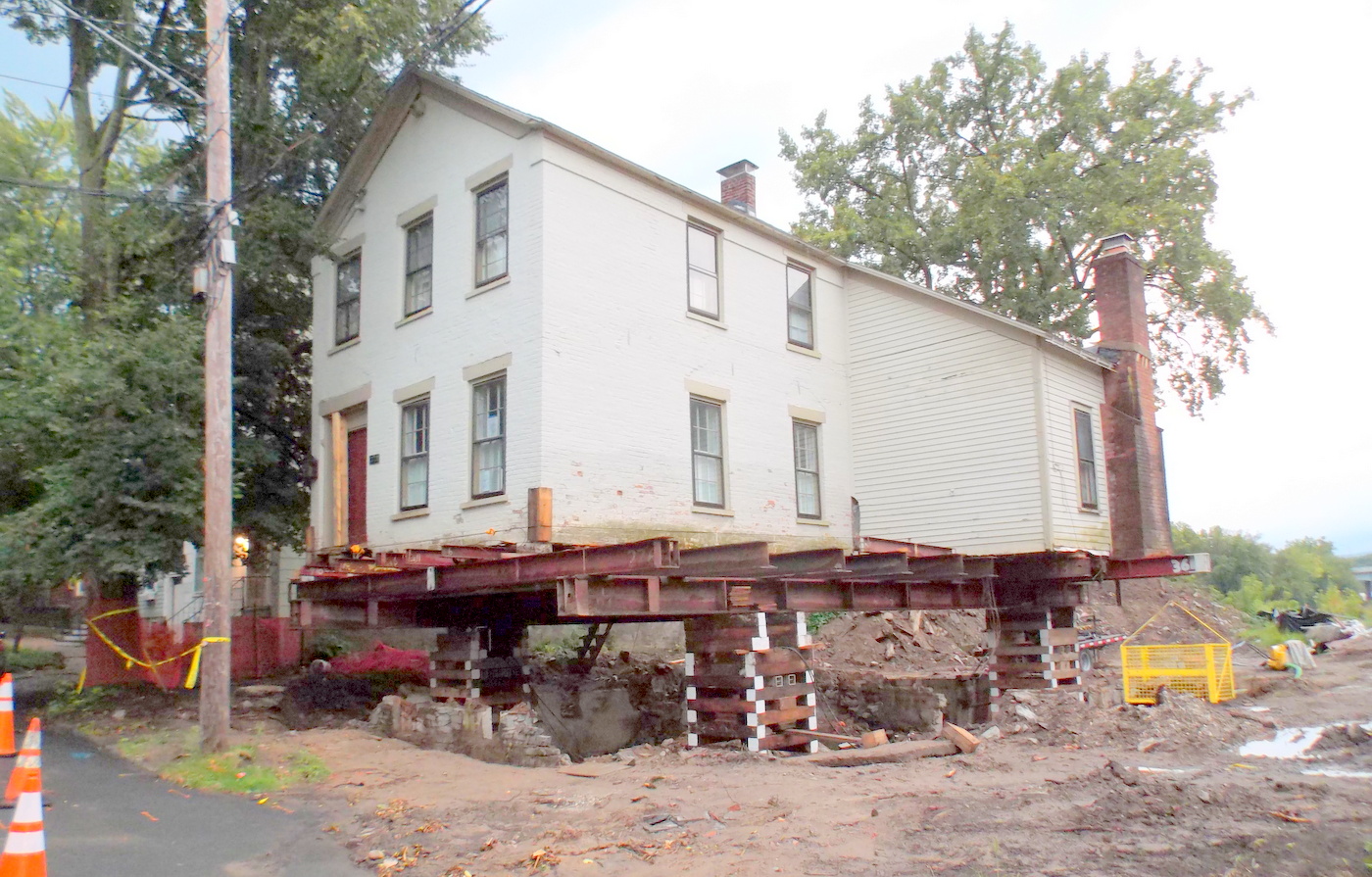
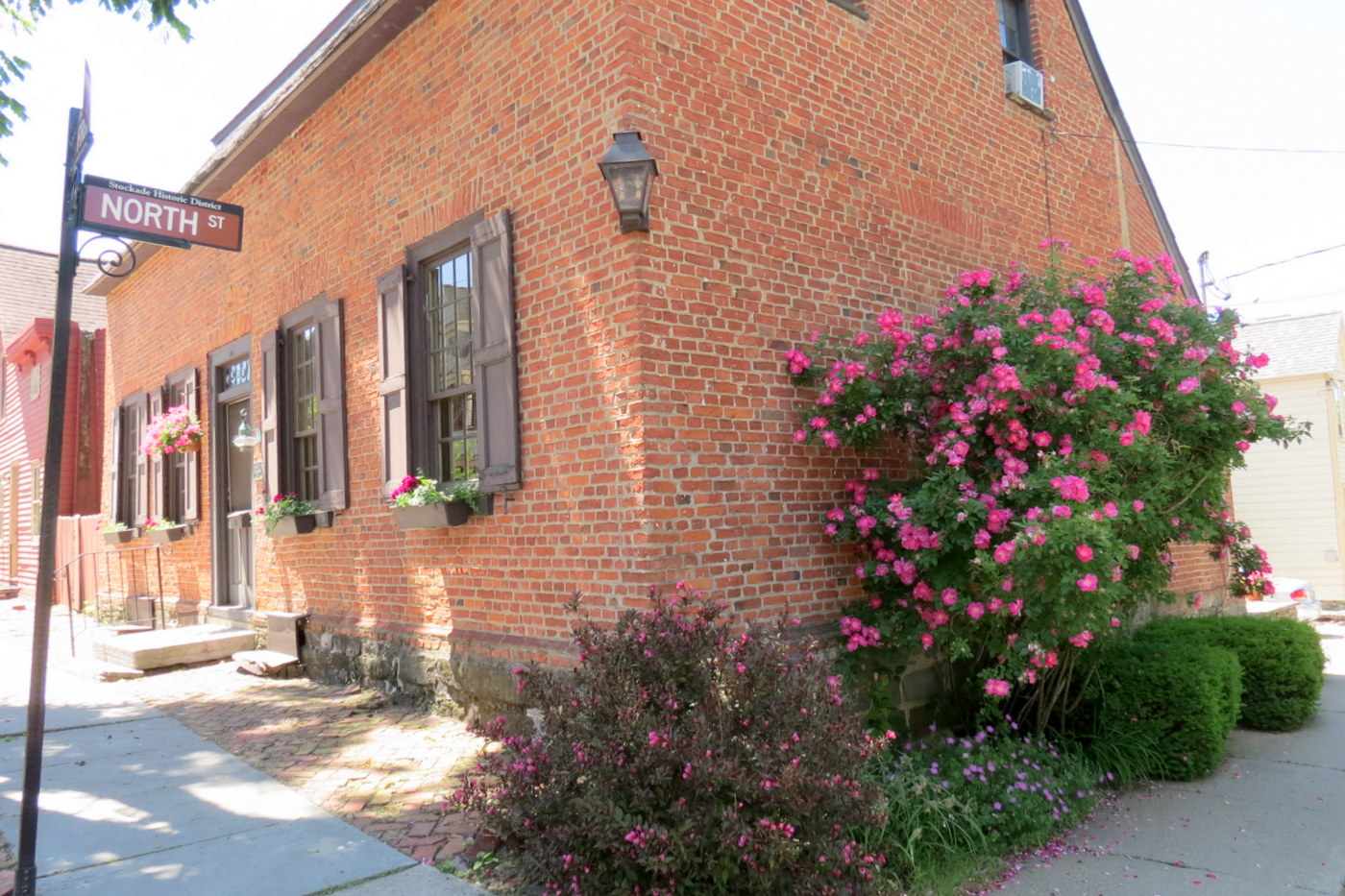
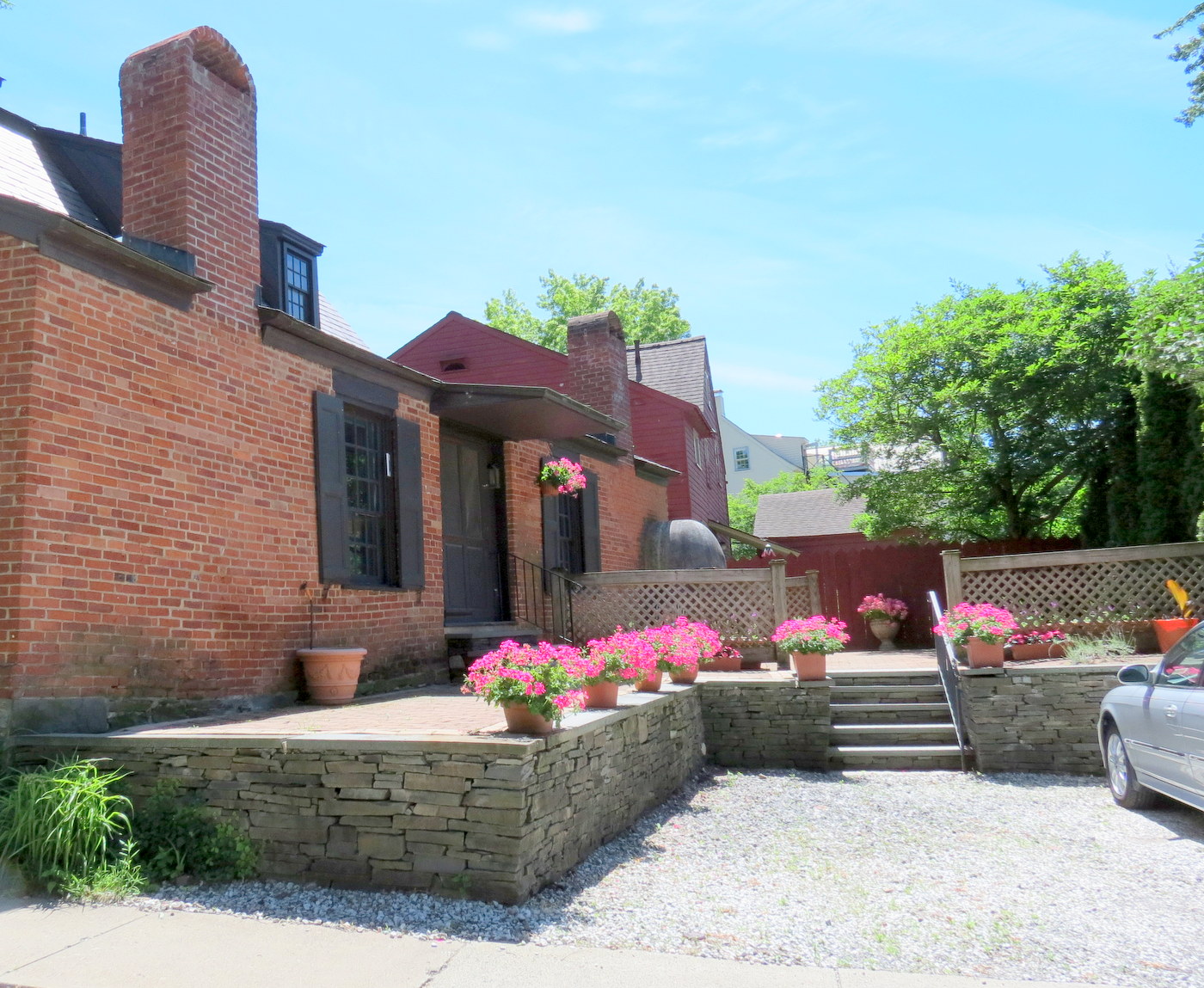
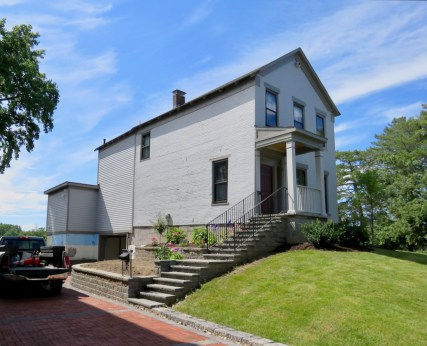
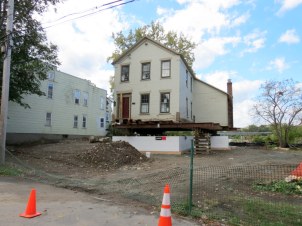
. . [L] May 18, 2016 (at the sidewalk) and [R] July 21, 2018 (moved back and elevated)
4Wash21Jul2018

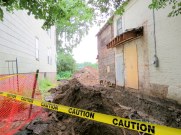
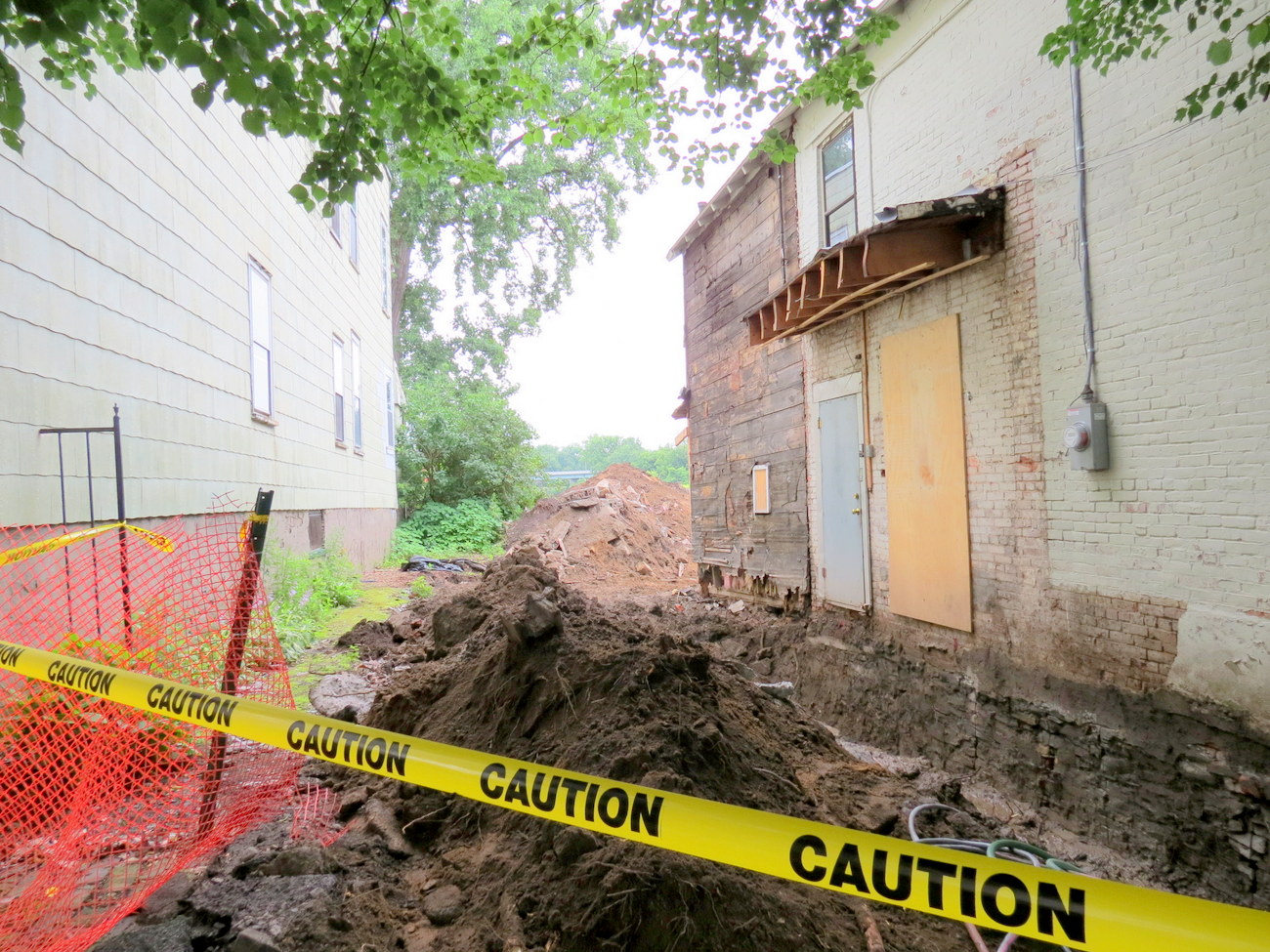
above: [L] south side of 4 Washington Ave., July 21, 2018; below: rear of 4 Washington Ave., seen June 15, 2018, from Western Gateway Bridge . .

4WashRear15Jun2018b

update (Aug. 10, 2018): The Times Union reported online last night that “the work to move, elevate and fix up [4 Washington Avenue in the Stockade] is all but done.”  “Stockade house move nears completion as pump station project in limbo” (by Paul Nelson, August 9, 2018). Owner Meredith Anker is quoted saying, “The inside is the same structure but because it’s elevated the sun comes in and it’s unbelievable.” Moreover,

“[Jim Plowman of Plowman Construction] said that Anker received $300,000 from the NY Community Reconstruction program, part of the Governor’s Office of Storm Recovery, and [sic] chipped in about $150,000.
.
“That out of pocket expenses came in higher than anticipated in part because once the structure was raised, it revealed that all the structural beams were rotted out and had to be replaced.”
IMG_5017 . . img_7208

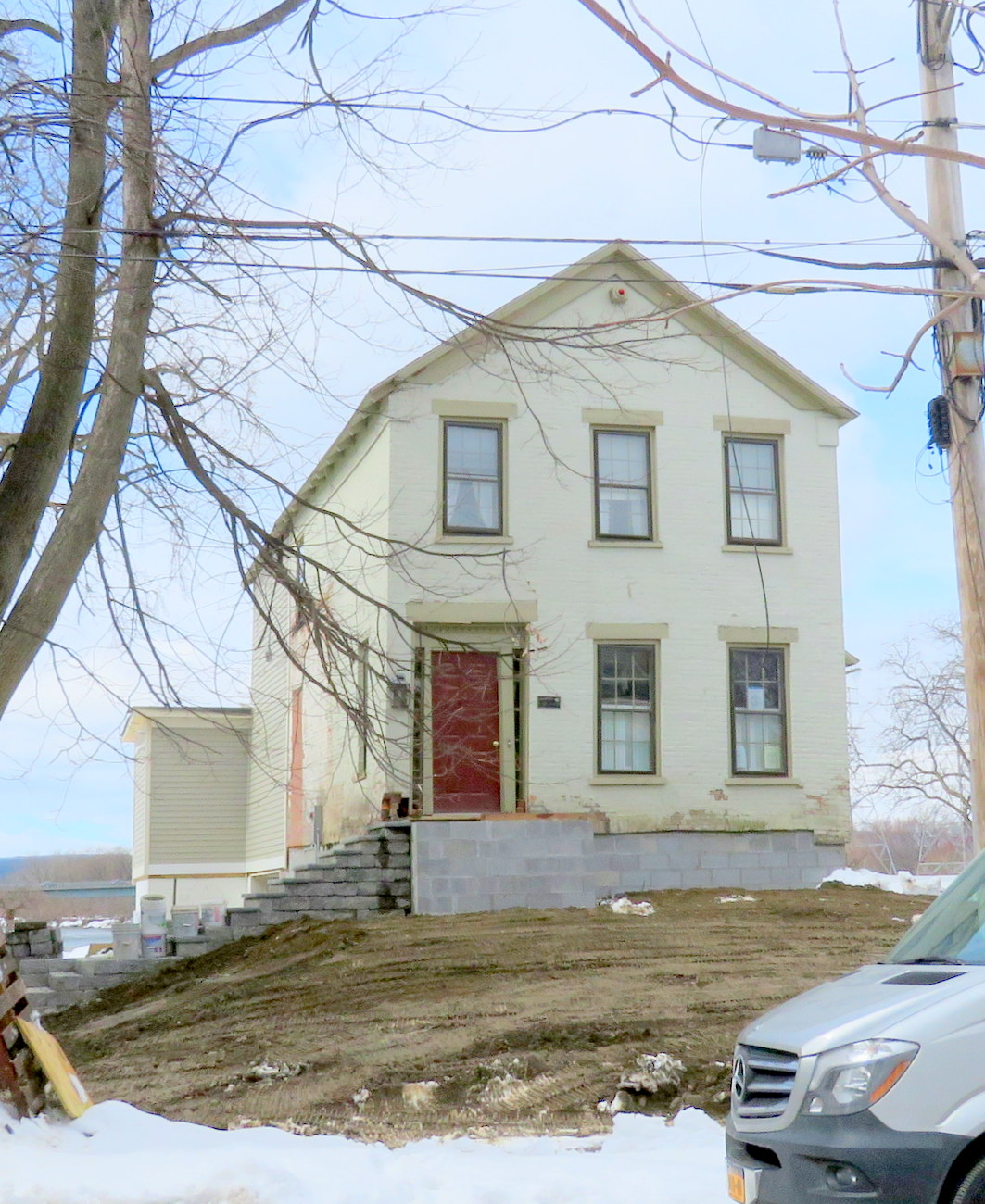
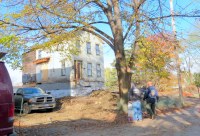
. . update at 4 Washington Ave. (May 21, 2018) : above: [L] on Nov. 9, 2017, the day the foundation was completed; and [R] on May 21, 2018, the day when the old tree at the street was removed, showing sod on the lawn and paint on the siding.

.

 IMG_6653-001 . . IMG_6654-001

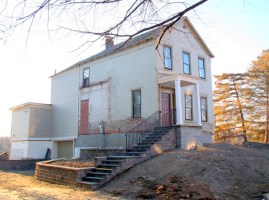
. . . update: more than baby steps (March 15, 2018): 4 Washington Avenue is starting to look a lot more homey and approachable (if you can handle all those steps). another look (April 10,2018):
4Wash10Apr2018e

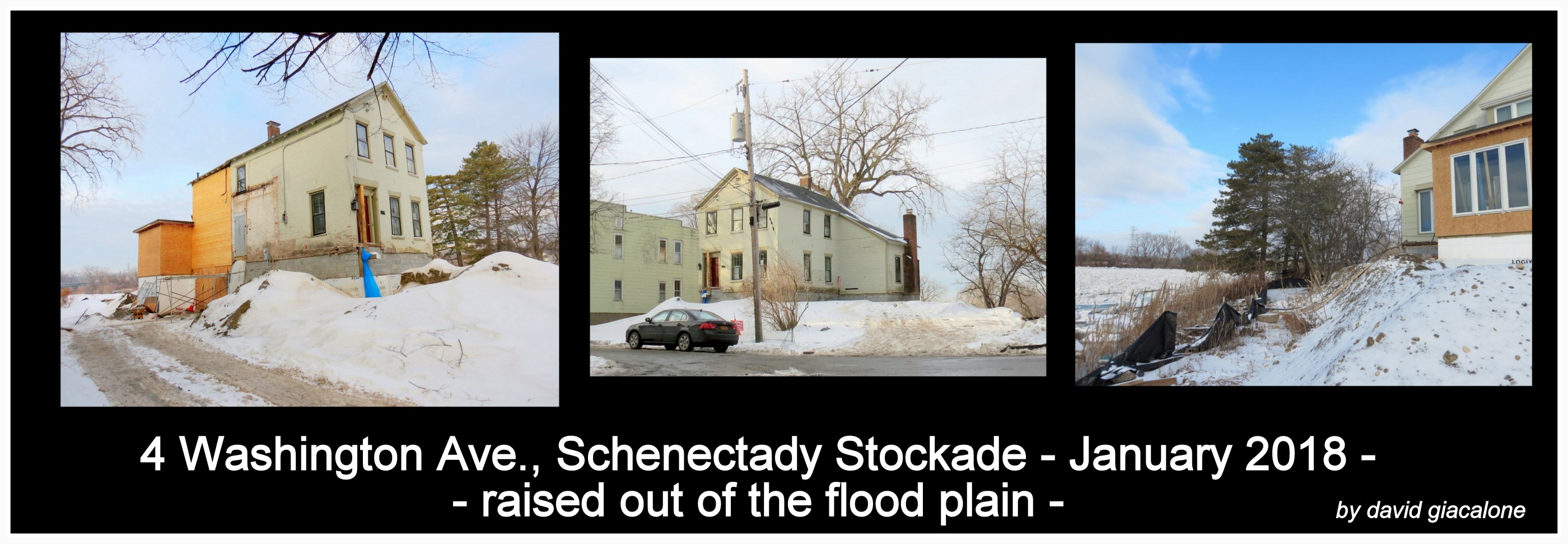
4WashJanCollage

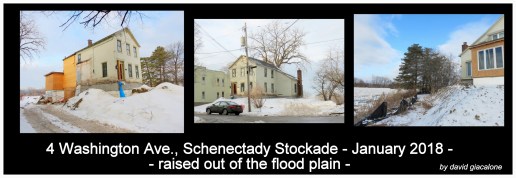
flood-ready (January 2018): The landscaping was not completed before the winter freeze, but 4 Washington Avenue was safely above the flood-plain, as seen in the above photo display, taken a few days before our January 13-14 ice jam and flooding, as we reported in depth.

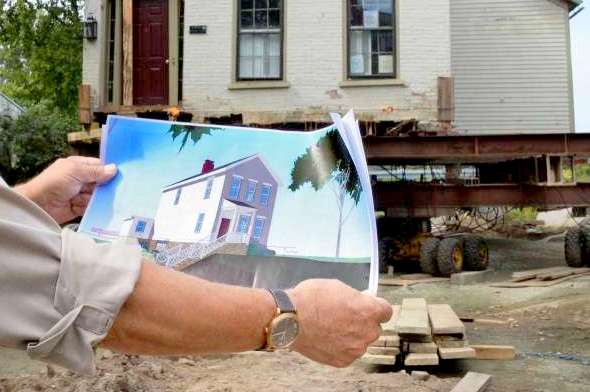
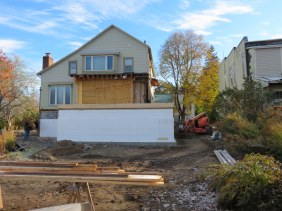
 Foundation Follow-up (Nov. 9, 2017): The new foundation under the re-planted house at 4 Washington Avenue, along the Mohawk River, in the Schenectady Stockade, is complete. See the Slideshow immediately after this update. I was told this morning by contractor Garrett Plowman that as soon as this afternoon, trucks will be bringing in the fill dirt — some 80 cubic yards delivered by 60 trucks. Click here to see an artist’s rendition of the finished house, held by the architect, Frank Gilmore.
IMG_5006

This slideshow requires JavaScript.

. . above Slideshow, photos taken November 9, 2017 . . 

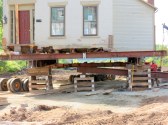
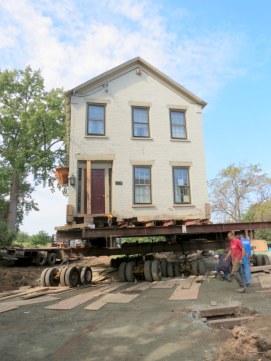
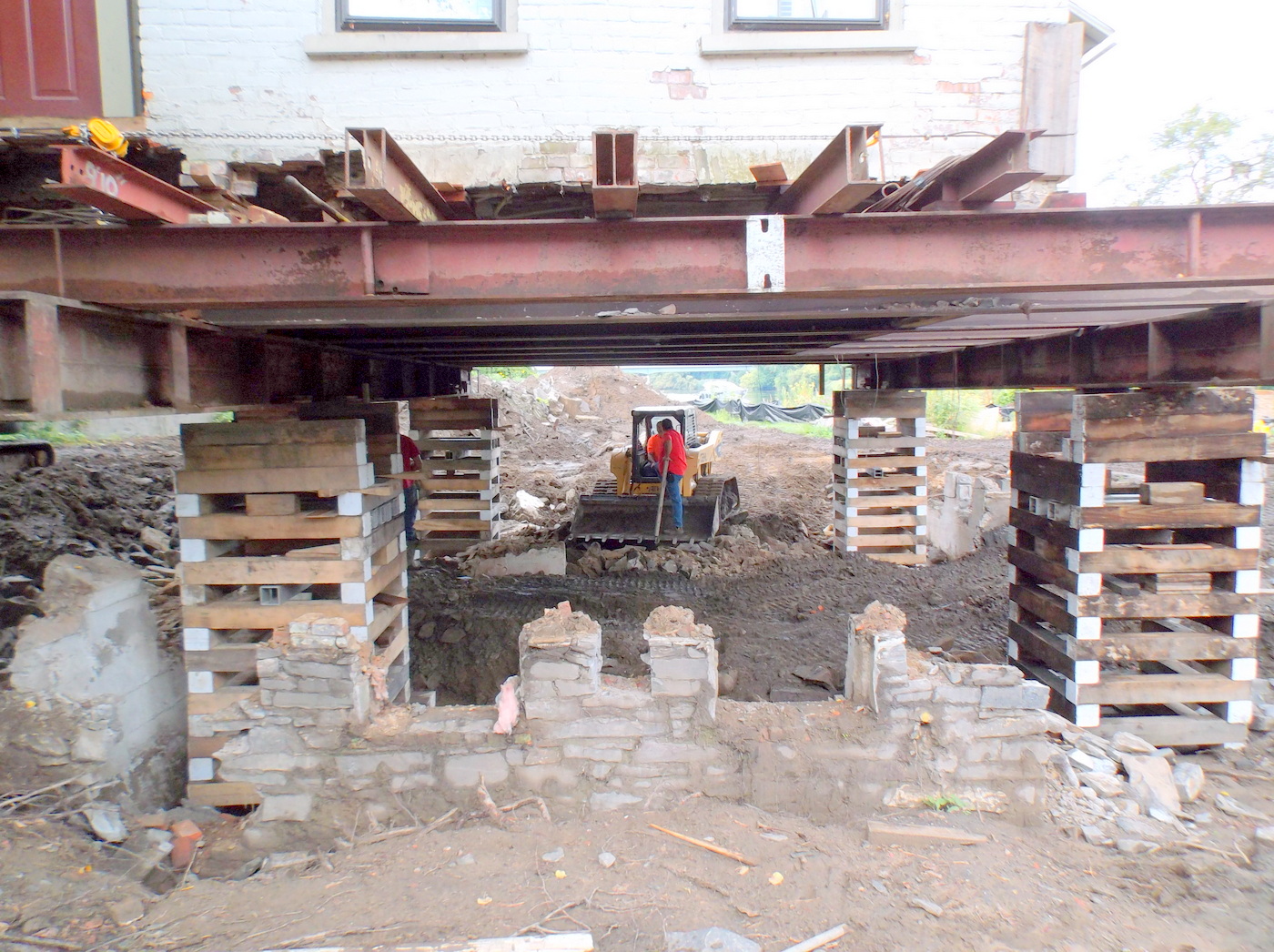
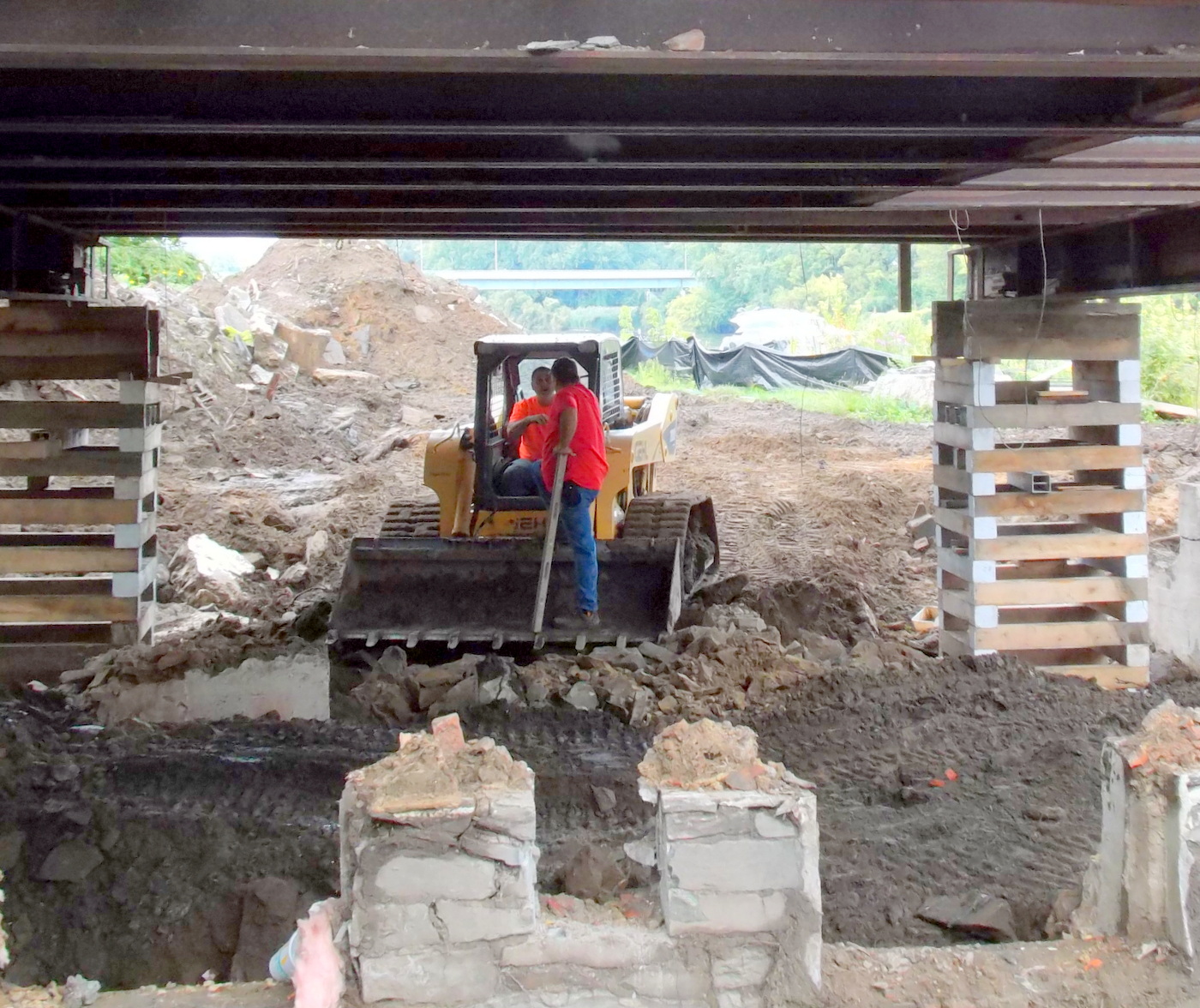
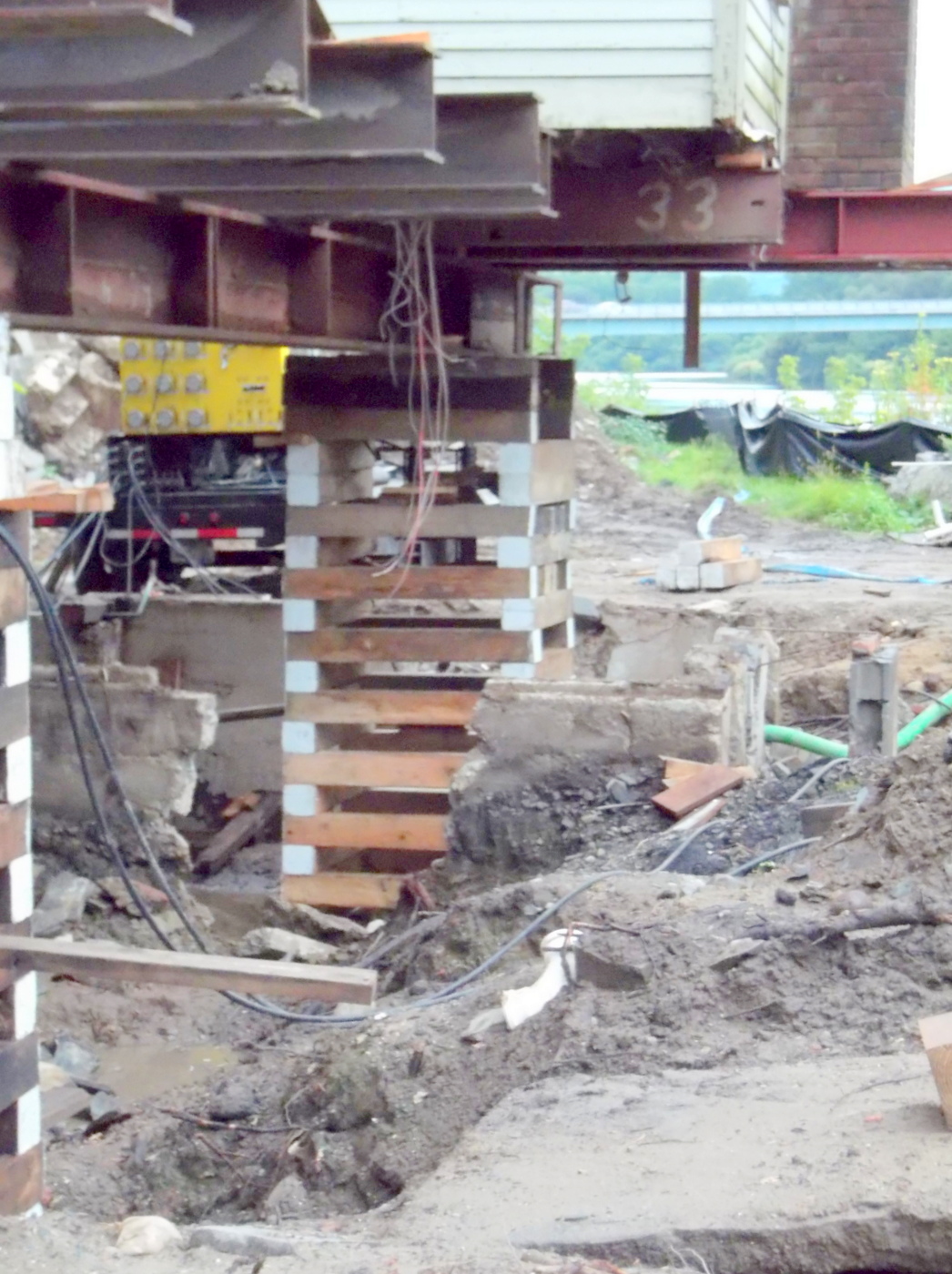
BIG UPDATE (September 13, 2017; 1 PM): Larmon House Movers did final preparations this morning for rolling 4 Washington Avenue to the new location on its lot. By noon, the move to the final location of the house was completed. Photos are being added to the Slideshow below, near the bottom of this posting (showing the process of this project, with images since May). The house will be jacked up in place about another foot, with “cribs” [stacked blocks] placed under it to hold it up while the foundation is being built under it.

4Wash13Sep2017Move2 . .  4WashMovedOnlookers

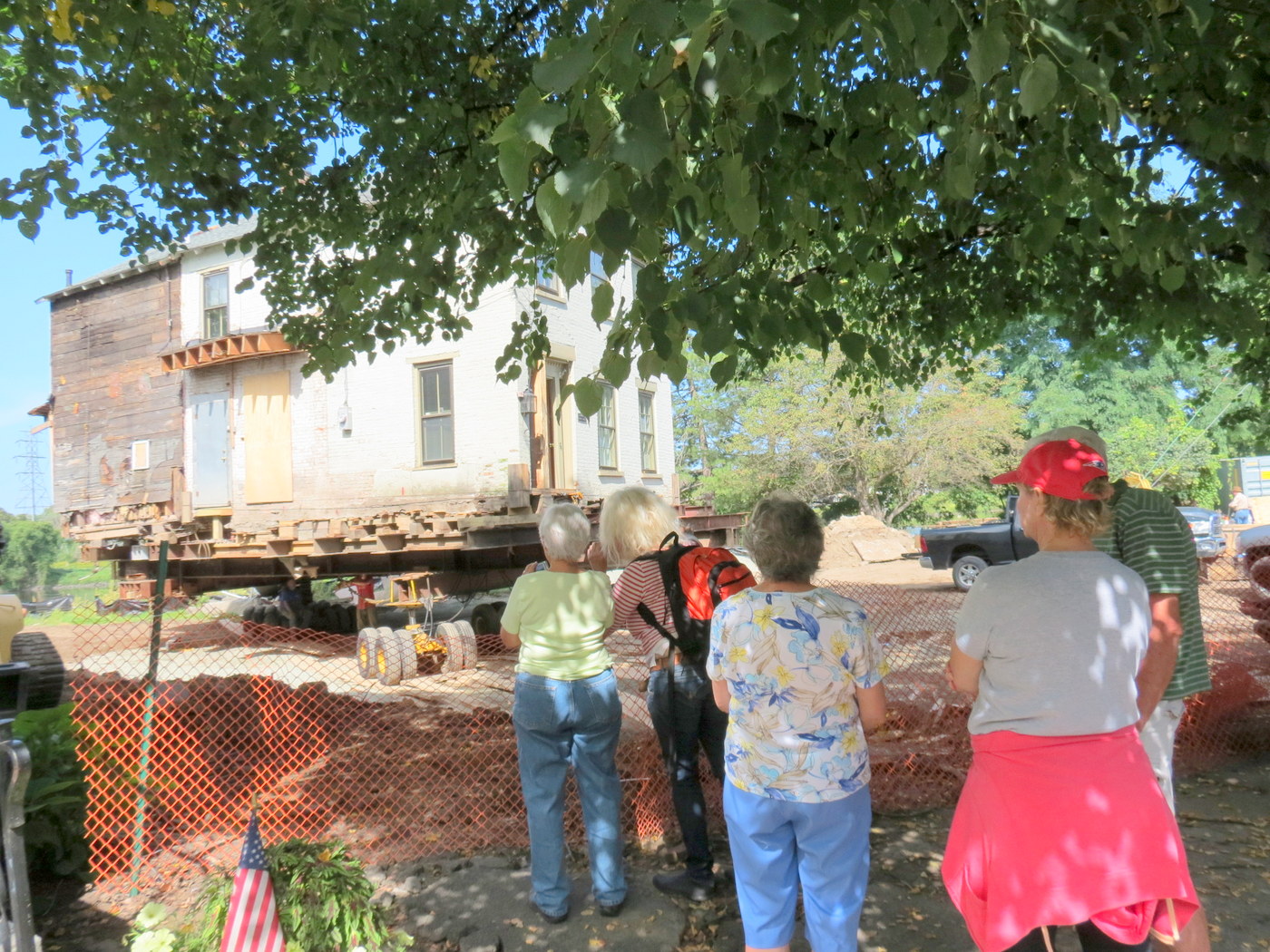
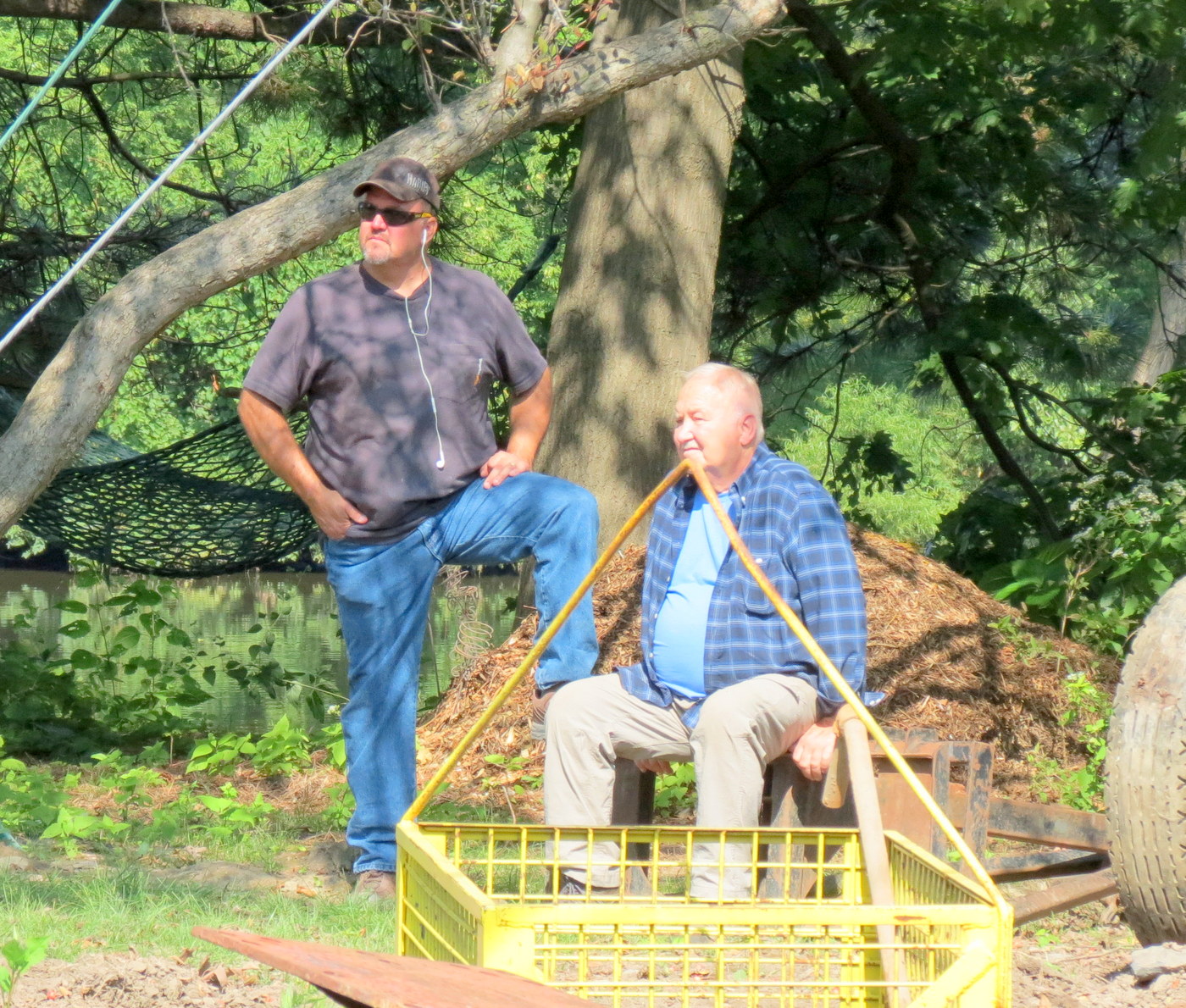
. . above: 4 Washington Ave. has moved to its final destination; [L] Contractor James Plowman at start of today’s move; [R] onlookers view house at final location (11:30 AM, Sept. 13, 2017); below (3PM): northeast view of house [L]; wheeled jacks removed, cribs in place:

4Wash13SepPM1 .  . 4Wash13SepPM2

4WashGilmoreDesignTU-002

 . . share this post with the short URLhttp://tinyurl.com/moving4WashAv

ORIGINAL POSTING

IreneStockade-4&6WashAv

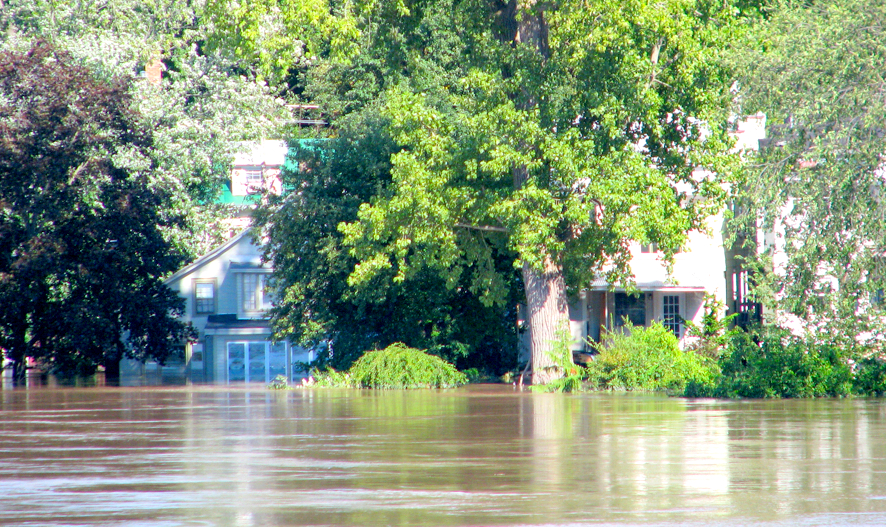
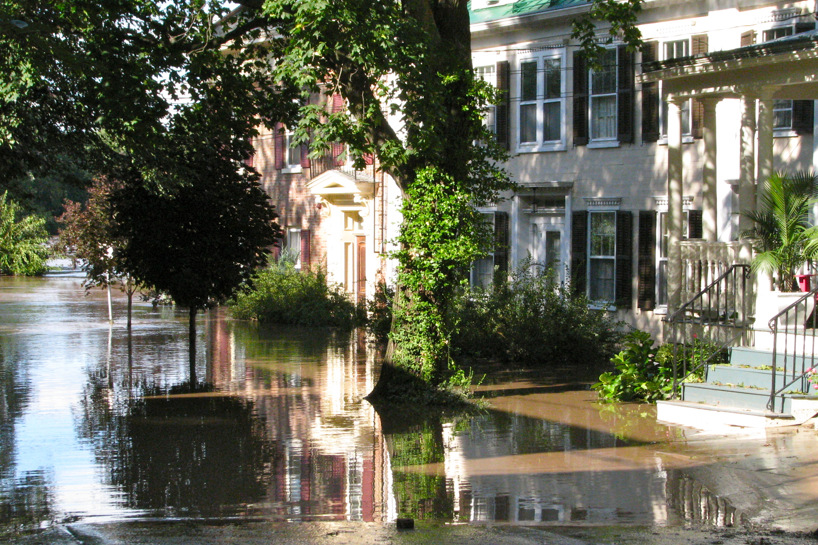
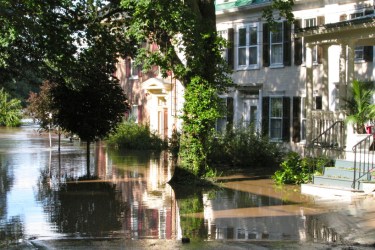
. . above: rear of 4 Washington Ave. [L] & 6 Washington Ave. during flooding post-Hurricane Irene (Aug. 28, 2011) . .  
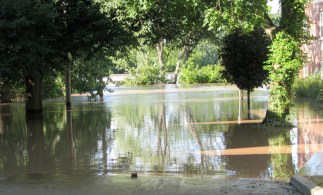
   . . left: flood waters from Hurricane Irene at River end of Washington Ave. with #4 & #6 on left . .
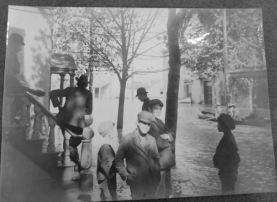
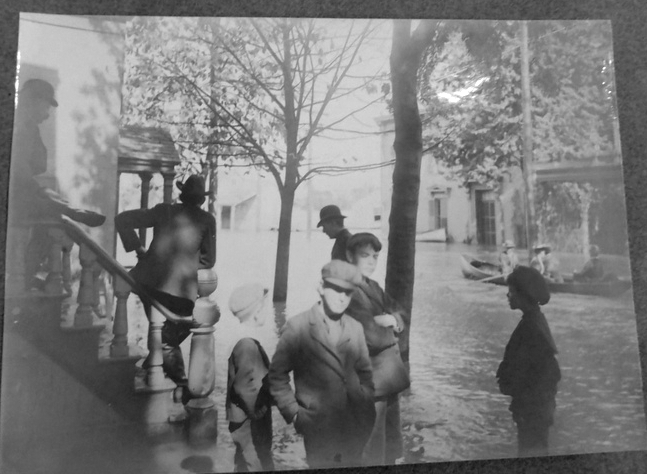
 . . left: floodwaters at end of Washington Ave., with neighbors at stoop of 6 Washington Ave. (vintage photo from collection of Schenectady County Historical Society, undated)

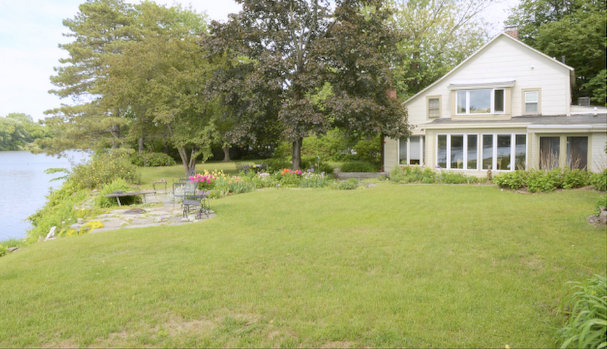
Meredith Anker’s home at 4 Washington Avenue, in the Schenectady Stockade Historic District, was constructed circa 1820. It was built along the Washington Avenue lot line, with no front lawn, but a spacious rear and side yard that borders the Mohawk River. Flooding in 2011 due to waters associated with Hurricane Irene did dramatic and traumatic damage to the first floor of Meredith’s home. Immediately below are photos of the front of the house and its yard taken last May:

4wash16may2016.jpg  . . 

. . above: 4 Washington Ave. & yard (May 18, 2016) . . 
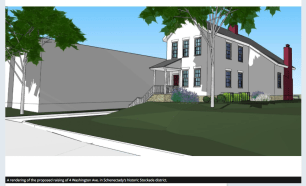
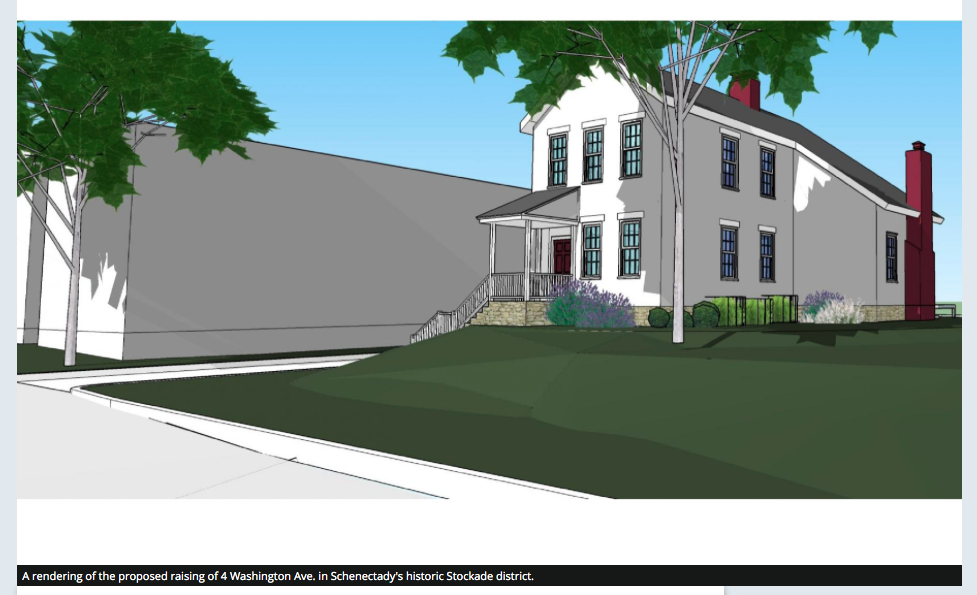
    In response, Meredith has asked the Schenectady Historic District Committee for permission to raise and move the house to another location on its lot. If the current project is successful, sometime this summer (2017), the house will be elevated about 12.0 feet and set back 15 to 20 feet from Washington Avenue, in order to remove it from the River’s flood plain. See “Stockade project to move historic home from flood plain underway” (Albany Times Union, by Paul Nelson, July 20, 2017). It took the homeowner, her architect (and across-the-street neighbor) Frank Gilmore, and contractor Jim Plowman, several sessions before Schenectady’s Historic District Commission approved the lift-and-move project, which is the first such project in the Stockade Historic District, where paint colors and removal of window shutters need Commission permission. See “Panel OKs plan to elevate Schenectady home above flood zone” (Times Union, by Paul Nelson, November 17, 2015); and “Homeowner allowed to raise, move Stockade house: After nearly half a year of discussion, the Schenectady Historic District Commission reluctantly agrees” (Schenectady Daily Gazette, by Haley Viccaro, November 16, 2015; $ub. req’d). The sketch to the right of this paragraph is the rendering submitted to the Historic Commission when seeking its approval for the project.

The blank wall in the sketch represents 6 Washington Avenue, the home of Scott Andrus and Jone Jensen, who are watching the process closely, and are not sure what to expect. The Historic Commission made it clear that they have not yet reviewed or approved the final design scheme (colors, landscaping, etc.).

4WashAvRearYard-GazPBarber

. . above: the rear lawn of 4 Washington Avenue, with Mohawk River on the left (photo by Peter Barber of the Daily Gazette) . . 

   Larmon House Movers is in charge of the short trip. However, the first-phase lift and shift has not yet happened, because National Grid has not yet honored the request that it turn off the gas line. According to the Times Union:
.
[T]he structure will remain at a temporary site for upwards of a month, which will give the crew time to fill in and shore up the foundation at the new spot, said [contractor Jim] Plowman. A one-car garage will be built into the foundation.
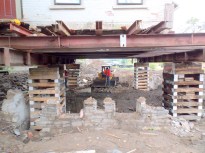
  • 4WashAv07Sep2017a update (September 7, 2017): I learned this morning from James Plowman, the general contractor for the project, that they have decided to move the house directly to its final location (15 feet back from the street and 20′ farther from the River), rather than risk more jostling of the old structure by moving first to a temporary location while the new foundation is being constructed. They will be bringing in dirt for fill and then the big wheels on dollies for the move, with Monday, September 11, 2017, now seeming like the likely day for the move.
   Since I first saw the large gray metal container sitting alongside Meredith’s house in early May, I have been sporadically photographing this historic process, and (if the creek don’t rise) I plan to continue documenting the move as the process unfolds — and will add images to this posting as they are taken.
 .
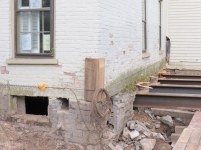
    We have had a lot or rain lately, and many sidewalk kibitzers and amateur engineers have offered me and other neighbors skeptical predictions about the likelihood that the ancient structure, with its flagstone and brick foundation, can be successfully and safely moved. Like virtually all Stockade homes, the original home has had additions appended to it. Whether it is out of an abundance of caution or true necessity, yesterday (Friday, July 28, 2017), workers strung a metal cable and chain around the structure.  See the photo to the right of this paragraph.
.

 . . 

   At the original date of this posting, the Slideshow below displays photos in chronological order, taken from May 10 through the end of July 29, 2017. As mentioned above, photos will be added as the project progresses. [followup: the Slideshow has somehow asserted a will of its own, and refuses to stay in chronological order; on the bright side, it allows the viewer to compare various phases of the project.]
  • As always, you can see a larger version of an image in the Slideshow by pausing it on the image, right-clicking and choosing See Image in New Tab.
.
 . . share this post with the short URLhttp://tinyurl.com/moving4WashAv
 .
update (September 5, 2017): Despite all my anticipation, I missed the actual lifting of the house today, but took a few photos this evening (Tues, Sept. 5), including:
.
4Wash05Sep2017c . . . 4Wash05Sep2017a
. . above scene after first day of lifting (click on photo for larger version). . 
.
4Wash06Sep2017Chimney According to an article posted online this evening at the Schenectady Daily Gazette website, “Stockade home elevated ahead of move” (by Brett Samuels, Sept. 5, 2017), the house is about 10 feet above its foundation, but the crew will probably not be back to finish this phase until next week, when it will be moved on wheels or using steel girders to a temporary spot while the new foundation if poured, etc. The Gazette also said that they had to stop lifting to figure how what to do about a chimney that was not part of the original structure of the house, that was separating from the structure. They put some straps around it (see image at right). 

.

This slideshow requires JavaScript.

.
TUIreneStockade-WashAv2011-001

. . above: 1-9 Washington Ave., Aug. 28, 2011 . . 

.
4WashAv07Sep2017b

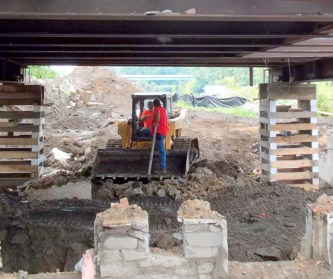
. . above: construction crew, Western Gateway Bridge, and a fancy boat viewed from in front of elevated house at 4 Washington Ave. (Sept. 7, 2017) . .  .
IMG_4718

Plowman . . Plowman

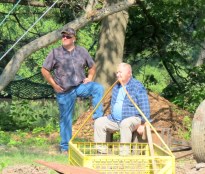
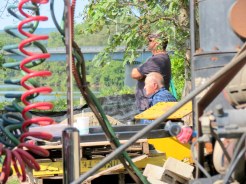
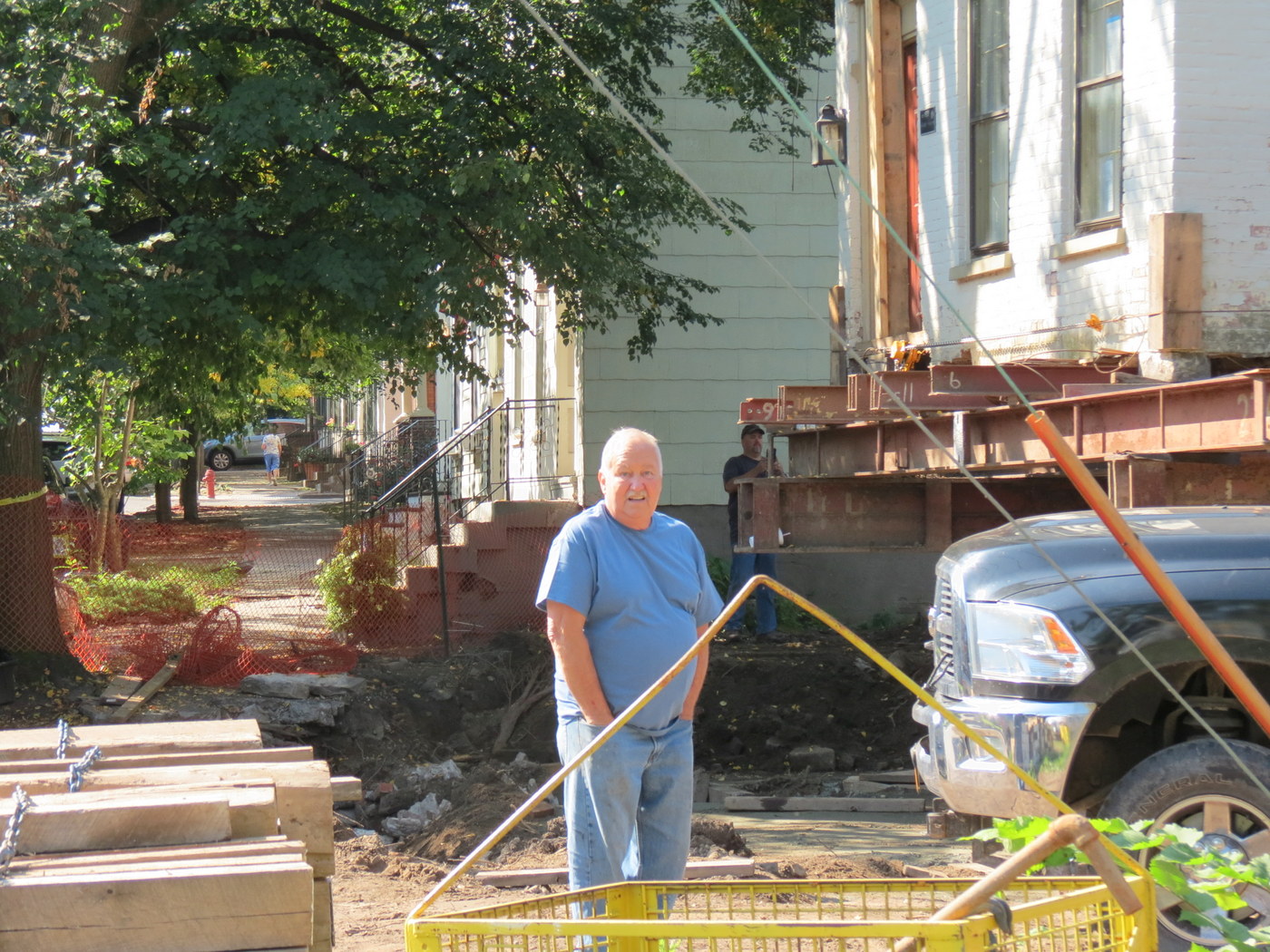
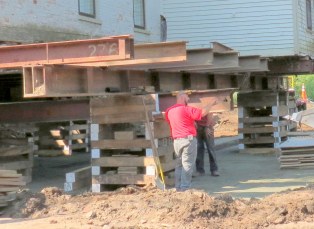
. . above: Garret (standing) and Jim Plowman watch Lorman crew securing girders under the elevated house to prepare for the big move (Sept. 11, 2017)
IMG_4823

October 8, 2017

zzIMG_4766-002

September 13, 2017

Posted by: David Giacalone | July 17, 2017

the revised Pump Station Design and Old Pump House QQ

 Last Thursday, July 13, 2017, Schenectady’s Commissioner of Operations, Paul LaFond, sent a 7-page document with the promised revised version of a new North Ferry Street Pump station to the Mayor, City Council, and the President of the Stockade Association, Carol DeLaMater. The plans were developed by the engineering firm CHA, and are in a form much like a Site Plan submission. There were no detailed, lifelike renderings. But, below are two non-technical pages that the general public and neighborhood probably would find the most useful. (click on each for a larger version) The red font was added by the proprietor-editor of this website (David Giacalone).
 . . 
. . 

. . . Compare with the design presented early this year, by CHA and City Water/Sewer officials, which would have taken up most of Riverside Park’s lovely and unique West Lawn, blocking views of and from the rear of six Stockade district properties:

 . . 

In a City where even very silly proposals too often come in the form of Done Deals, most of us who fought to keep the new, monstrous pump station off the west lawn are pleased with this outcome, and the cooperation of City Council members and the Mayor’s Office and City Staff — if some new version does not further encroach upon the Park. [But see, “new pump station is a scene stealer” (April 1, 2021), expected views have been obstructed.]

Here are the main points, as I read the June 2017 Revised Pump Station Document:

  • The above-ground structures have been kept within the original Pump Station Lot. The new main building is two stories above ground and seems to be perhaps 33 feet tall, with Mechanicals/wells underground. The engineer’s drawing shows the new building to be 39’ wide and 62’ deep.

  • Some of the underground mechanics/wells are under a section that intrudes into the Park about 25 feet. That piece of alienated parkland looks like it is a slab now at ground level, and I presume it will have some kind of lawn over it, and be fenced. 

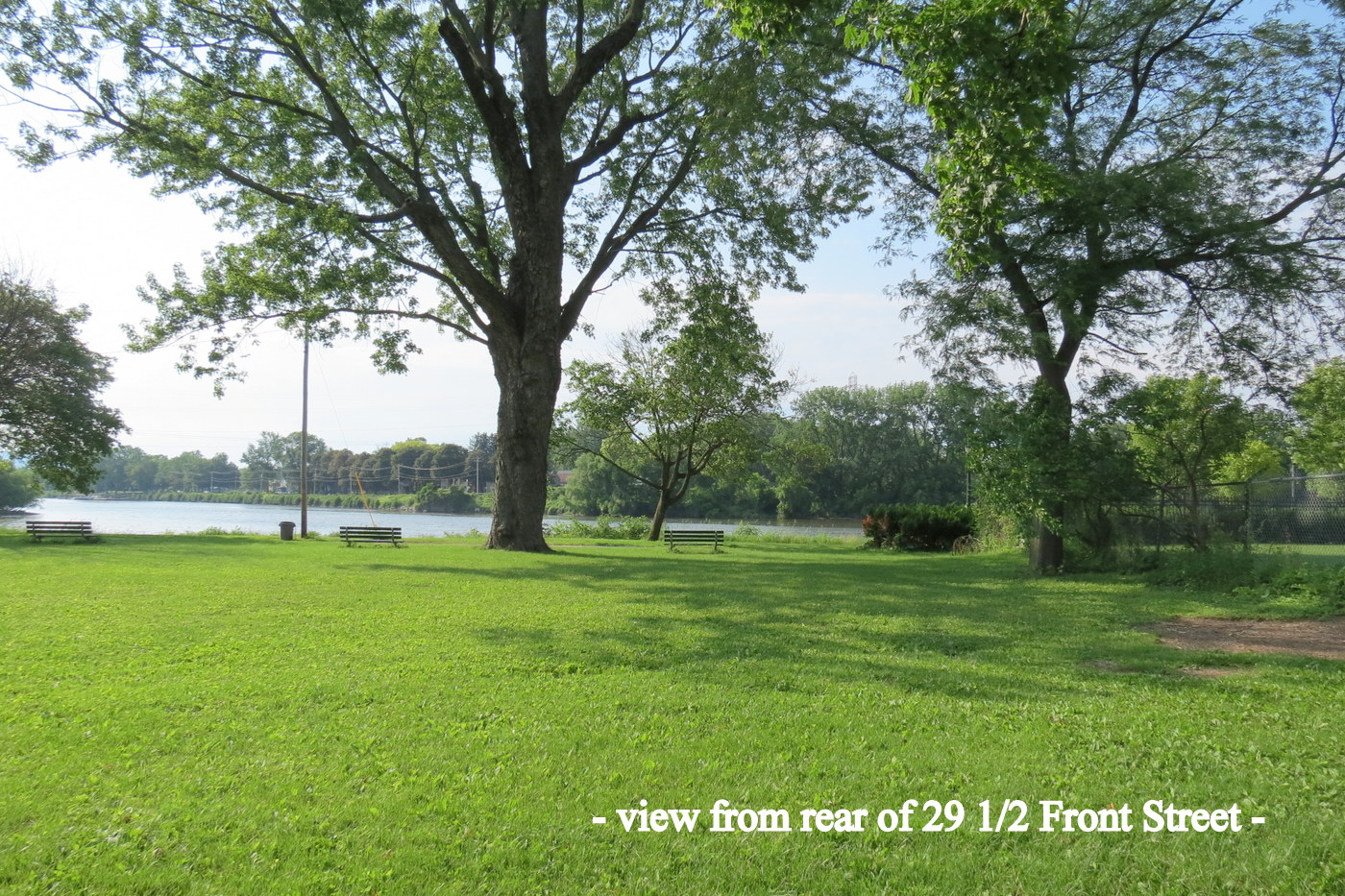
  • If the utilized parkland remains underground-only, Tom Killeen’s view (his property is 29 1/2 Front St.) would not be blocked, even though a 6’ fence might surround the entire New Pump lot.

 . . 

. . above: two views from the rear of 29 1/2 Front Street  (click on them to enlarge) . .

  • The dry dock is close to Deborah Ashline’s property at 125 N. Ferry St., which is directly behind the pump station lot. However, the new pump station (unlike the old) will have scrubbers to deal with odiferous exhaust issues, and Mr. Miller of CHA has stated that the new pumps, etc., will also have noise-dampening design. (Click to see Ms. Ashline’s letter to the editor of the Gazette, July 7, 2017, with her concerns about the proposal and her wish that the new pump station, if it must be kept within the current pump station lot, utilize the footprint of the Old Pump House.)

.

  • Measurement questions for the engineers: What is the footprint is of the new building, dry dock, and “slab”, and any necessary buffer/landscape area. In April, CHA was talking about a footprint on the west lawn that would be reduced to 0.2 acres? The entire lot of the old pump station is 0.39 acres. Also, what is the precise height (above ground) of the new building and of the dry dock; and how tall is the old pump station?

. . Google Map Satellite View of North Ferry St. Pump Station .. 

In an email letter to Stockade Association Members sent yesterday, July 16, 2017, SA President Carol DeLaMater wrote, in part:

I have shared this design with members of Stockade Association Preservation Committee on Wednesday July 12 and next steps were discussed.  We have requested a presentation on the site plan design within the next few weeks [by project engineers and City officials] in order to ask questions and provide feedback.  We expect this to be a Special Meeting of the Stockade Association with the  invitation extended to interested neighbors.  Any action taken will be dependent on results of presentation but members who had been opposed to any new structures within the park will want to be informed.

When the date is known for the Special Meeting on the Revised Pump Station Design, and as significant new details are learned about the design, the information will be available as updates to this posting.

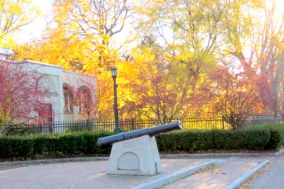
pumphouse2015cannon

defending our Park

The Old Pump House

 . . 

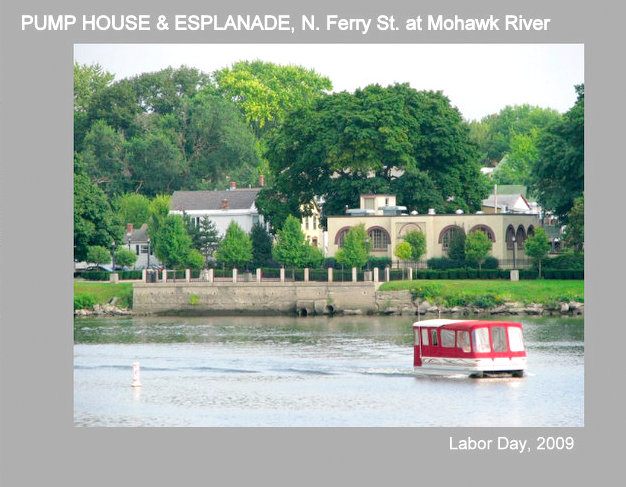
above: Pump House on Labor Day 2009 [R] and on the day of the Irene Flood (August 2011)

.

  . .above: from the collection of the Schenectady County Historical Society, Grems-Doolittle Library

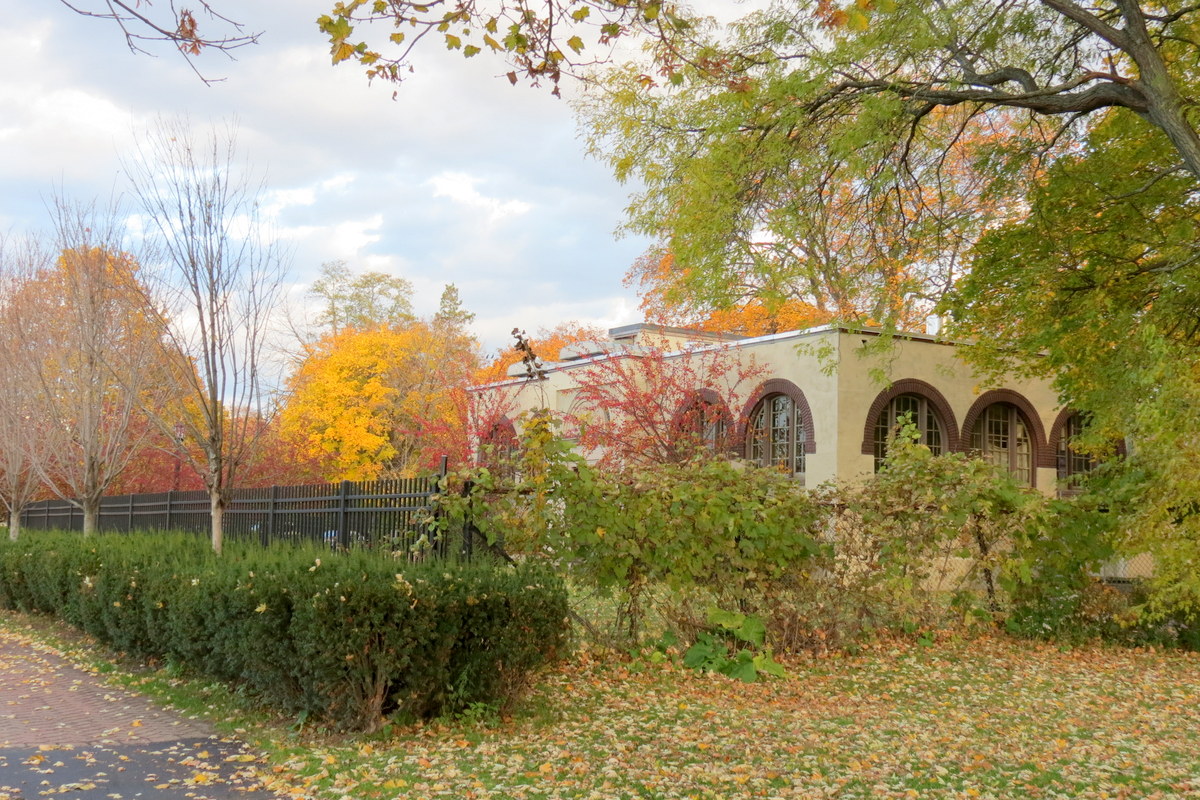
Many people in the Stockade and Schenectady had hoped that the Old Pump House would be retro-fitted and rehabilitated instead of building an entirely new pump station. That battle was lost. However, one issue that I believe will need a considerable amount of deliberation very soon is the fate of the Old Pump House.  That may be especially true in a City that recently “lost” the Old Nicholaus Building, and thereby angered many of its residents. Furthermore, consideration of the future of the Old Pump House, which was constructed in 1913 (see rendition above), is logically interwoven with the design of the New Pump Station and its lot. The next stage in the creation of the new pump station is, of course, its architectural/exterior design. It would seem strange to decide upon the exterior design of the New Pump Station without knowing whether the Old Pump House is likely to still be standing beside it, just a couple of feet away and sharing the same “parkscape”.

  • If, for example, the east wall of the new pump station abuts the old House (as in the sketch near the top of this posting), it would probably be unadorned, without windows, etc.  But, if the Old Pump House is coming down, we would replace a quaint and attractive scene from the park and river with the nearly blank side of the 125 North Ferry Street, a two-family dwelling, and the larger New Pump Station facility, which would be in full view on all sides.

 Frankly, I do not know “how popular” the Old Pump House [“OPH”] is among various segments of the Schenectady community and its leaders. Nor do I have any idea what it would cost to keep it adequately maintained, and to remove pumping apparatus and otherwise convert it to some new community or park use. One reason given by the City’s engineers for needing a separate, new pump station is that the Old Pump House has “shifted” off its foundation. Requests for proof of this claim have not been answered. The City has stated that the old structure shifted about a foot, but others say it was less than an inch and the shift might have been decades ago. Any necessary stabilization of the structure is, of course, one required expense, if OPH is to be allowed to stand.

As you can see from the original 1913 rendering above of the “Concrete Pumping Station”, it had a Bandstand on top when it was built. Of course, at that time, it was only a water-pumping station. Given many decades dealing with sewerage, the facility and the grounds around it may need to be “remediated” in some form to remove any toxic substances before it can be removed. [Could Rush Street Gaming and Galesi Group (Rivers Casino and Mohawk Harbor) continue their reputation for removing brown-fields by offering to fund the refurbishing of the Old Pump House as a community grant program, on the scale of Rush Street giveaways in Philadelphia, Pittsburgh, and Des Plaines?]

 One very big problem with retaining the Old Pump House is the current lack of any plan by the City for maintaining it and making sure that it is a secure building in any period in which it is empty and not used for a new purposes. The lack of a plan or set of alternatives presented to the public by City Hall, despite the Mayor having decided at least three years ago to build a new pumping station, suggests there is little will within the McCarthy Administration to spend — or seek from preservationist sources — funds needed to care for the Old Pump House appropriately. Furthermore, Assemblyman Phil Steck is already a vocal proponent of taking it down, and has offered to submit a bill to the NYS Legislature taking the lot and the structure out of the Stockade Historic District.

 Despite my personal fondness for the Old Pump House, I need to learn much more about the options, pros and cons, and costs of alternatives, before giving its survival a thumbs up or down. I believe many people feel strongly about OPH, while others are indifferent, or think another park use could be made of that part of the current pump station lot if it is removed. To me, it is a unique sight from the river and the park, beloved my many, some of whom do not even know what purpose it serves, and is a special structure from a time when industrial architecture had style. Some of my favorite photos include the old pump house. But, I would like to hear a focused debate about the pros and cons of keeping or demolishing or relocating the exterior of the structure, including relative cost of each viable option, before having to come to a conclusion. 

  • If you have an opinion on the future of the Old Pump House, or questions you, too, would like answered, please let the Stockade Association know, and the Mayor and City Council, along with the media. Click for City Council contact information.

. . share this post with the shorter URL: http://tinyurl.com/NewOldPS

Posted by: David Giacalone | July 14, 2017

early on a Schenectady SummerNight (2017)

IMG_4109

It’s been several years since I’ve attended Schenectady County SummerNight in Downtown Schenectady, on the “Proctors Block” of State Street and the Jay Street Pedestrian Mall. Expecting (erroneously, it seems) rain and thunderstorms this evening, I decided to check out the event a bit early, and arrived a half hour before the official 5 PM start time. The bands had not started yet, but plenty of other activities were already in progress, with food stalls making festive aromas.

IMG_4148ScuplturePhilSinger . . Phil Singer‘s sand sculpture of Wonder Woman, presented by Sunmark FCU, was a favorite sight.

This slide show presents photos in the order I took them, starting at Franklin Street and the Jay Street pedestrian walkway. It was suitably colorful, despite the gray skies, and folks were in a good mood. I did not miss the crushing crowd that would probably find its way to State Street by mid-evening, unless the weather forecast thinned the numbers.

.

This slideshow requires JavaScript.

.

IMG_4134 . . IMG_4141

.

IMG_4111-001

IMG_4147-001


. . click here for our coverage of the 2018 version of SummerNight.

Posted by: David Giacalone | July 5, 2017

looking east for fireworks

Historically, people coming to the Stockade for Independence Holiday fireworks look northwest across the Mohawk toward the Isle of the Cayugas and Scotia, to see the annual Jumpin’ Jack’s fireworks show. However, this year’s original JJ fireworks date, June 30, was rained out, and the rescheduled date of July 22 has been cancelled.*

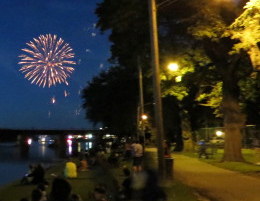
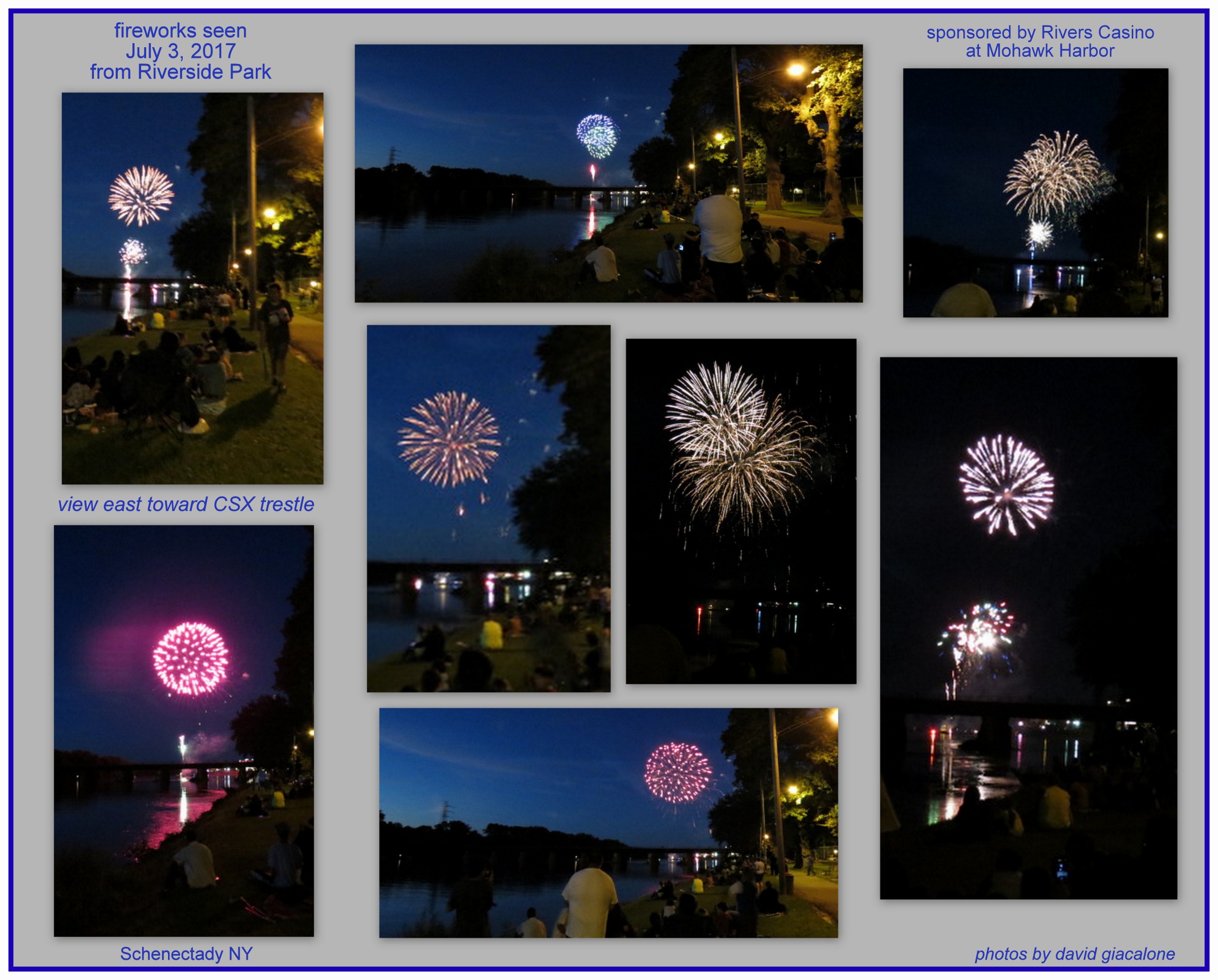
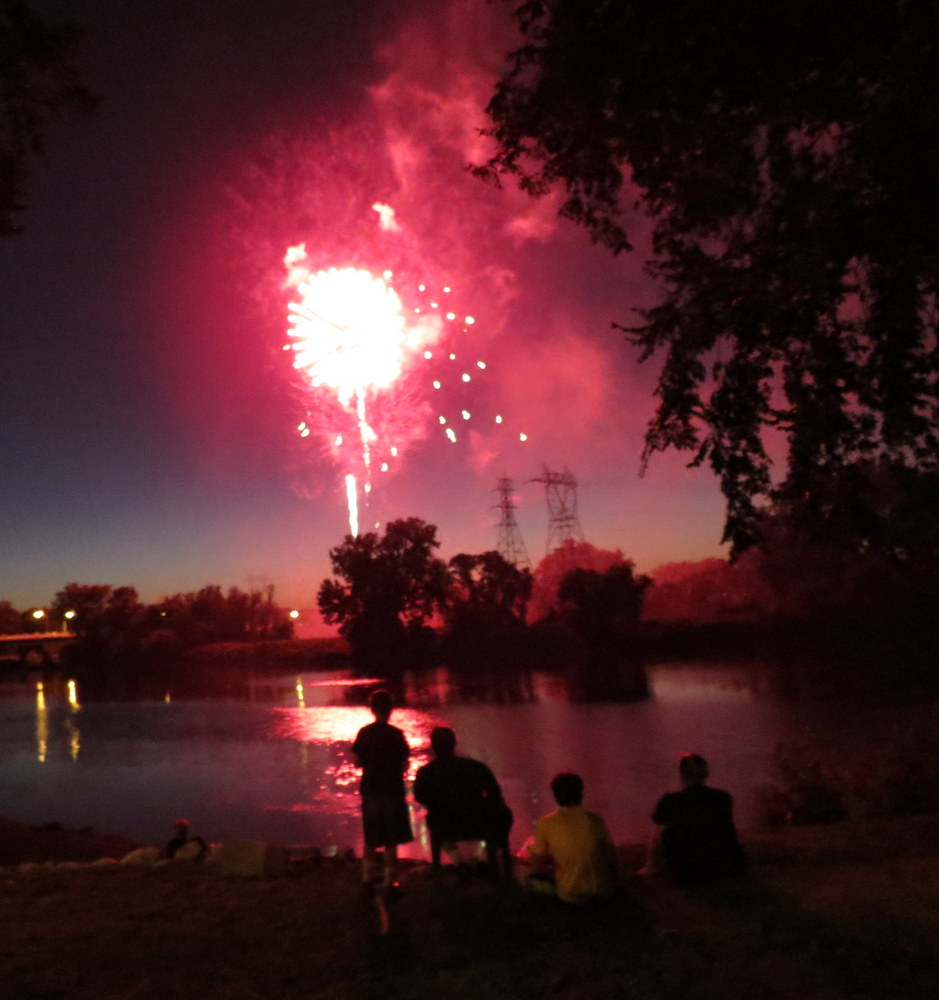
IMG_3999 Nonetheless, a new tradition was apparently started on July 3 and 4, 2017, with fireworks displays sponsored by Rivers Casino at Mohawk Harbor. Folks came to Riverside Park in the Stockade to see the Rivers Casino fireworks, and by facing east, toward the CSX train trestle, they were able to enjoy a very good view of excellent fireworks [photo at right taken while waiting for the show to start on July 3]. I was not able to be in the audience for the big show on July 4th, but did see the July 3 “teaser”, and had a good time.

It was, however, not one of my more stellar adventures as a photographer, and I only have this Rivers Casino Fireworks collage, from July 3, 2017, to share as this years’s version of the Stockade fireworks experience. [click on it for a larger version]

Thanks go out to Rivers Casino at Mohawk Harbor for bringing its fireworks flare to Schenectady. I’d like to suggest, nonetheless, that Rush Street consider instead holding its Schenectady fireworks extravaganza at a time of year when we have fewer fireworks shows available. In Philadelphia, for example, they put on a New Year’s fireworks show at their SugarHouse Casino.

For a bit of nostalgia, check out our 2016 Jumpin Jack’s posting, and the links therein. Here is a shot from Cucumber Alley, with neighborhood kids enjoying out traditional perspective, looking toward the Isle of the Cayugas:

*See”Fireworks at Scotia’s Jumpin’ Jacks Drive-in cancelled” (Times Union, by Amanda Fries, July 4, 2017); and Gazette coverage: “Jumpin’ Jack’s cancels July 22 fireworks show“. Here’s the Statement from Jumpin’ Jack’s management about the cancellation of its 2017 Fireworks:

Read More…

Posted by: David Giacalone | July 1, 2017

June 2017 outtakes

IMG_3854-001 . . alongside 1 Union St., at Washington Ave.

Before June 2017 falls into my Boomer Bin of Lost Memories, I want to post some photos that have not been seen yet here, but deserve posting for posterity (or simply to refresh my memory as years go by).

Slight Tangent: I had not planned to include the photo to the right in this post. But, an article in today’s Schenectady Gazette about the need to renew the tennis courts in Schenectady’s Central Park (“Work on Central Park tennis courts, Music Haven lag“, by Bill Buell, July 1, 2017), reminded me of it, which I took on June 15 at the east end of our Riverside Park. I left the “Note” below for Jeremy Howard, who is quoted in the Gazette article.

Note to Jeremy Howard, Schenectady’s Director of Property Management: The above courts are the closest tennis courts the City has to Mohawk Harbor and the Rivers Casino. Please consider asking Mssrs. Buicko and Bluhm for a good faith donation to their neighbors down Front Street, to bring tennis back to the Stockade’s lovely neighborhood park.

RiversideTennisCourtstangent update (July 2, 2017); A neighbor informed me yesterday that the courts in Riverside Park were weeded and spruced up a bit last week after years of neglect. No nets yet, of course. Click on the thumbnail collage to the right to see the condition of the courts on July 2, 2017.

. . June gleanings:

IMG_3896 . . right:  a Flag Day scene, June 14, 2017, on the 200 block of Union Street

.

TellerHouse2017June . . TellerHosue2017JuneRear

 . . above: front and rear views Teller House, 121 Front St. (June 14, 2017) . . 

Slideshow I has many additional photos taken on Flag Day, June 14, 2017, in the Stockade neighborhood.


This slideshow requires JavaScript.

.

Next, a visit to Central Park last Sunday, June 25, 2017, yielded my first in-person viewing of the new pergola in the Rose Garden, plus shots taken strolling around Iroquois Lake. You will find images in Slideshow II.


This slideshow requires JavaScript.

.

Finally, Sideshow III has miscellaneous shots from the Stockade, Riverside Park, and Downtown that were taken in June 2017:


This slideshow requires JavaScript.

Posted by: David Giacalone | June 28, 2017

BIKE SCHENECTADY: a Crucial Battle for Riverside Park

 IMG_6750-003 . . 6img_10422  .

dscf13791 A Shared-Use Path in Schenectady’s treasured Riverside Park? The Safety & Comfort of all Park Users (as well as cyclists), and the Soul of Riverside Park, are at Stake, if more and faster-moving bicyclists are allowed on the Park’s only walkway, as is proposed in Bike Schenectady, “The Schenectady Bike Infrastructure Master Plan” (2017) . The significantly increased volume of traffic, change of pace, and reduction in safety are likely to create a “scared-use” path, frightening away many current users, especially the most vulnerable (the very young, the elderly, and disabled, and their caretakers), as well dog-walkers, sunset-seekers, and romantic strollers.  For the majority of current Park users, it will end or spoil practices enjoyed for decades by many generations, without measurably improving the City’s bicycle infrastructure. As is argued in the Gazette OpEd column “Preserve Riverside Park for pedestrians” , we should instead preserve, promote, and enhance what is best about Riverside Park by officially making it a Pedestrian Sanctuary.

WalkBikeInParkW . . RiversidePkJul2017.png Share this posting with the shorter URL: http://tinyurl.com/RiversideBikes2

BikeSchdyFinal-Cover

 Procedural Update (Oct. 17, 2017): The Final version of Bike Schenectady, the Schenectady Bike Infrastructure Master Plan, was posted without fanfare at the City’s website on September 5, 2017.

It was approved October 18, 2017, by the City of Schenectady Planning Commission (with its Chair, Mary Moore Wallinger recusing herself due to her leading role as designer and proponent of Bike Schenectady). Peter Knutson, representing the City’s Department of Engineering, assured the Commission that no segment of the Planned network would be constructed without first having more public comment on specific plans, after assuring that design guidelines are met.

The proprietor of the website submitted Comments to the Planning Commission re Bike Schenectady, asking the Commission to recommend changes or additions to the Plan explaining the types and needs of pedestrians and protecting Riverside Park from imposition of a shared-use path, without at least first having a study of its pros and cons and impact on the Park and its users. The Planning Commission ignored the recommendations.

Bike Schenectady‘s Final Version was adopted by the Schenectady City Council on December 11, 2017. See “Schenectady bike infrastructure plan adopted: Master plan includes 3 phases” (Daily Gazette, by Stephen Williams, Dec. 12, 2017). As fully discussed below, the Plan’s Bike Path Policy section (at D-11; see thumbnail image at the head of the paragraph) states that “The current codes for the City of Schenectady prohibit bicycle use of paths and trails within the parks in the City.” It therefore calls for the City Code to be amended to permit, with adequate safeguards, the use of park paths by bicycles. [Nonetheless, as of April 4, 2026, no such amendments were ever proposed, much less enacted, by the Mayor or City Council.]

Riverside Park Map H

 update (June 22, 2018): You can see our summary of the County’s Trail Extension Feasibility Study, here. Its suggestion of giving Riverside Park a two-path reconfiguration, separate paths for pedestrians and for cyclists, seems promising when compared to converting the existing walkway into a shared-use path. Of course, we need to see details to evaluate the impact on the Park and its users, and may conclude that allowing bike traffic is simply too much of a risk.   [Note: The two-path configuration, seen in the thumbnail image at the head of this paragraph, was never seriously considered or approved.]

Original Posting

 . . .  Tomorrow, Thursday, June 29, 2017, the City of Schenectady will unveil and explain Bike Schenectady (Draft), the Schenectady Bike Infrastructure Plan. [click here to see the Final version.] The public presentation of what is surely a near-final Bike Schenectady Plan makes the issues raised at this weblog last year very timely and the concerns quite urgent: see the post “does a bike path make sense for Riverside Park” (short URL: tinyurl.com/RiversideBikes). That post has been updated because of the release of the Bike Schenectady Plan, with additional description of the current-traditional activity on the Riverside Park path.

  • RiversideSharedUse-Safety The prior posting, like this one, calls into question the conversion of the only paved path in a small, treasured neighborhood park (which is listed on the National Register of Historic Places), into a shared-use path to be used for two-way travel by cyclists and people on foot or in wheelchairs. The Riverside Park path has been used for generations by people of all ages almost like a “public square”, for many passive-park purposes. Bike Schenectady would make it into a “keep-moving”, connector & transportation thoroughfare, purposely attracting many cyclists seeking to move, in both directions, as quickly as possible through the Park, on its 10-foot wide path. A path that is an integral part of the enjoyment and experience of Riverside Park is, we fear, likely to become so unsafe and uncomfortable that it will scare away a large portion of its current users.
  • This piece focuses more directly on Bike Schenectady, recapping important points from our earlier posting, describes the Path, the Park, and their use and users, in more detail, along with DOT design standards for multi-use paths, and City Code sections relevant to bicycles and parks, and it contains more discussion, photos and images.

below: Detail showing the Mohawk Harbor-Stockade portion of the Schenectady Bicycle Infrastructure Plan Map . .

2Bikes-HarborArea

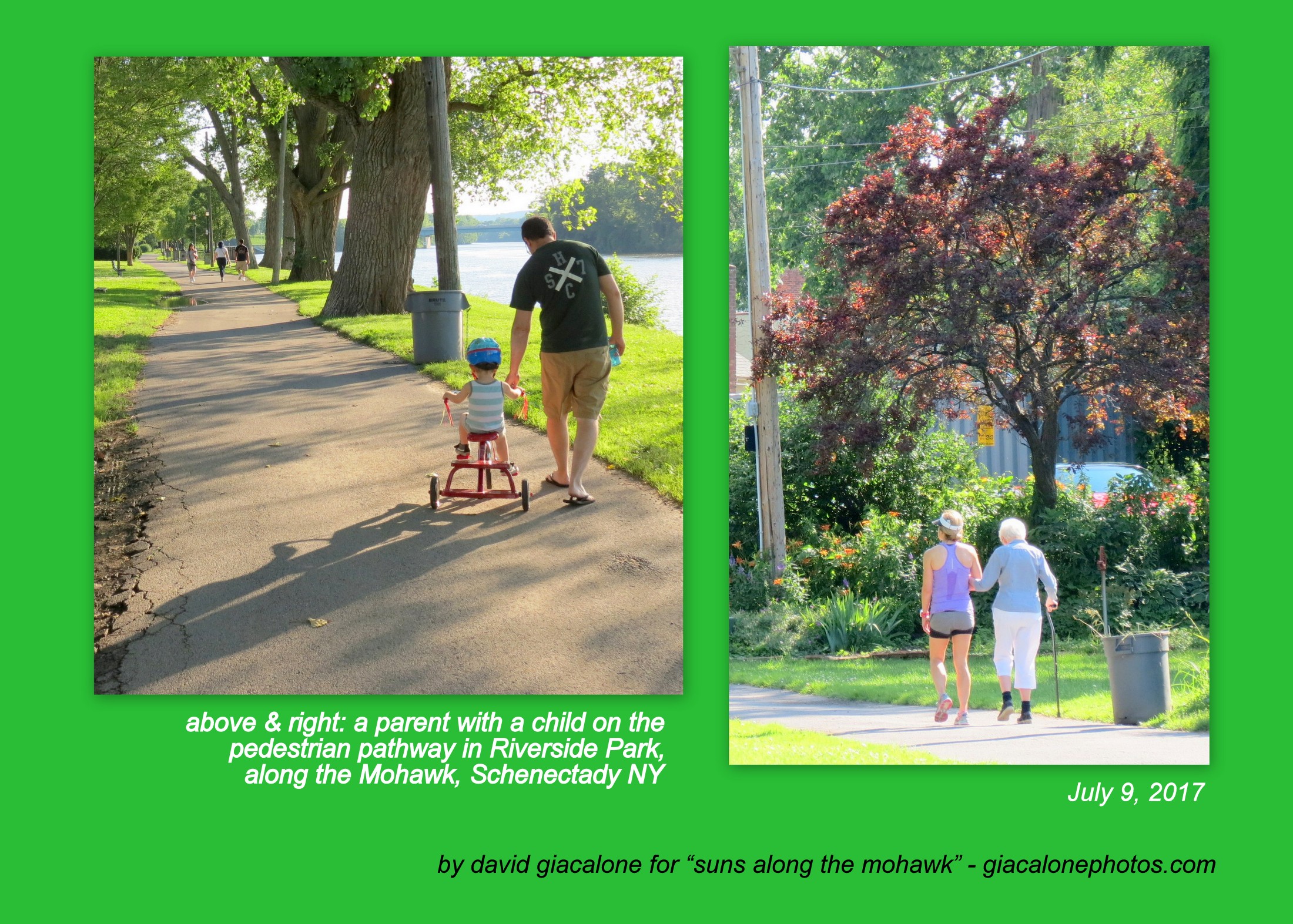
Slideshow of Users, Uses, and Conditions. Several dozen images of the Riverside Park path, with its many kinds of users and uses, can be found in the following Slideshow [which has been supplemented with additional scenes from a quiet Sunday evening in the Park, July 10, 2017, and Sunday afternoon, Earth Day 2018.]. Any decision about bringing large numbers of cyclists to the path and the Park must consider the impact on the current usage and users.

This slideshow requires JavaScript.

.

The collages immediately below raise just three of the many factors to consider when deciding whether a Shared-Use Path could be made safe enough to make it appropriate for Riverside Park.

RiversideBikesTreeCollage . . RiversideBikeSundayUsers . . RIversideBikeWashAve

Collages above: [L] Treasured Trees at Risk; [M] Sunday Users and Uses; [R] Unsafe interface with Washington Avenue. Click on each for a larger version. 

Victoria Walks, an Australian walking-advocacy coalition, has extensive experience with shared-use bike-ped paths in Melbourne. After reviewing the literature and research, Victoria Walks has come to important conclusions quite relevant to whether a shared-use path makes sense for our Riverside Park. See Shared paths – finding solutions (Victoria Walks position paper, May 2015), which is based on its comprehensive research paper, Shared paths – the issues. And, see “Footpaths are for feet“. Here are some quotes from Victoria Walks on Shared-Use Paths:

 “Victoria Walks has significant reservations regarding shared paths and how they impact walking, particularly by more vulnerable walkers. Generally, slow moving recreational cyclists may be able to share paths with walkers. However, walkers do not generally mix well with commuter or sports cyclists, who typically travel at higher speed.”

“Road managers should avoid converting footpaths to shared paths, as they may be ‘designing out’ the most vulnerable road users – older walkers and those with a disability.”

“Shared paths are commonly built for both bike riders and walkers, but they can be an uncomfortable place to walk, especially for children, disabled or older people.”

I’m old and not very nimble — it’s [a] frightening silent menace.”

[Elderly] “For those aged 75 and over, walking makes up 77% of their total physical activity. . .. The study included a survey of 1128 senior Victorians – 39% rated bicycle riders on shared walking or cycling paths as a moderate to major constraint to their walking. Cyclists on footpaths will deter seniors from walking and limit their ability to live their everyday lives.”

VictoriaWalks-ShiftingRisks

[Goal] Victoria Walks strongly supports: “The community and government working together to find solutions for both walking and cycling, while ensuring pedestrian safety is not compromised.”

 [Speed] “Evidence suggests that cyclists do not necessarily slow down when they share a path with pedestrians. A study from Sydney and Newcastle found the average speed of cyclists on footpaths was 21 km/h [13.04 mph], exactly the same speed as cyclists on roads with a speed limit of 50 km/h [31 mph] or less.”

SharedPathsWhenNotTo

Existing Analogy  . . ZeggersJul2017  Wouldn’t continuing the longstanding ban on riding bicycles on the path of Riverside Park, and enforcing the Ordinance, serve the same purposes (safety, comfort, peace of mind of people using the space while on foot, etc.) as Schenectady’s ban on cycling on both the wider, more street-like Jay Street Pedestrian Mall and Stratton Plaza (behind Proctors), which also was once a City street?

JayStNoBikes

. . Jay Street pedestrian walkway – No Bicycling, Skateboarding Allowed . . 

StrattonPlazaSign-NoBikes . . also at Stratton Plaza . StrattonPlazaCollage

. . cyclist walks bike on Jay St. [R] . . DSCF3231-001

Walk-Only-Zones-ASUTempe      . . even bike-oriented colleges know the advantages of walk-only zones on paths with many pedestrians . . 

.

FHWA materials on the planning and design of shared bike-ped paths, from “Federal Highway Administration University Course on Bicycle and Pedestrian Transportation” (Publication No. FHWA-HRT-05-133, July  2006; see Chapter 19, Greenways and Shared Paths), confirm that our common-sense concerns about the safety of both pedestrians and cyclists on a path set in an established park are quite relevant and valid. With its mix of customary “pedestrians”, who are in reality park-users who happen to be on the paved path, it seems clear that the planned shared use path in Riverside Park is inappropriate, absent severe restrictions on cyclist speed.  Indeed, such restrictions may only be achievable by requiring that bicycles be walked through Riverside Park.

The FHWA Course referred to above is almost 500 pages long. But, click here for a 7-page set of excerpts from the Chapter on Share Used Paths.  Here is a sample of relevant points:

  •  “The popularity of many urban paths has shown that large volumes of pathway traffic, with a diverse user mix, can create congested and conflictive path conditions similar to that on urban highways. Therefore, planning and design of shared-use paths must be done with the same care and attention to recognized guidelines and user needs as the design of on-roadway bikeways and other transportation facilities.”
  • “Shared-use paths are typically used by a diverse set of users representing different travel modes, using different types of equipment and traveling at different speeds. It is important to understand, even within the basic user categories of bicyclists, pedestrians, and skaters, how diverse path users can be.”
  •  “In addition to diverse users and a variety of equipment used, shared-use paths serve a wide variety of trip purposes. User behavior, such as travel speed and willingness to make stops, varies considerably with different trip purposes. Especially in urban and suburban areas, paths are routinely used for commuting to work or school, running errands, visiting friends, getting exercise, observing nature, and seeking recreation and enjoyment of the outdoors.

     “Moreover, people of all ages and abilities use and enjoy shared-use pathsfrom the very young to the very old, from the novice cyclist to the marathon trainer. Accommodating and balancing the various needs created by this diverse user market is a central challenge for today’s shared-use path planners and designers.” [emphases added]

  • “Too often, agencies charged with creating a shared-use path fail to understand or adopt a crucial pathway planning principal—that by definition, shared-use paths serve both transportation and recreation functions. As such, they must be planned and designed to be a part of two systems of community infrastructure: parks and recreation, and transportation.”
  • The most common feature of many greenways is a trail…with so many types of users in the United States, there are many types of trails, and elementary though it may seem, it is important to distinguish among them. All greenway trails should be compatible with the natural landscape and its functions.

WalkBikeInParkW Despite its 79-page length, the draft Bike Schenectady Plan shows no indication that our City and County planners and politicians have considered how different from a policy, practicality or public-relations perspective it is to impose a shared-used transportation function on a path used for more than a century for passive-park recreational purposes, as compared to “merely” constructing a path through a hitherto unused or underused portion of land along a river, or through a new development, where a culture of shared-use etiquette and expectations can be nurtured.

.

Similarly, the Plan spends considerable space discussing the attitudes and goals of various types of cyclists [see page 2-1, which describes four basic types, including Strong & Fearless(<1%) and Interested But Concerned (60%)]. But, not a word is presented to suggest there are also very different kinds of pedestrians, with greatly different ages, abilities, activities/goals, and tolerance for the presence of cyclists. Most important, there is no indication that the Schenectady Bike planners appreciate the possibility that a significant number of current and potential users will be literally scared away by cyclists in any large numbers going through the Park at more than a very leisurely pace. Mothers with strollers or a handful of youngsters to control, and the elderly or the vision-impaired, who can be startled into a fall even without a collision, are two such groups. 

 Likewise, there is no indication of an appreciation by the authors of the Bike Schenectady Plan that (1) factors making a 10-foot wide shared path in Central Park acceptable do not exist at Riverside Park (such as, other paved spaces for stopping to chat or to observe the sights, scores of acres upon which to play, and a fenced playlot); (2) a much wider path would be needed in Riverside Park to ensure the safety and comfortable use of its path by pedestrians or cyclists. For example, the predominance of dog-walkers along the path, often with more than one dog at a time, needing to stop and wait for a dog to do its doggie business, makes quick action and movement, and constant attention to approaching bikers, by the dog walkers quite problematic. And, (3) “education” without consistent “enforcement” activity, is most unlikely to change the behavior of a significant proportion of bicyclists who fail to indicate their approach orally or with a bell.

Follow-upGiven the expected users of the Riverside Park path, the 2012 AASHTO guide, which is the standard that NYS DOT uses, would require more than a 10’ wide shared use path (in addition to 2’ buffers, and 3’ clearance for signs and trees). See this quote from the “AASHTO Guide for the Development of Bicycle Facilities” (2012), Chapter 5: Design of Shared Use Paths:

5.2.1 Width and Clearance

The minimum paved width for a two-directional shared use path is 10 ft (3.0 m). .  . . .  . Wider pathways, 11 to 14 ft (3.4 to 4.2 m) are recommended in locations that are anticipated to serve a high percentage of pedestrians (30 percent or more of the total pathway volume) and higher user volumes (more than 300 total users in the peak hour). [emphasis added] 

In our posting last year, we made this observation concerning bicycles and safety in our Schenectady parks:

SchdyCode-Bikes-ParksPaths PARK SAFETY. The bicycling safety rules for all Schenectady Parks appear to be reasonable and appropriate. They require that bikes only be used on Park driveways-roadways, and at a speed less than 15 mph. Similarly, citywide provisions ban those over ten years old from using a bicycle on a public footpath or sidewalk that is intended for use by pedestrians (see Code sections montage to right; click on it for a larger version). Ignoring those limitations, and indeed encouraging bicycling in Riverside Park, without at least providing a separate pedestrian path (an alternative suggested in the City Urban Bike Route Master Plan), seems inappropriate and ill-advised. “Feasibility” of the Trail extension must take into account the City’s policy for preserving the safety of its park users.

BikeSchdy-ParkPathCode The draft Bike Schenectady Plan text speaks of “policy” changes to the Schenectady Municipal Code that would “open access to park pathways to bicyclists.”  Thus, the Policy section states (App. D, at D-11; emphases added):

Park Path Policy 

The current codes for the City of Schenectady prohibit bicycle use of paths and trails within the parks in the City. This greatly inhibits the ability for bicyclists to travel to and through the parks, which generally offer much greater comfort than street riding. However, the issue of pedestrian comfort and safety arises when discussing the opening up of paths to bicyclists

For this reason, it is recommended that the City of Schenectady adopts a policy where bicyclists are allowed to use shared use paths that meet the criteria outlined in the Guidance Chapter and an engineering assessment of the trail corridor shall be conducted before any trail is opened to bicycle use.

    • This is an admission that the current Schenectady Code, by its plain language, does not permit bicyclists (unless under 10 or handicapped) on paths such as the one in Riverside Park. 

There are doubtlessly many more points that could and should be made, and many other factors that have apparently been overlooked by Bike Schenectady proponents who are more focused on creating a transportation option for cyclists than on the impact to a special neighborhood park. Readers with different experiences, recreational desires, and physical needs than the author of this website surely can make a litany of relevant concerns. Riverside Park has long been recognized as a unique treasure along the Mohawk:

  • On January 26, 1998, a Resolution of the Schenectady City Council resolved, that Riverside Park “is recognized as a unique component of the [Stockade Historic] District and best serves residents and visitors as a quiet place to view the natural beauty of the Mohawk River.”  In addition, the Resolution stated that “to change its special nature would deprive visitors and disadvantage the homeowners who are the caretakers in this Historic District of national importance.”
  • Indeed, with its combination of urban waterfront beauty and relative tranquility, Riverside Park was praised by the editor of Architect Forum as “probably the finest thing of its kind in America.” (Dec. 1961) 

GazOpEd04May2018F . . sign-CyclistsStopDismount

 Let’s Make Riverside Park a Pedestrian Sanctuary. As is argued in the Schenectady Gazette Guest Column “Preserve Riverside Park for pedestrians” (May 4, 2018, by David Giacalone; click on the above screenshot of the Column, or here for 2-page pdf. version):

Let’s preserve and promote what is best about Riverside Park by making it a pedestrian sanctuary so that users can continue to stop and chat, walk dogs, or view the river. Those with bicycles could enjoy the park as a park, by dismounting and walking their bikes, or staying awhile.

sign-PleaseWalkBike . . . When the Mohawk River Trail reaches Riverside Park, cyclists should dismount and walk their bikes the short distance across the park, or use any of the five streets that dead-end at the park to connect with the on-road bike path.

Close-by parking and lack of significant inclines and barriers at the end of those five streets make Riverside Park especially accessible for older and younger park users, and therefore especially appropriate as a pedestrian sanctuary.

 Raise Your Voice & Your Pen. If you are concerned about the impact of a shared-used bike path in Riverside Park, please do not merely smack your head or give up in despair over another Dorp Done Deal. Although Bike Schenectady has been approved as setting forth a framework, each segment of the City bike infrastructure is still being evaluated, with the Mohawk River Trail segment undergoing engineering and feasibility studies.

  1. Let members of the Schenectady County Legislature know your opinion about Riverside Park’s relationship to Bike Schenectady. Contact the Legislature.  [updated May 2022:] Consider contacting Members such as Anthony Jasenski, the Chair; Omar McGill [email], who represents District 1, which includes the Stockade, and who lives less than a block from Riverside Park; and Richard Patierne and Randy Pascarella, who also represent District 1. Mr. Patierne is Public Facilities, Transportation & Infrastructure, Chair; and Mr. Pascarella is Vice-Chair of the Environmental Conservation, Renewable Energy, & Parks Committee. Contact the County Legislature here.

  2. CityCouncilCommitteees2022 Ask the members of the Schenectady City Council to take charge and responsibility for whether the Riverside Park pedestrian walkway is to be designated as a part of the City’s off-road cycling network. I think they are as surprised as we here in the Stockade to learn that the Bike Planners consider Riverside Park to be an existing part of the off-road cycle network. The bike path could do significant damage to the usage, users, and essence of the Park. Click on thumbnail list to the left for contact information and committee assignments.
  3. Let the media know of your opposition.

.

. . Share this posting with this shorter URL: http://tinyurl.com/RiversideBikes2

follow-up:

follow-up (November 1, 2018): Doing some research on a related topic today, I found a discussion about hike-bike trails and parks that I just had to include at my site. It comes from Trail Design Guidelines for Portland’s Park System (Portland OR Parks and Recreation, May 2009) , section on Hiking and Biking Trails (at p. 35, emphasis added):

USERS Walking and biking trails serve the greatest diversity of users: pedestrians, including those with fitness and balance limitations; cyclists, particularly those using road bikes; scooters; skateboards; rollerbladers; wheelchairs; and electronic mobility devices used by persons who need assistance to be mobile. People of all ages walk, run, ride, and roll to enjoy the environment, socialize, exercise, and access other parts of the community. Since user speeds can vary substantially, this trail type requires extra courtesy in sharing the trail.

Many existing park trail systems were not designed for bicycles, although cyclists often ride to parks and young riders may come to develop bicycling skills in the park. If a city bikeway is allowed to connect to existing park paths, it is important that commuting cyclists slow down. In some sites, park character, sight distance, trail width or pre-existing uses (playgrounds, playing fields, natural resource protection, off-leash dog areas) may be negatively impacted and the bikeway system should not connect to park trails. In other sites, adding new bike trails or widening existing walking trail may be needed

. and, consider posting our sign(s), online or in the real world:

NoScaredUse

WalkBikeInParkW

MakeSanctuary

Posted by: David Giacalone | June 25, 2017

a Saturday night rainbow

Having my Fujifilm T550 camera in my pocket allowed me to snap a few pictures last night of a rainbow that graced our sky on a particularly lovely Saturday evening.

. . photos taken just before 8 P.M., looking south from Liberty Street, just west of So. Ferry St. . . click on a photo for a larger version . .

.

rainbow24Jun2017d

';[]pp[p[p[p


Posted by: David Giacalone | June 13, 2017

what the Parkland Alienation resolutions mean

IMG_3832

. . please excuse our enthusiasm . . 

follow-up: (May 1, 2020) Sadly, the grand old tree on the left in the photo was not rescued. It was chopped down on Earth Day, 2020. Update: See “was the Pump Station another Rendering Ruse?” (May 7, 2020).

 Miracle along the Mohawk? Last night, June 12, 2017, just seven weeks after suns along the Mohawk sounded the alarm about “the at-risk West Lawn of Riverside Park” (April 23, 2017), the City Council of Schenectady enacted two parkland alienation resolutions about Riverside Park. Rather than the usual rubber-stamping of mayoral proposals that happens too often at City Hall, the two-resolution “compromise” should leave less than one-seventh of the originally threatened parcel “at risk” of being removed from park use. We went from a threat to despoil a half-acre of the City’s most beautiful and tranquil parkland, to promises of best efforts to keep any alienation to no more than a 30-foot swath alongside the Old Pump House lot that would equal about 0.07% of an acre.

  • see our summary of the May 2 Stockade meeting for a litany of what was wrong with the City’s initial proposal to take up the bulk of the West Lawn with a pumping station.
  • Note: At the bottom of this posting, we have inserted a copy of our original Pump Station Petition page, to preserve it for anthropologists and the curious.

In our April 23rd post, we hoped “there will soon be a full, objective discussion of the Proposed Plan and alternatives to it”, and that “it will be led by an energized and responsible Stockade Association.” While the first goal was not reached, the compromise that was achieved under claims of tight time restraints greatly lessens the disappointment over alternatives not fully addressed. Moreover, that disappointment was eclipsed by the fulsome fulfillment of the second goal. Once roused to action, the leadership of the Stockade Association demonstrated the serious attention a committed, hardworking group of neighborhood advocates can garner from City leaders and an often indifferent public. [Click on the image to the left for an annotated tax map that shows the still at-risk 30′ parcel of parkland, and gives some salient points.]

The following photos, taken today (June 13), show the piece of land lying next to the old pump station’s west fence, with an approximation indicated of the 30-foot line.

  . . 

. . above: [L] the “30-ft. swath”; and [R] the “rescued” portion of Riverside Park. . 

Riggi Statement

When combined with the renewed vigor of the Stockade Association, the attentiveness of City Council Members and Mayor Gary McCarthy leaves me considerably more optimistic than I have been in decades, that City Hall may be willing to work with residents to produce better outcomes. (Especially, I hope, when a proposal can’t seem to pass the Smack-Your-Forehead-Test.) We did not convince a majority of the Council to refuse to alienate any part of the Park; in fact, only Vince Riggi (I) voted against requesting the home rule alienation bill (click on the image to the right for his insightful Statement). Nonetheless, several members of the Council made it clear to the Mayor and their colleagues that they were stunned by the proposal to take the precious west lawn out of park use, and that Park neighbors and users were raising some important questions.

  Council members, therefore, took the Mayor up on his promise to Stockade residents two weeks ago to do everything he could to keep a new pump station within the old station’s lot, with a minimum of spillover into the Park. They took the unusual step of voting for a second, clarifying, resolution “Affirming the Mayor and City Council’s Intention of Preserving Parkland in Riverside Park.” [The text of that Resolution is copied in at the foot of this posting, and is worth your time, especially if you’d like to see how serious our elected leaders are to avoid unnecessary taking of any of Riverside Park.] They even resolved not to accept any design or approve a contract that included more than the 30′ leeway, “without a full public hearing on such design.” [If you need a reminder of what we were up against, please click the “postcard” to the Left of this paragraph.]

State Sen. James “Jim” Tedisco sponsored NYS Senate Bill 6692, which would grant the City of Schenectady, acting through its City Council, the home rule power to “alienate” 0.5 acres of Riverside Park for use as the location of a new sewage pumping station. As the Times Union’s Paul Nelson has explained, Sen. Tedisco wrote to the Mayor and City Council last Thursday offering to wait for a revised Bill that would alienate no more than the 30′ of land west of the current pump station fence. However, Mayor McCarthy’s principal assistant, David Fronk, wrote Friday morning that the City would not accept Tedisco’s offer. Moreover, Assemblyman Phil Steck let the City know late Friday that the Assembly was too close to the end of their session to allow a delay for rewriting the half-acre bill. Steck and Tedisco, however, have both stressed their hope that the new pump station could be kept within the lot of the current pump station, and would use no more than the discussed additional 30 feet. For Schenectady Gazette coverage of the parkland alienation compromise, click here (if you have a subscription).

VRiggiPumping Although we are encouraged, and plan to take advantage of the improved receptiveness at City Hall, please be assured that the proprietor of this website and the leadership of the Stockade Association plan to stay vigilant . In addition, council member Riggi has promised his colleagues (photo to the right) and the Administration that he plans “to keep their feet to the fire” to make sure they keep the promises contained in the clarifying Resolution. I hope we won’t have to smell shoe leather burning at City Hall.

DSCF2979

Ready to Defend Our Park!

The most worrisome part of this campaign to save Riverside Park is the fact that we would need to wage such a fight for such a special part of our community. Dangerously silly proposals can only happen when the City Council is kept in the dark as to what is happening around them in City Hall, and the executive branch does not fear close questioning of its legislative requests. The Mayor and Corporation Counsel are not the only ones who should be blamed for the chronic failure to give council members (and decision-makers on other City commissions and boards) information explaining proposals, and especially the pros and cons of a proposal and alternatives. It is the responsibility of Council and board members to be well-informed, and to insist on the information needed to do their jobs in a responsible manner.

City Hall can be a beach.

I hope the near loss of the City’s precious and rare riverfront parkland stunned Council members into remembering their rights and obligations in fulfilling their duties to the residents of Schenectady, current and future. For myself, I hope yesterday was the last time I will have to bring my No Pump Station in Riverside Park beach towel to City Hall [see photo to the right]. Instead, it can accompany me to the lovely west lawn for many years to come.

  • red-checkI’m not at all sure that the Mayor and his Corporation Counsel are particularly excited about Council members wanting fuller briefings and explanations of proposals and alternatives. One indication of their reluctance: To “make the Stockade happy”, Corporation Council accepted virtually the entire Stockade draft for the Intent to Preserve Parkland Resolution (below). Nonetheless, portions deleted from the Stockade draft tended to be those favoring more information. For example, the Second Resolve paragraph now begins, “Resolved, without a full public hearing on such design, the City Council shall . . .”. However, the Stockade version of that provision stated: “Resolved, without submission of full design criteria, including written discussion of the pros and cons of alternatives with a smaller footprint, and a full public hearing on such design and parkland alienation, City Council shall . . .”.  So, continued vigilance, but with perhaps a bit more optimism, is called for.

follow-up (Thursday evening, June 15, 2017): The Schenectady Daily Gazette did a good job crafting an Editorial that will be in Friday’s newspaper (June 16), entitled, “Editorial: Good deal on pump station: Compromise required active citizens, open-minded council” (June 16, 2017). Here are a few of my favorite excerpts:

“Government Body Listens to Citizens, Comes Up with Reasonable Compromise.”

You don’t see many headlines like that these days. But that headline could have topped the story in Wednesday’s Gazette about the Schenectady City Council agreeing to reduce the impact of a new sewer pump station in the Stockade’s Riverside Park. . .

. . . The resolution isn’t perfect, nor does it cover all the issues, like the fact that the city passed this resolution without seeing a design plan to ensure the compromise was actually possible. …

Still, while it doesn’t appear to be an ironclad promise, it’s clear the council’s intentions were honorable and well-intended.

Also, the language appears to leave the city with some wiggle room.. . .

. . . So opponents will still need to maintain the pressure to ensure the city keeps its pledges, including speaking out at the promised public hearing on any new design proposal.

… But as compromises go, this seems as good as one might get.

Opponents of the new station deserve credit for educating and pressuring city officials to minimize the impact on their park. And city officials deserve credit for listening to the concerns and coming up with a fair plan that attempts to address them.

Can you imagine if Congress or the state Legislature worked this way?

Nah, probably not.


The following resolution, Res. 2017-179, A Resolution Affirming the Mayor and City Council’s Intention of Preserving Parkland in Riverside Park, was passed unanimously by the City of Schenectady City Council, June 12, 2017 (and see it on the City Code website, at 46-47):

Read More…

« Newer Posts - Older Posts »

Categories