 . . .
. . . 
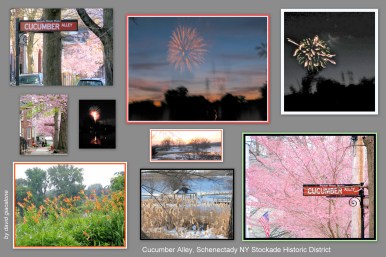
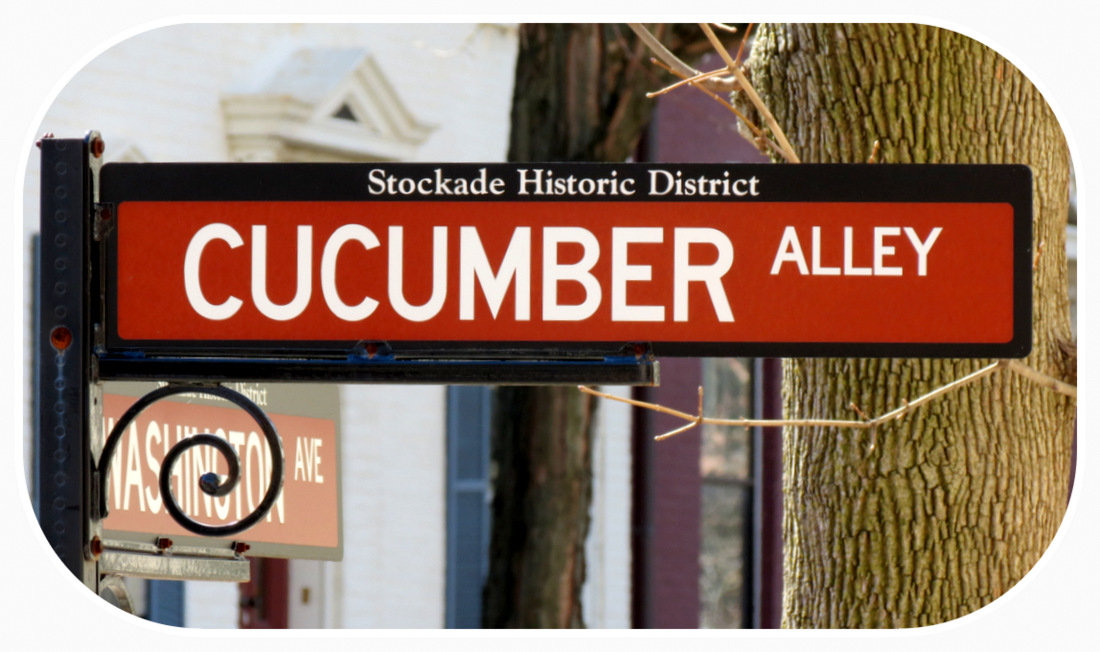
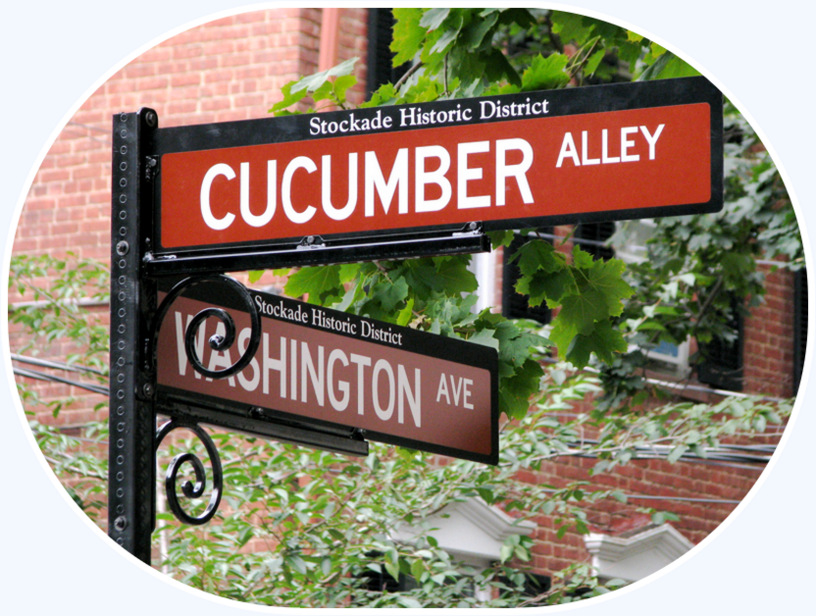
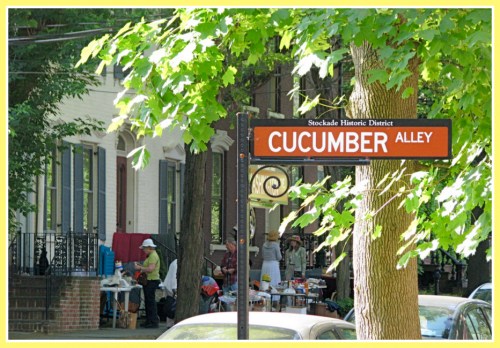
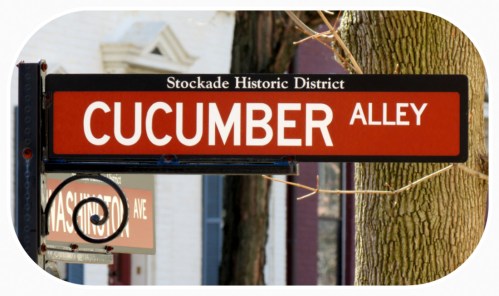
Cucumber Alley is a short thoroughfare in the Schenectady Stockade Historic District, along the Mohawk River, in the City of Schenectady, New York State, USA.
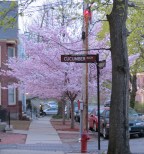
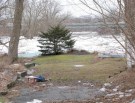
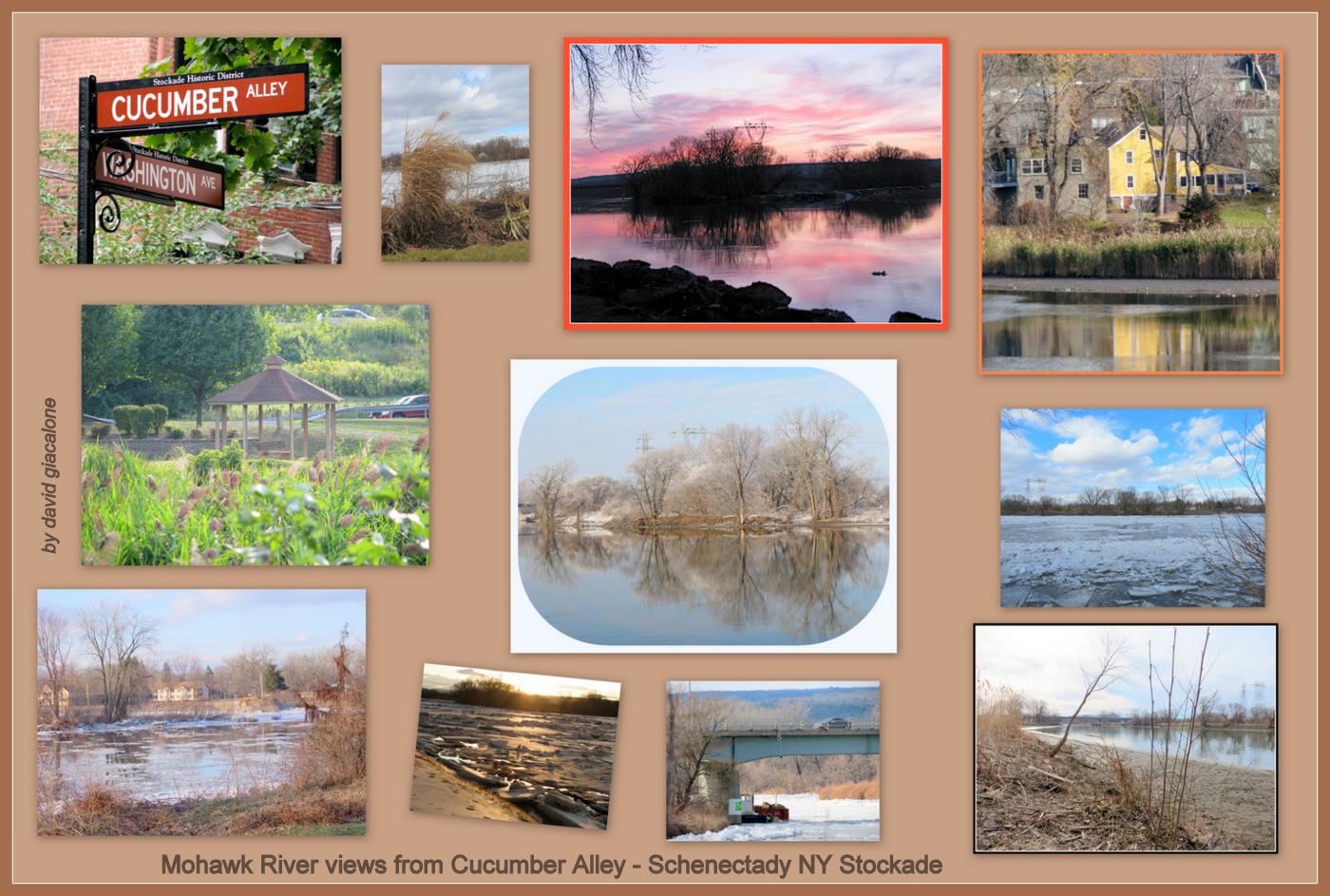
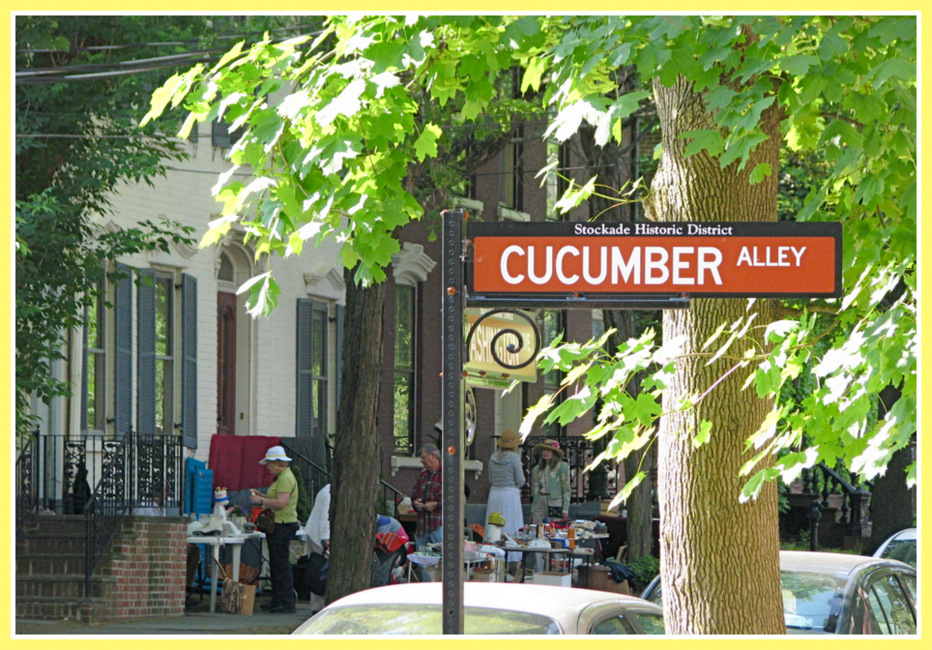
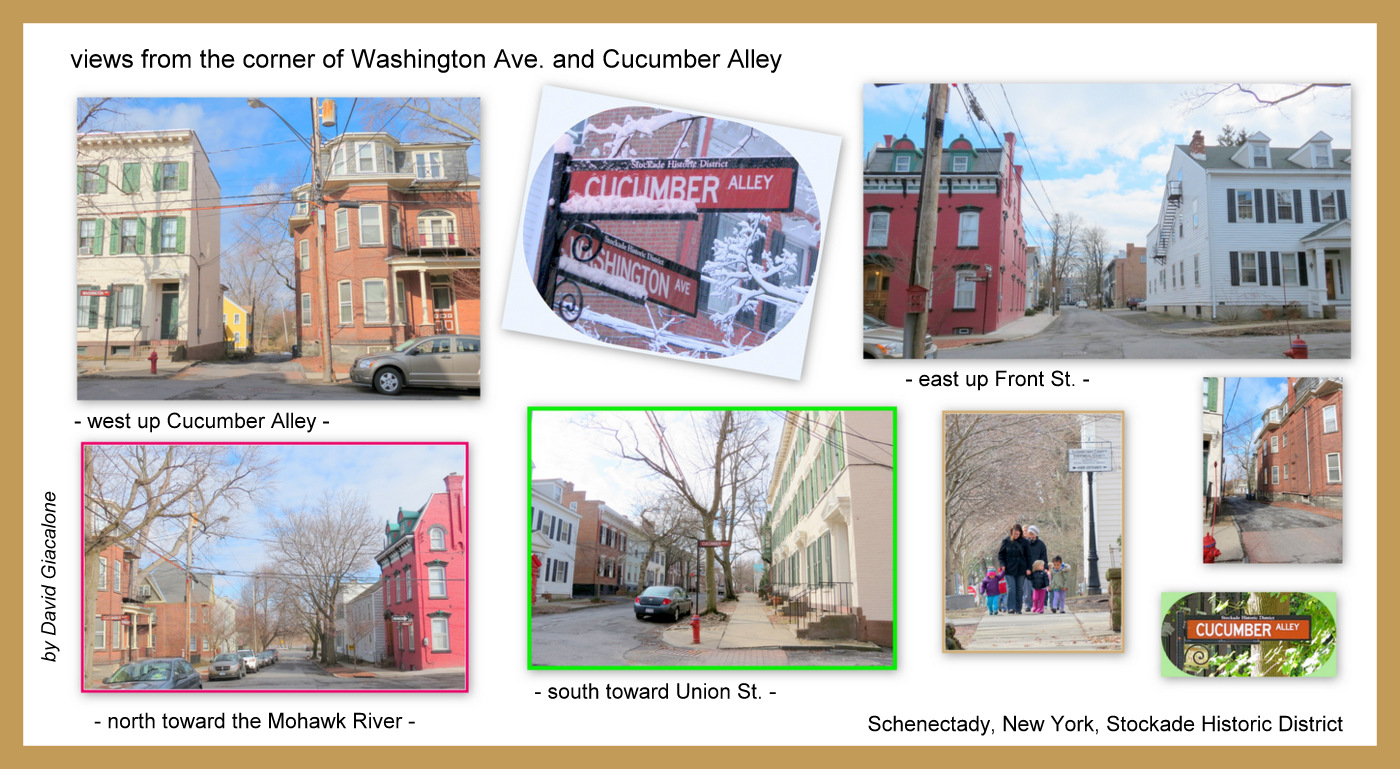
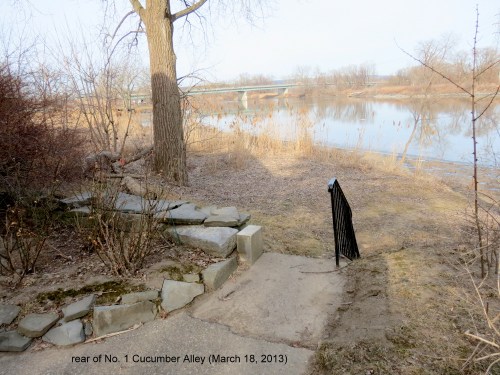
Although it is only 300 feet long, the scene at the east (street) end of Cucumber Alley is quite different from that at the west (River) end. For example:
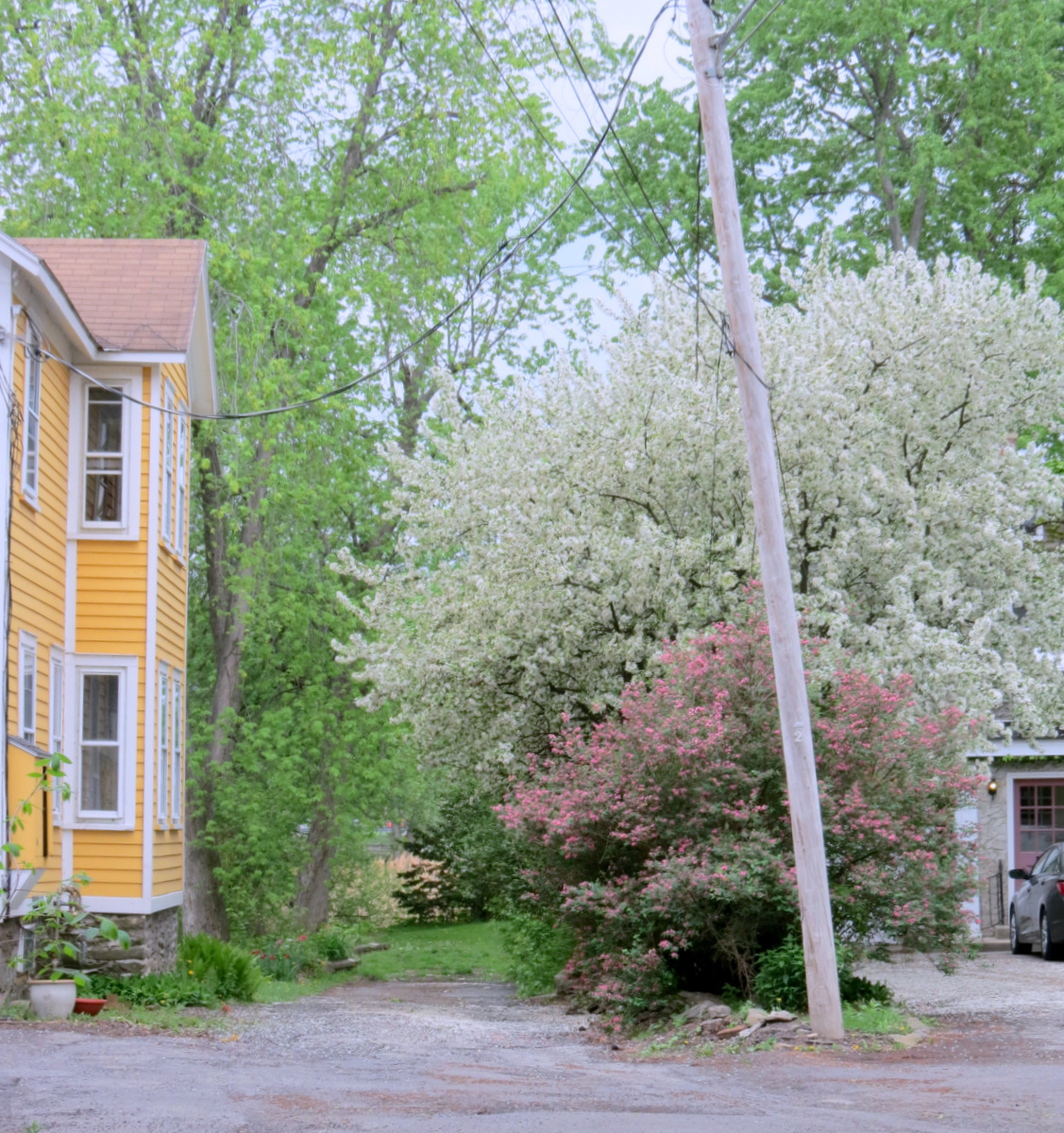
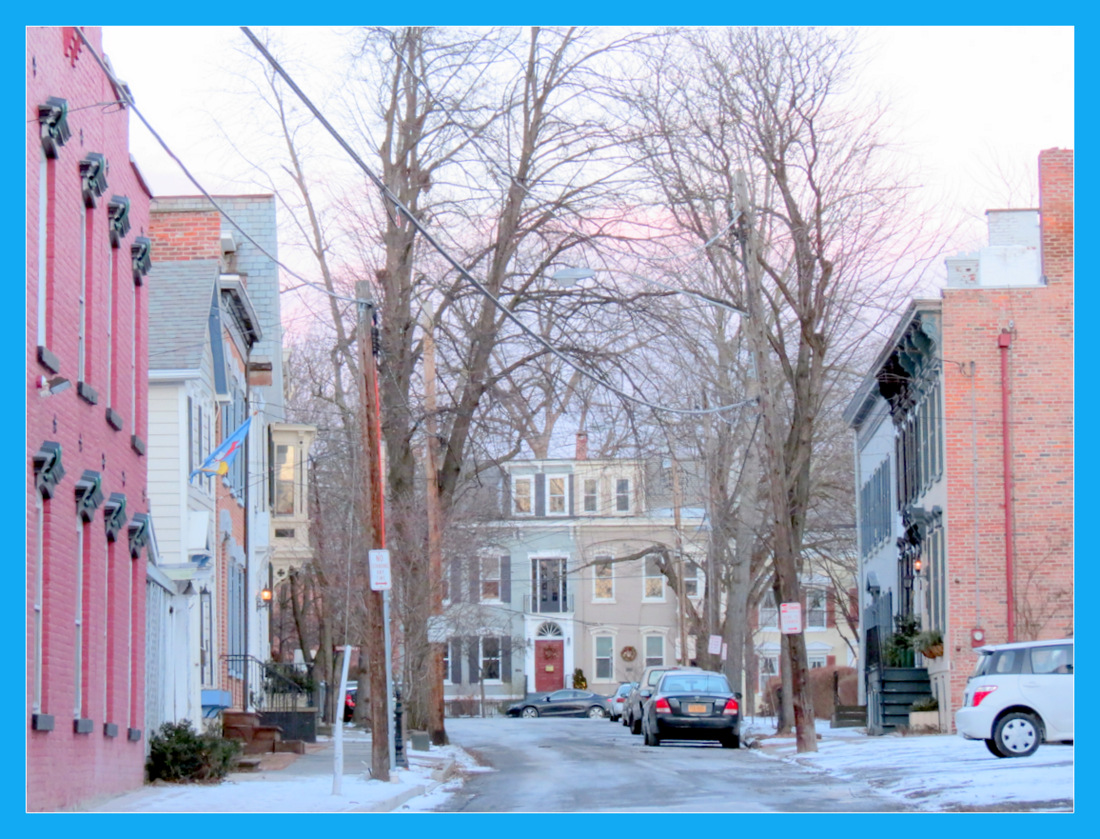
the east end:

– for better viewing, click on an image for a larger version –
.
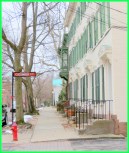 . . . .
and the west end:
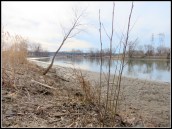 .
.
. 
.
 . .
. . 
.
 Family responsibilities recently had me thinking about moving away temporarily from the Stockade. As much as I’d miss the entire Stockade neighborhood and my many friends here, it was leaving Cucumber Alley that was especially hard to contemplate.
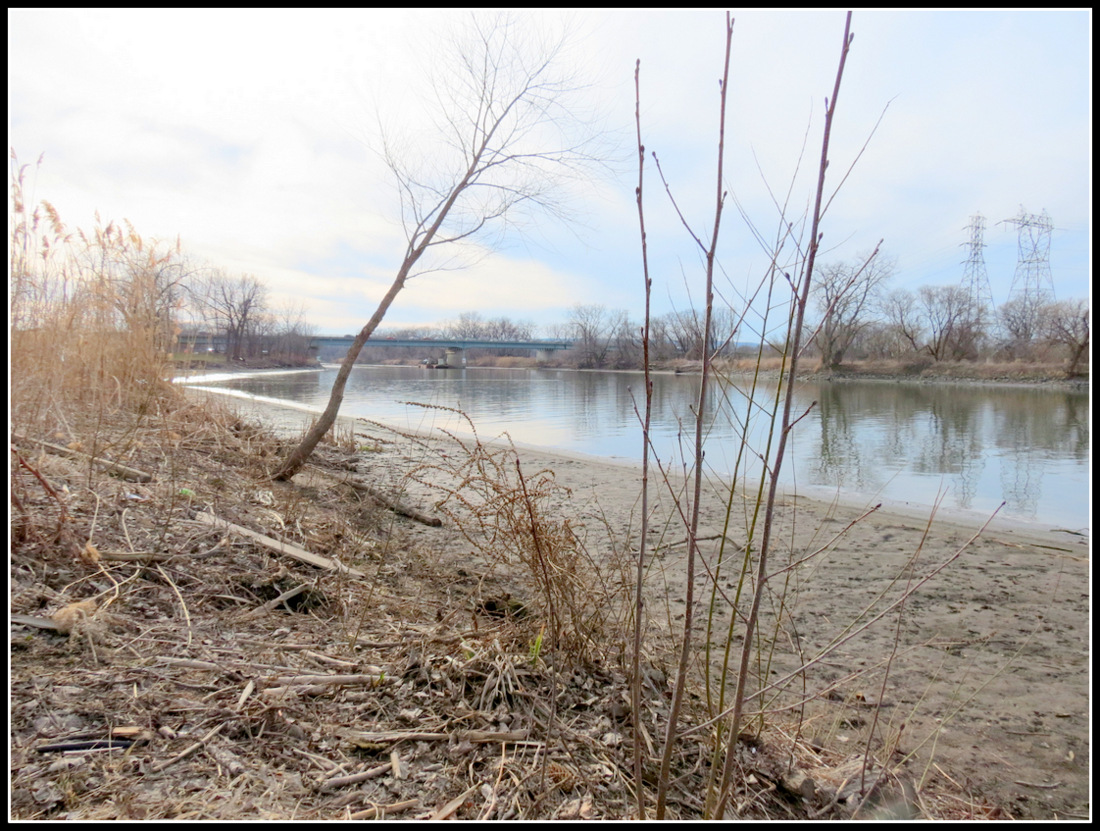
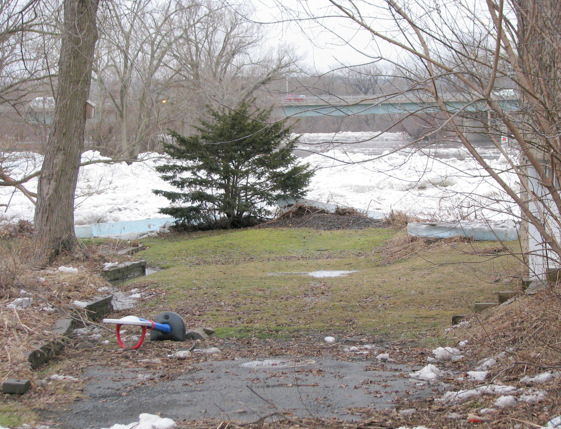
The possibility of moving away got me thinking about all the ways this 300-foot stretch of asphalt, lawn and mud, with two houses and yards, garages and parking areas for three apartment buildings, and a riparian shore, is so very special. The Alley stretches in a downward slope from a classic historic district street scene at its entry to cattails and reeds (and at times ice floes and flooding) on the banks of the Mohawk River. I combed my photo collection (and snapped quiet a few more), to help demonstrate some of the many things that can be seen or done without leaving Cucumber Alley. This posting has over a hundred photos taken on, of, or from Cucumber Alley, most of which can be seen in the Slideshow below, with others also featured individually, or incorporated into the loosely-themed collages that are spread throughout.
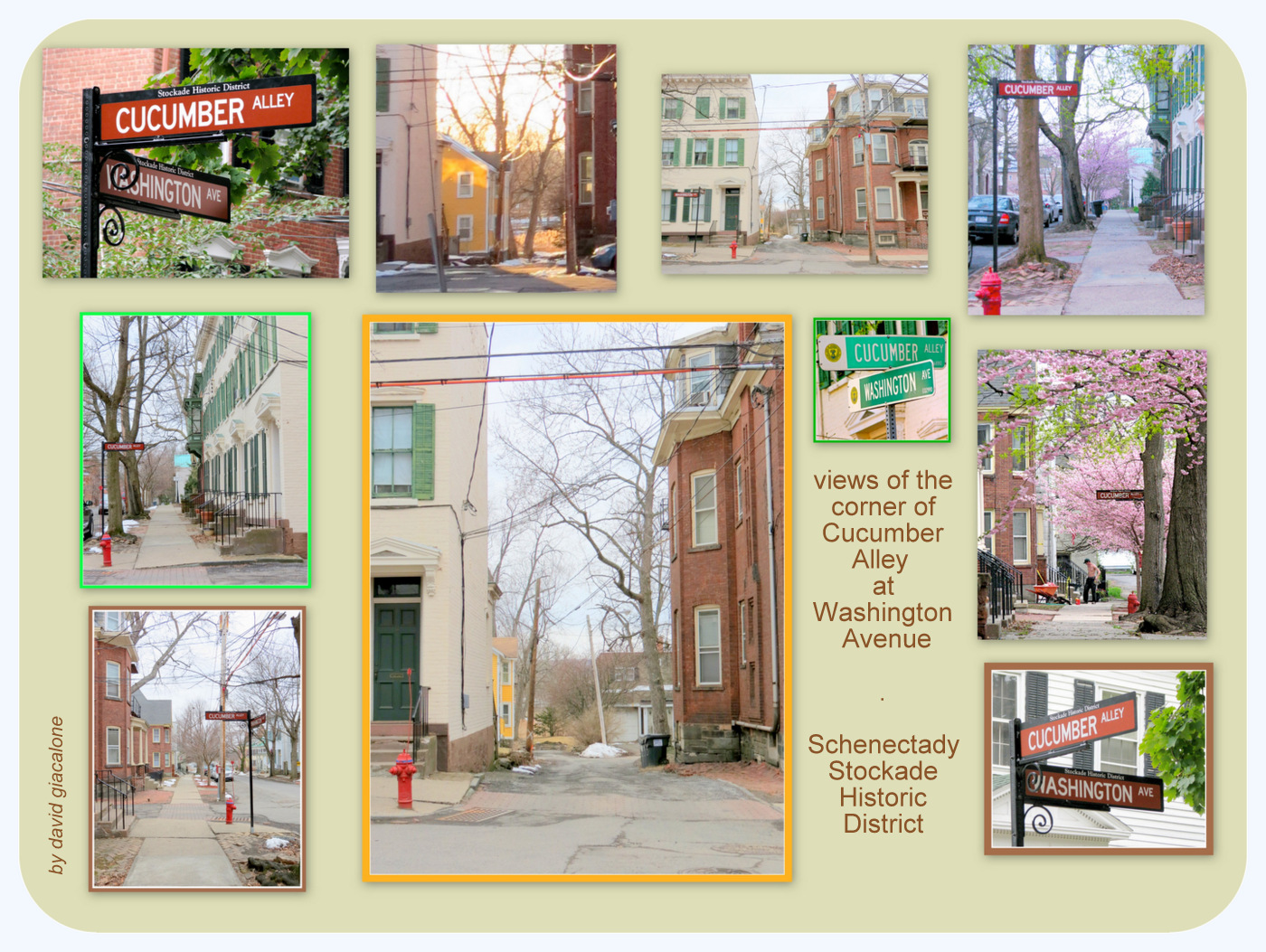
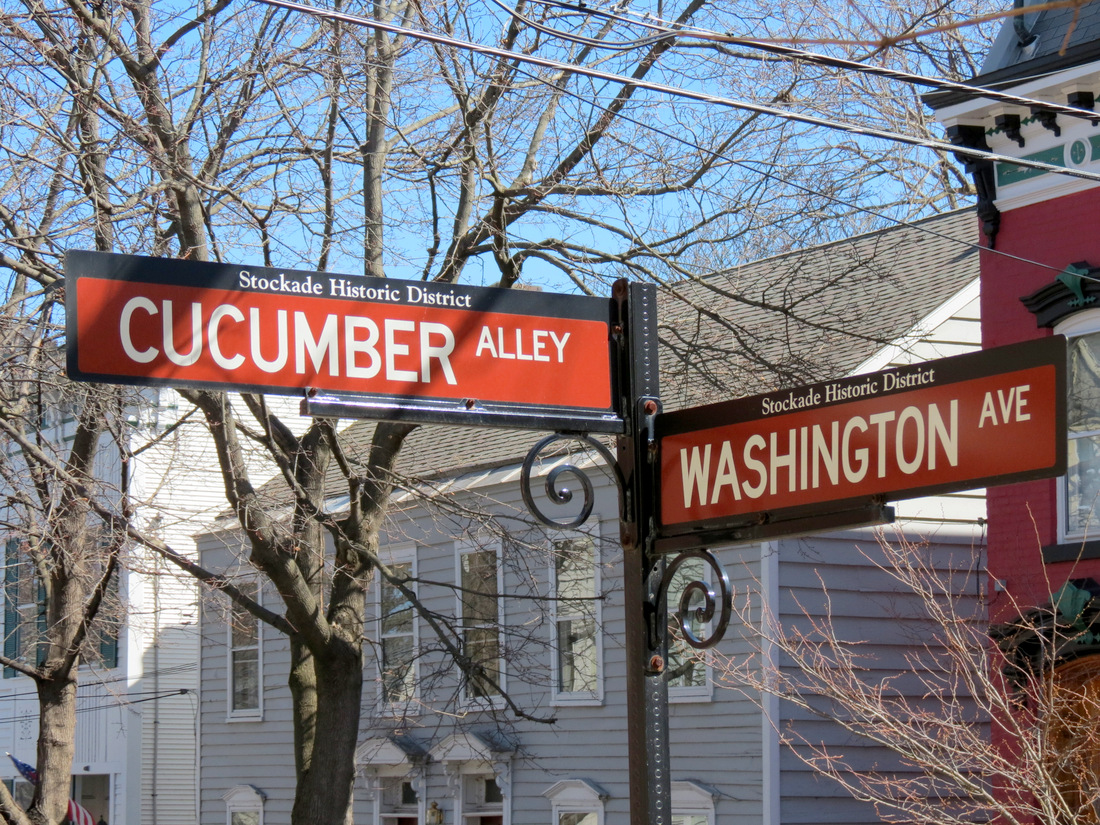
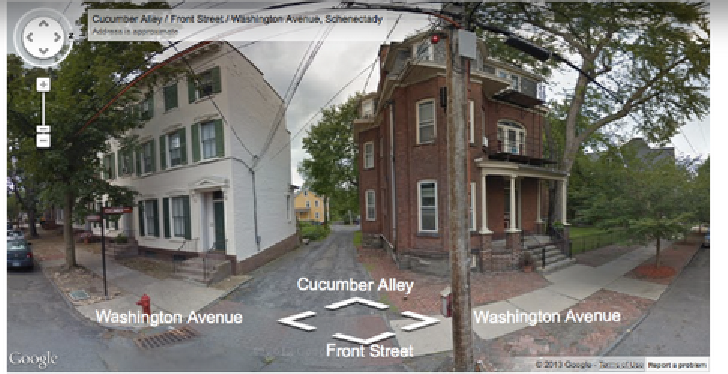
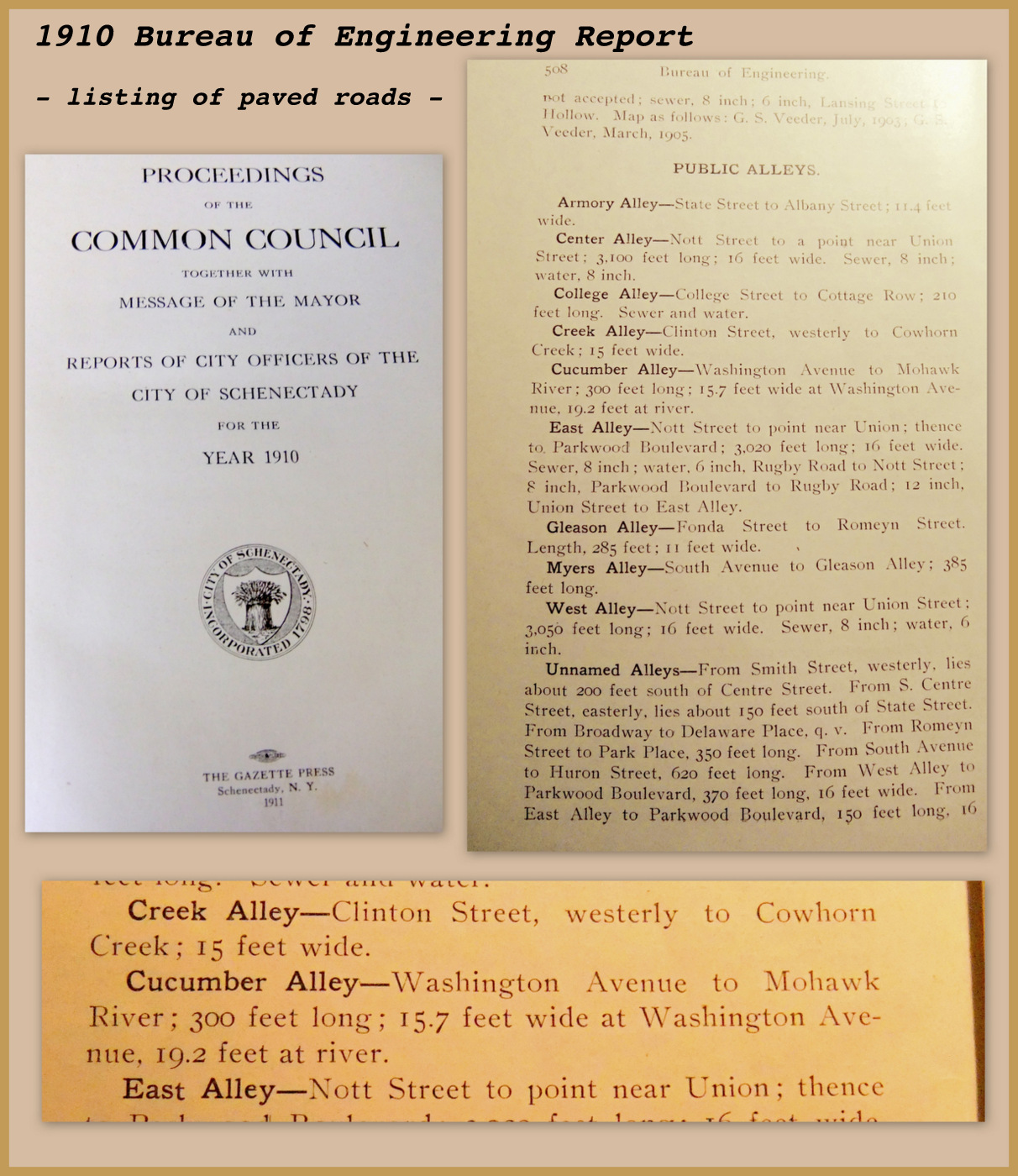
 Click this link for a Google Map showing the location of Cucumber Alley, at the intersection with Washington Avenue, opposite Front Street. Its geographic coordinates are: 42.8177665 and -73.9490356. The Schenectady Bureau of Engineering described the Alley rather dryly in a 1910 survey of Schenectady’s paved roads (see it online):
Cucumber Alley – Washington Avenue to Mohawk River; 300 feet long; 15.7 feet wide at Washington Avenue, 19.2 feet at river.
Slideshow with sights of and from Schenectady’s Cucumber Alley:
This slideshow requires JavaScript.
The images in the Slideshow above were taken on, from, or of Cucumber Alley. To isolate a photo from the Slideshow, Right-Click on the image and then click View Image.
.
 The NAME
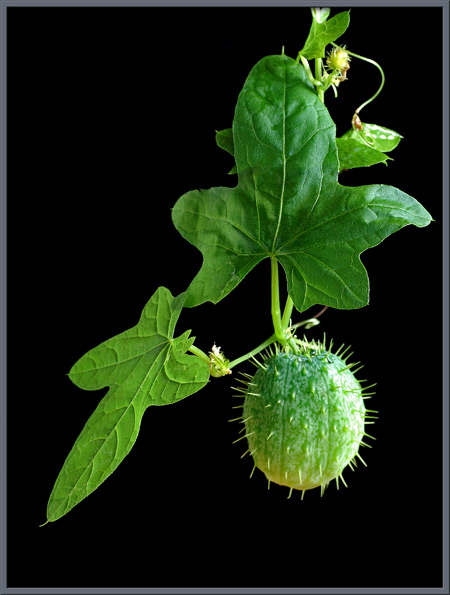
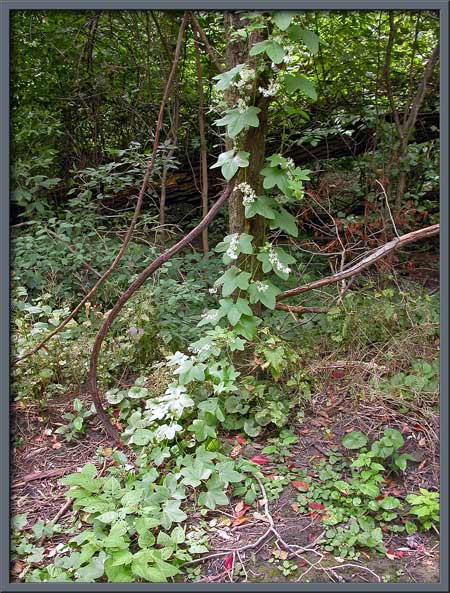
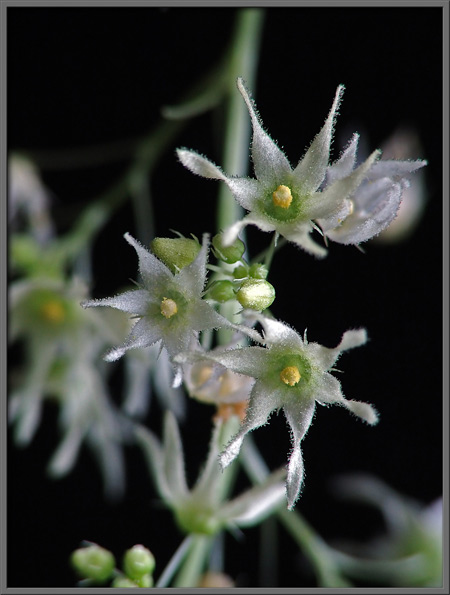
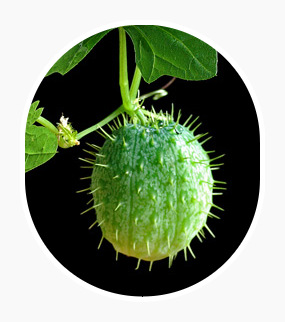
One of my favorite things about Cucumber Alley is its plain but playful name. It is called “Cucumber Alley,” because of the wild cucumbers that have long been found along the river bank at the end of the alley. Learn more about the rather rare name (and a few other places and things called Cucumber Alley), the controversy surrounding it here in the Stockade, and other official names given to the lane by the City since the end of the 18th Century, in our companion posting “the Cucumber alley name game“.
 . . The USDA sketch of the wild cucumber plant .
.
 . . .
. . . 
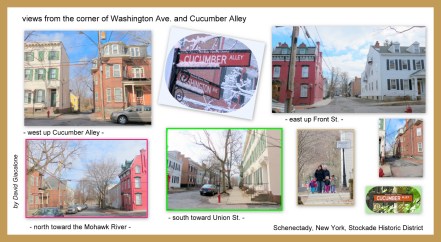
If you click on the next three collages, you can compare and contrast the views from the Washington Avenue end and the Mohawk River end of Cucumber Alley:

.
.

.

view north toward Mohawk River
.
.

.

. on the lane:
.

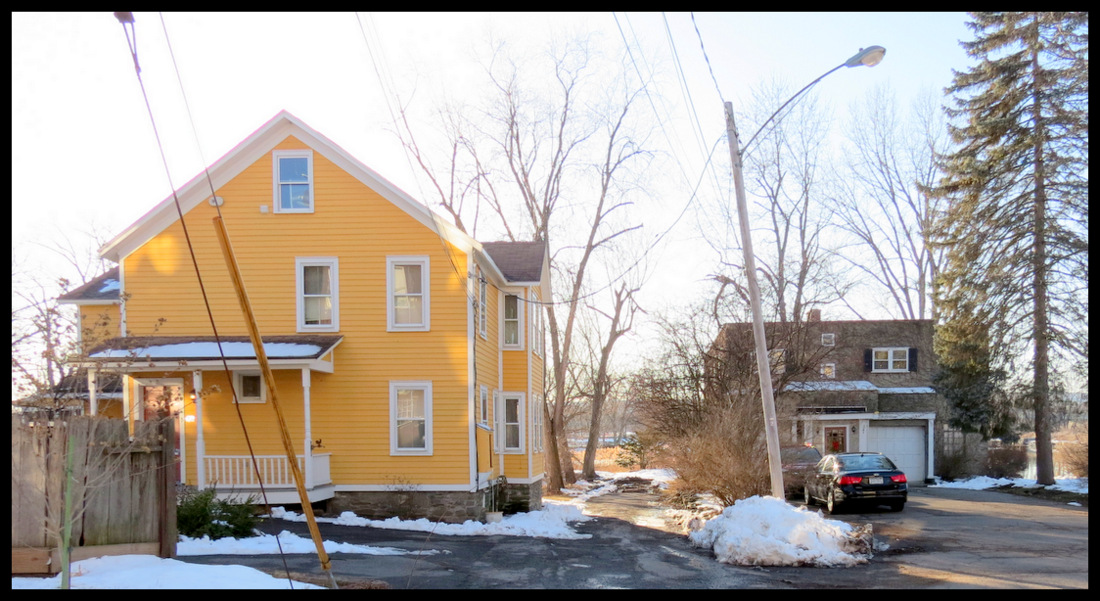
No. 4 (L) and No.1 Cucumber Alley
There are only two structures with Cucumber Alley addresses: Bob and Sylvie Briber’s charming “Cucumber Cottage” at No.1, which was built in 1950, and Samantha and Aaron Couture’s big yellow two-unit house at No. 4 Cucumber Alley, which was built in 1910. The Alley passes between the 8-unit apartment house at 16 Washington Avenue, owned by Tony and Beverly Popolizio, and the Colangelos’ row of townhouse apartments at 18 – 24 Washington Ave. The parking lots and garages for the apartments, including 10 Washington Ave., are located off the Alley.
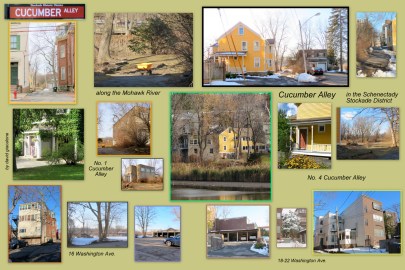 If you click on the collage at the head of this sentence, you’ll see each of the structures, yards and lots.
. No. 1 Cucumber Alley:
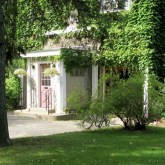
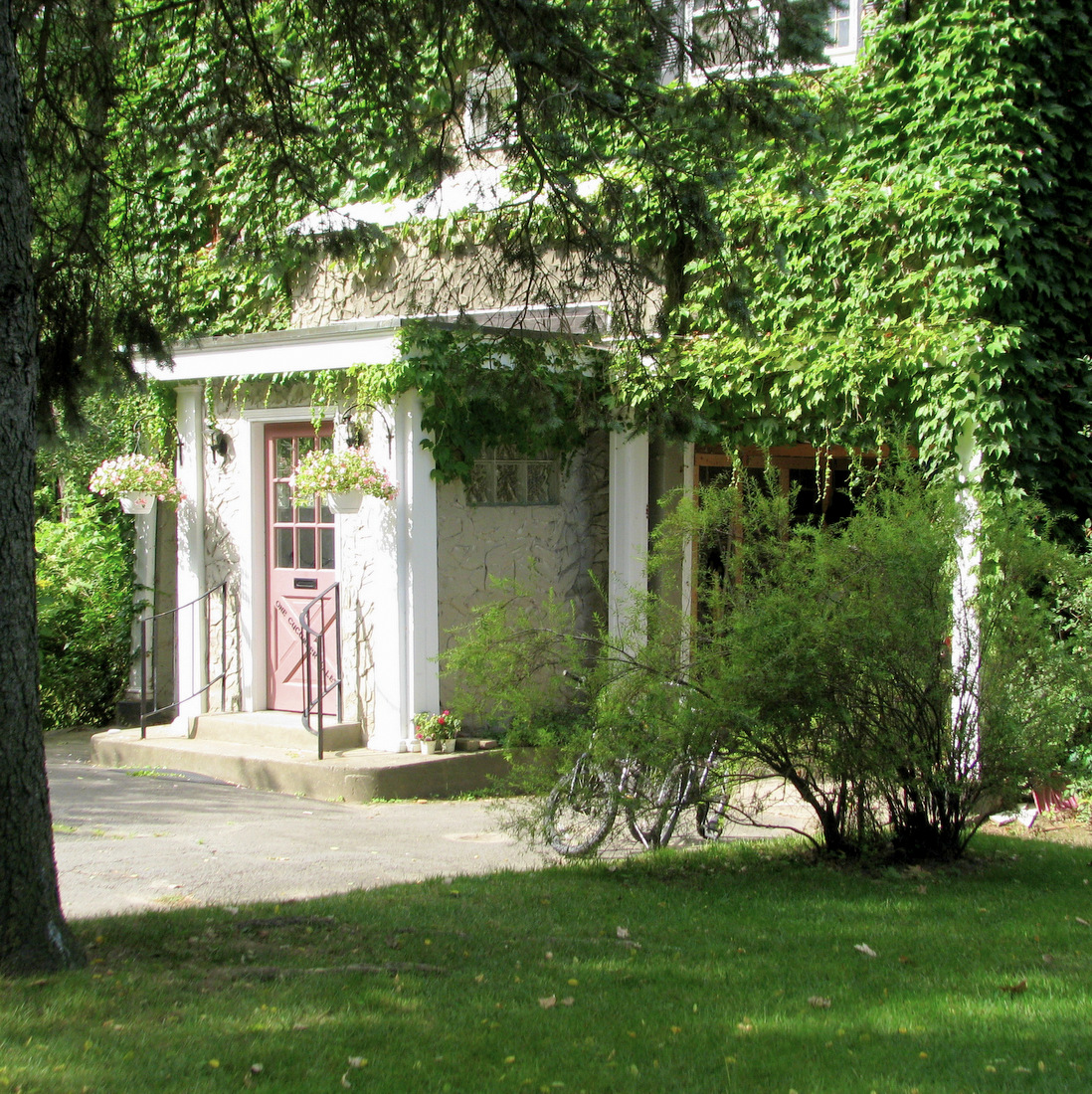
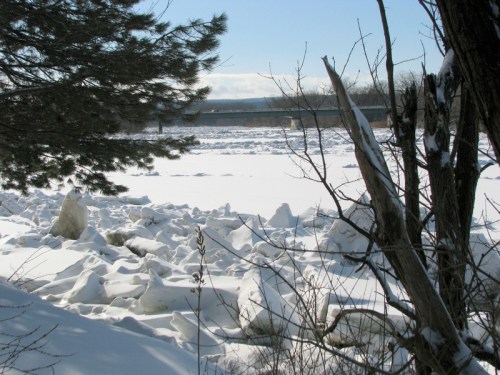
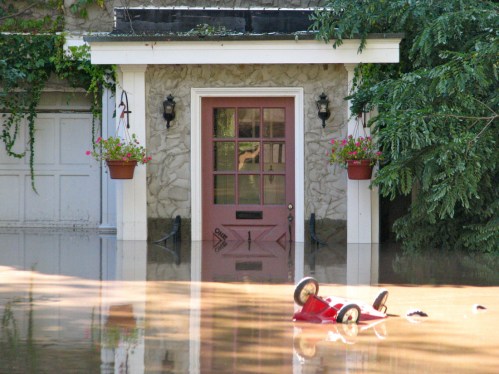
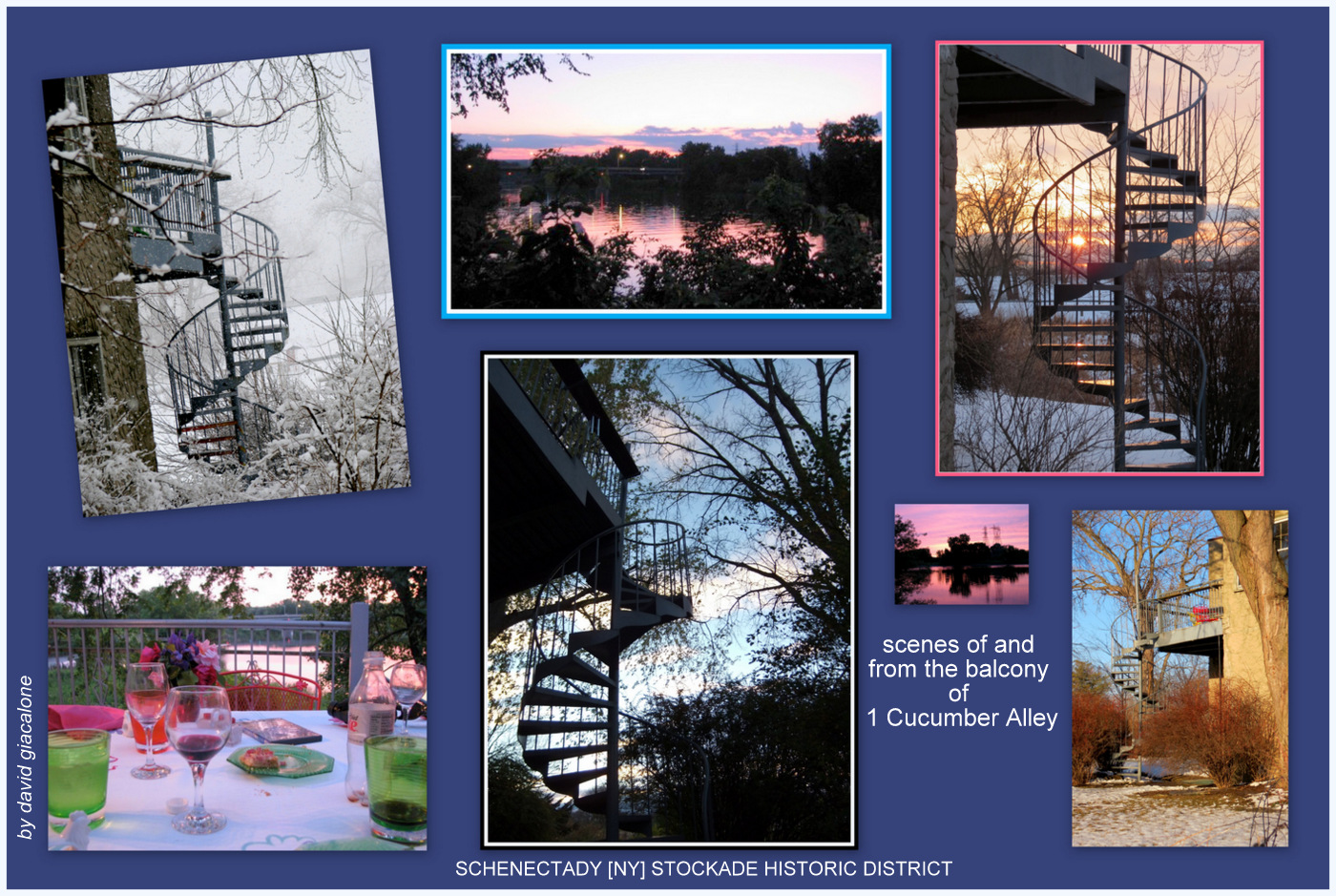
 The picturesque, 2-unit “cottage” at No. 1 Cucumber Alley was designed by its former owner, architect Werner L. Feibes. It has special charms in every season, and the property even shines (despite the heartache and backache involved) when surrounded by flood waters or invaded by giant ice floes.
.
 . . .
. . . 
– ice floes at the rear (L) and flooding at the front of 1 Cucumber Alley –
.
 . . .
. . . 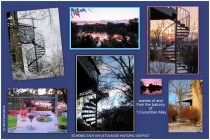
– the collage on the left above shows the balcony at “Cucumber Cottage” after a recent snowfall (March 19, 2013); the one on the right features additional scenes of and from the balcony and its spiral staircase (double-click to enlarge each collage) –
. No. 4 Cucumber Alley:
– double-click on this collage for views of No. 4 Cucumber Alley’s house and yard: 
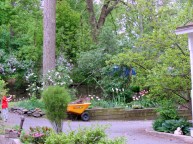
– Arthur & Miles have grown up on Cucumber Alley – 
 . .
. . 
.
. wintry scenes:
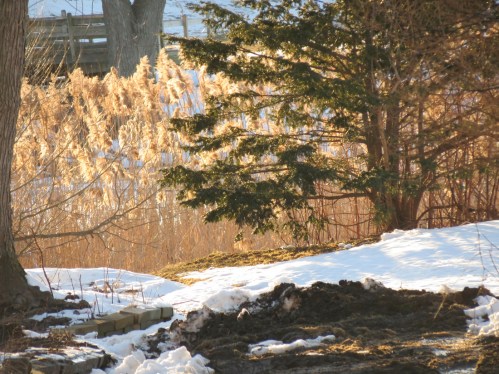
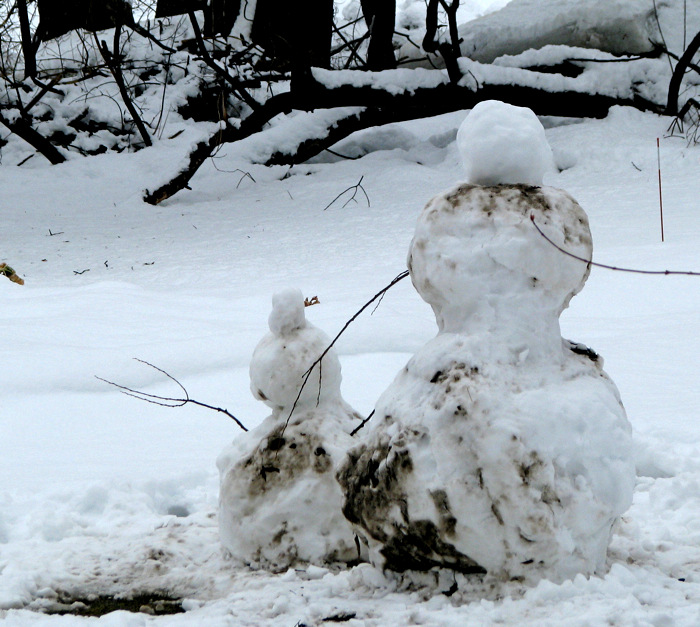
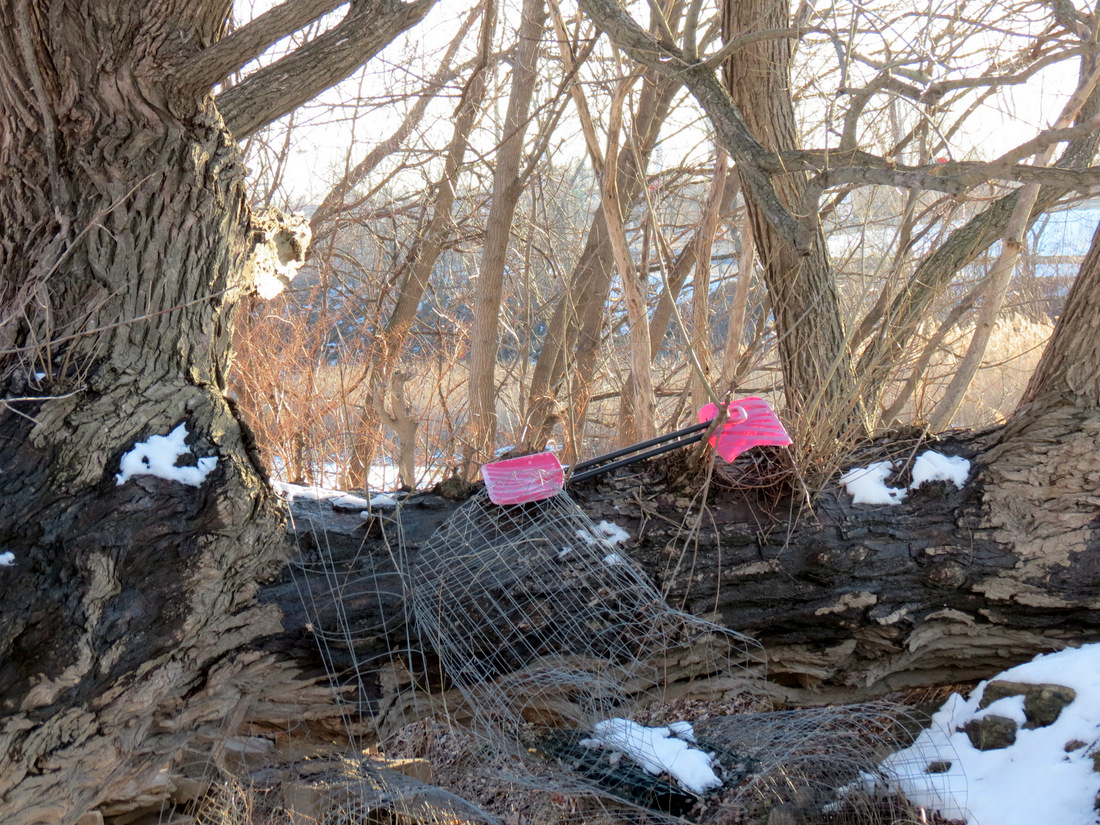
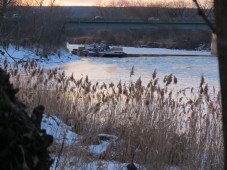 . . Here are winter views looking out from the river end (L) and the street end (R) of Cucumber Alley:
 . . .
. . . 
.
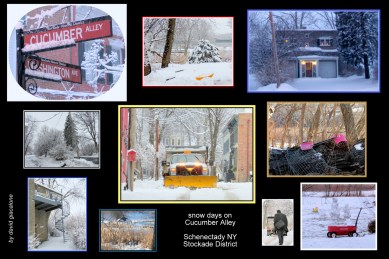

.
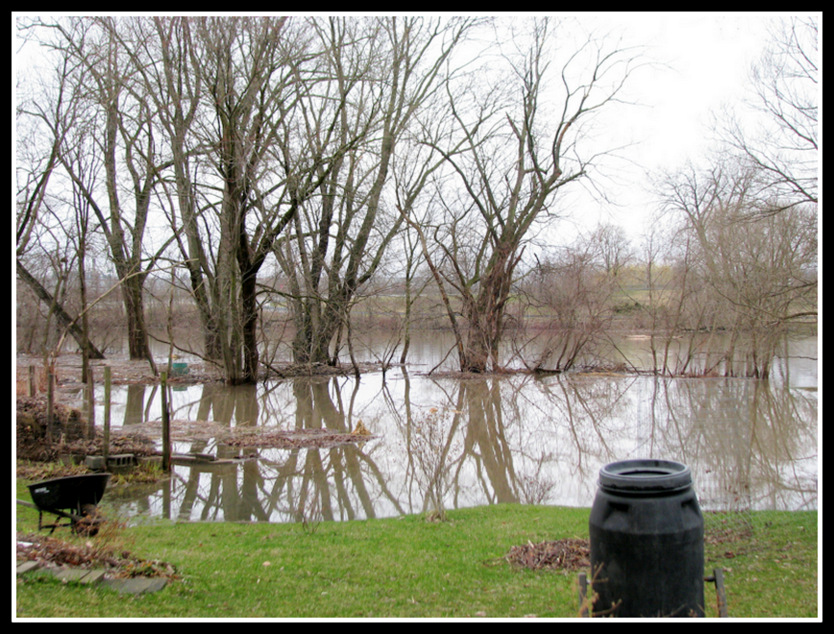
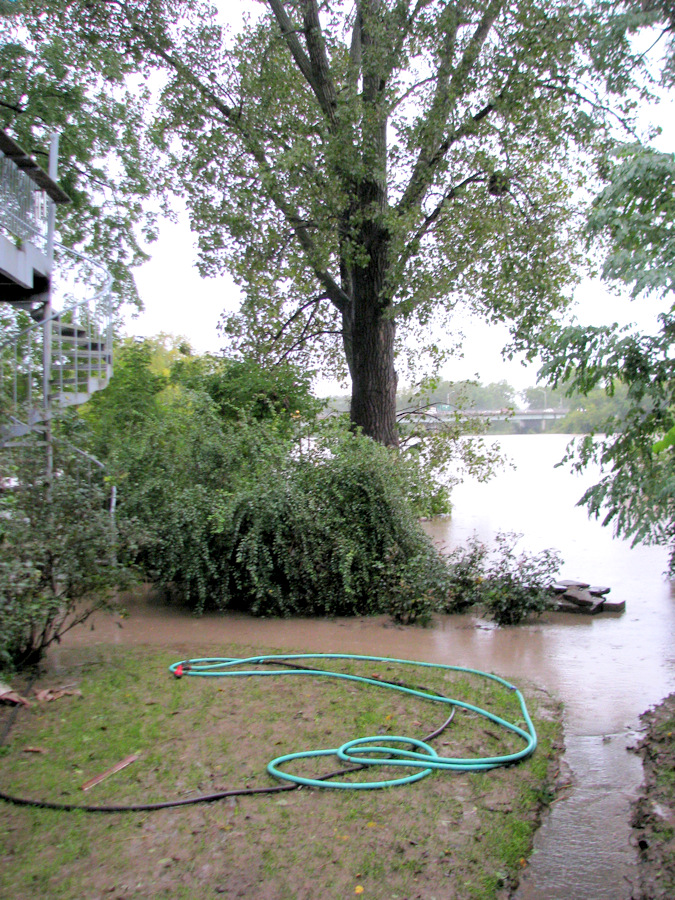
. flooding:
 . . .
. . .  . . .
. . . 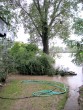
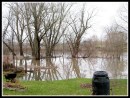
– the river end of Cucumber Alley is on the front line whenever the Mohawk River floods –
The worst flooding in memory came after the rains of Hurricane Irene, on August 29, 2011:

. sights:

– practicing crew teams often pass by on the Mohawk between Cucumber Alley and Isle of the Cayugas –
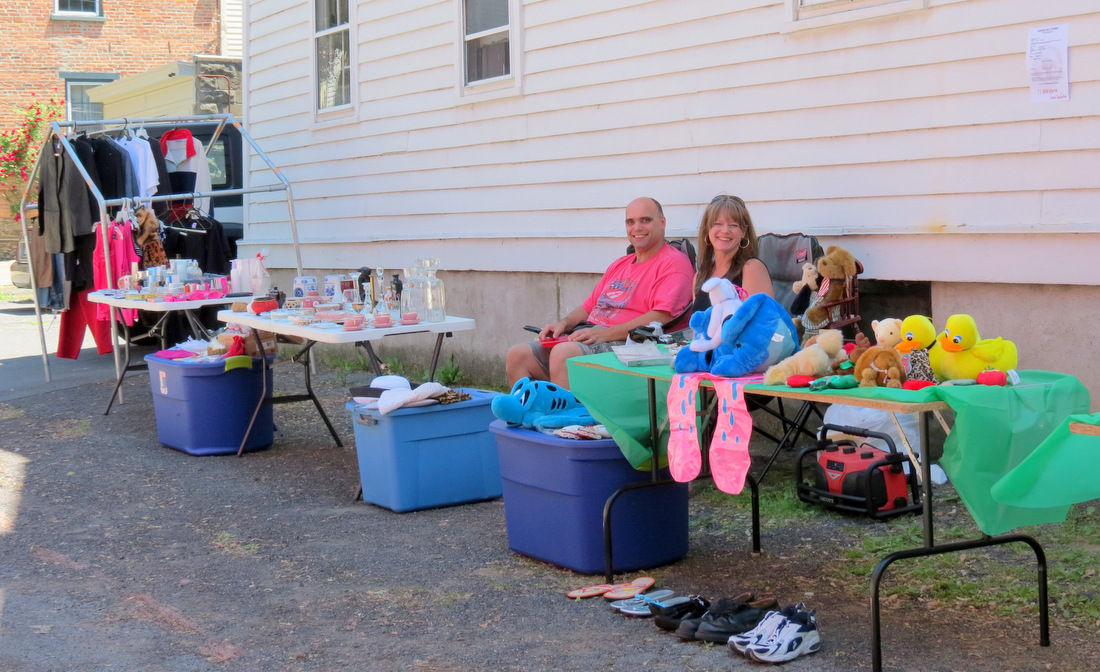
 You don’t have to leave Cucumber Alley to see and enjoy some of the Stockade’s most popular events:

– above: images from Stockade Walkabout and Sidewalk Sale and the Stockade-athon 15K race seen from the street end of Cucumber Alley –
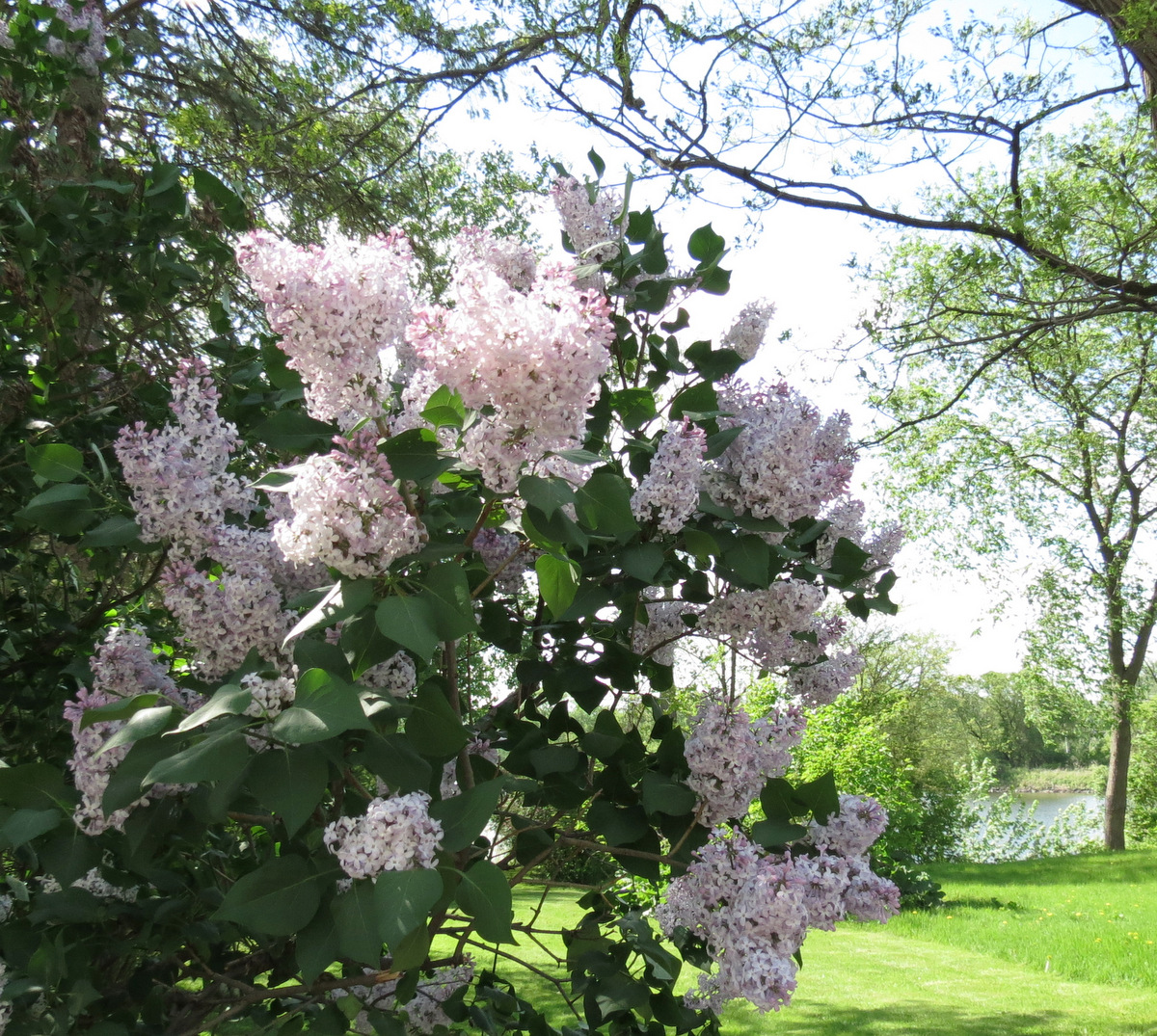
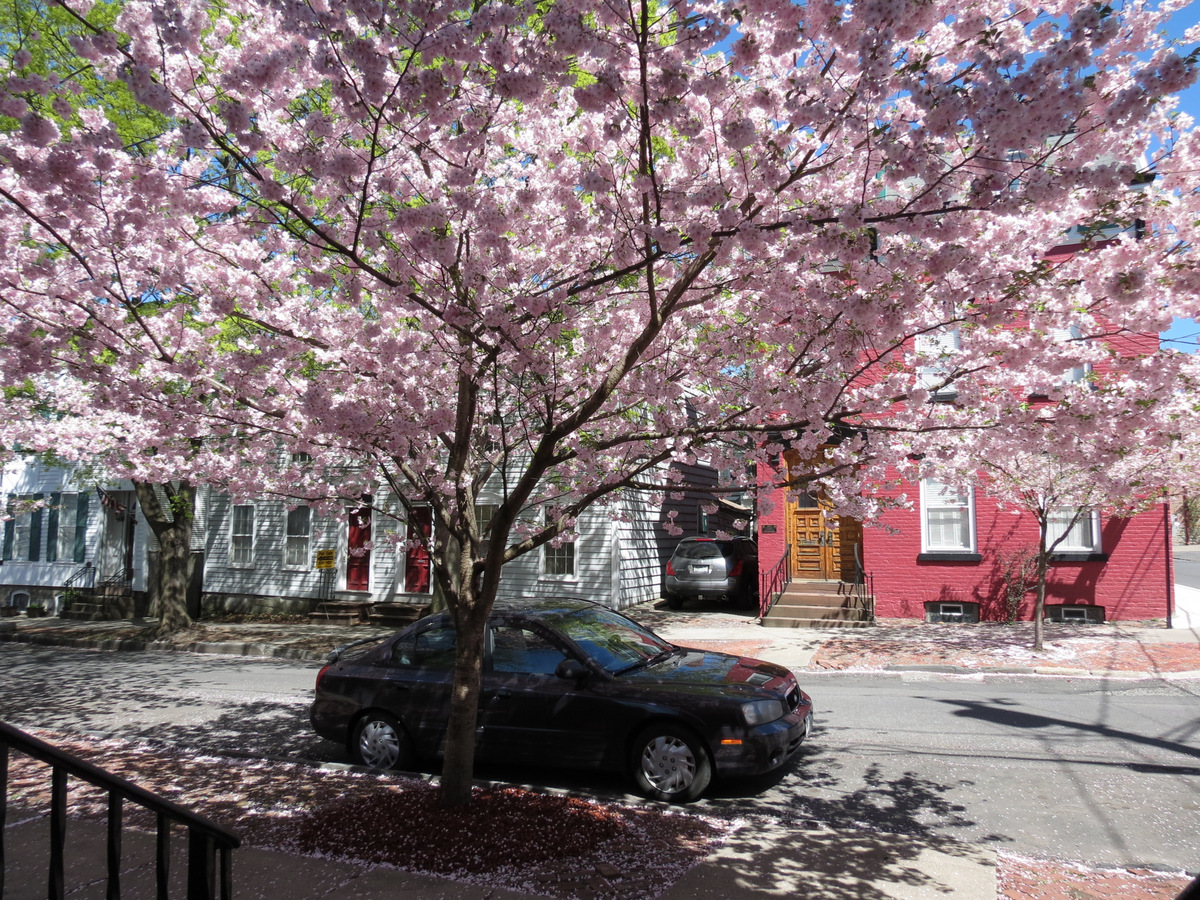
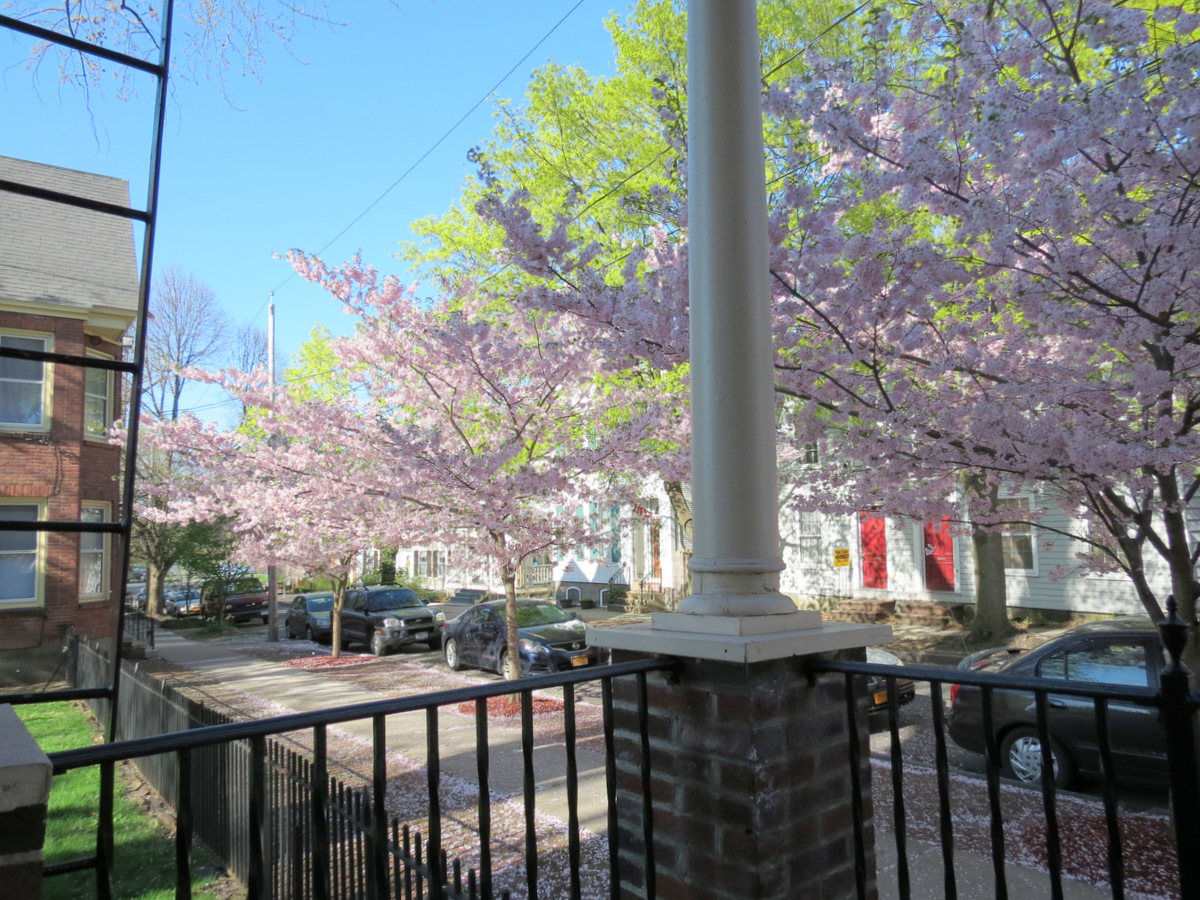
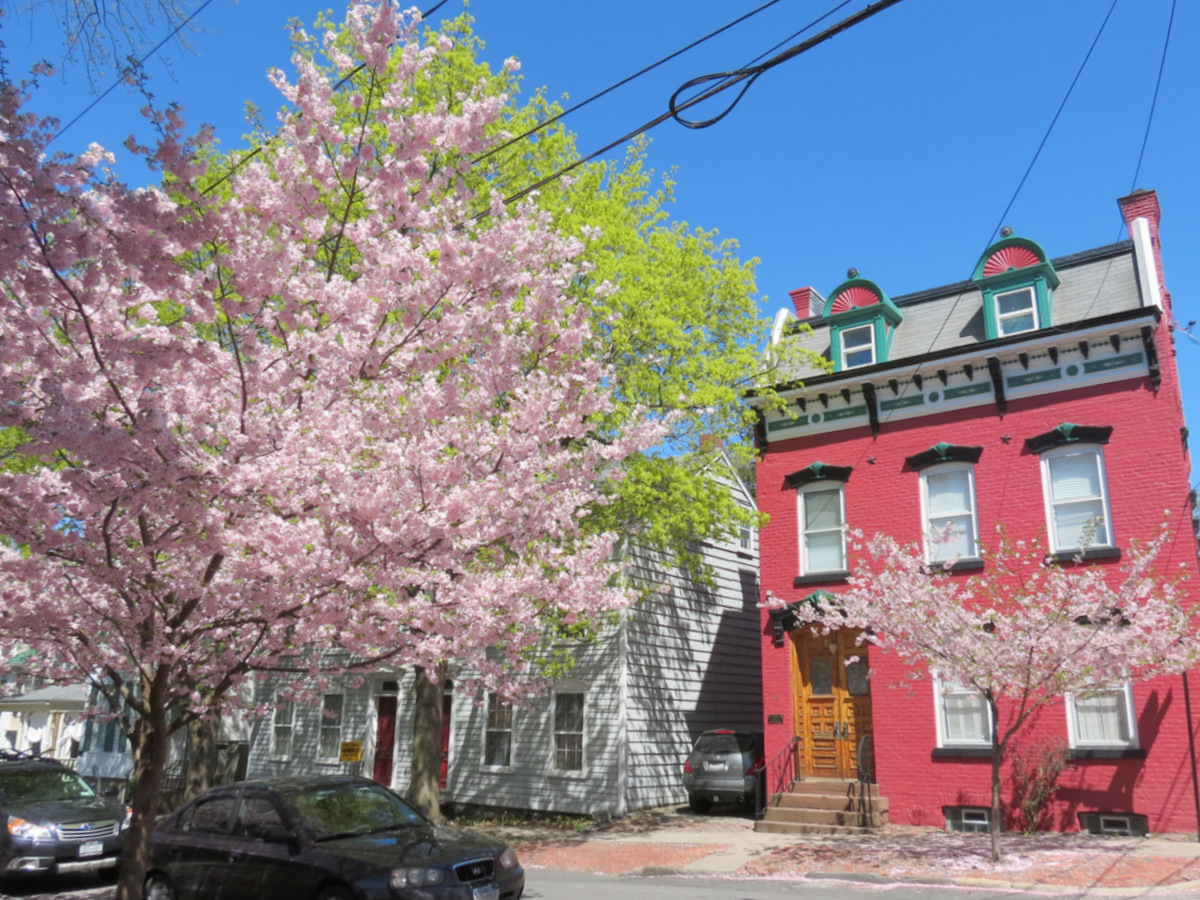
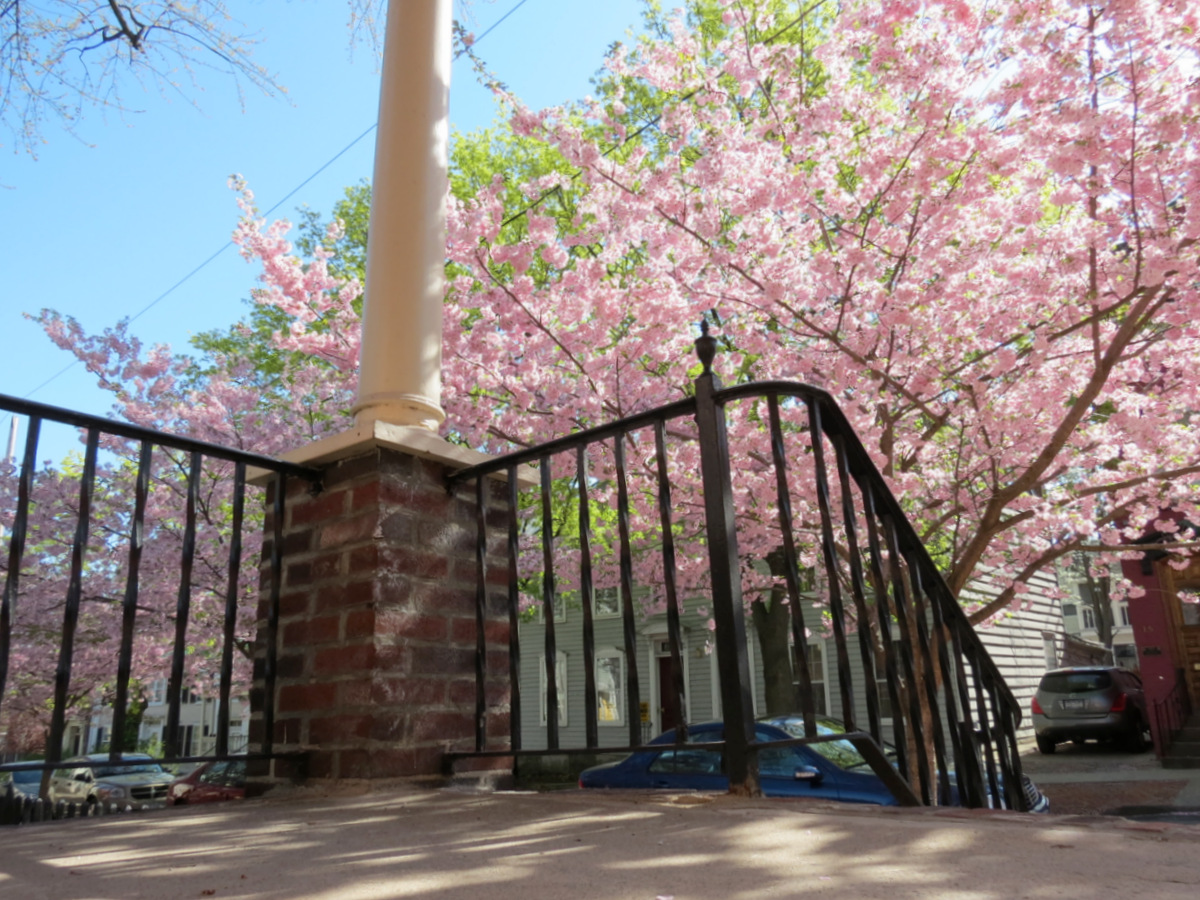
 . the beauty of cherry blossoms on Washington Avenue and Jumpin’ Jack’s fireworks over the Mohawk can be seen from Cucumber Alley, along with many other flowers and blooms along the Alley:
. 
 . .
. . 

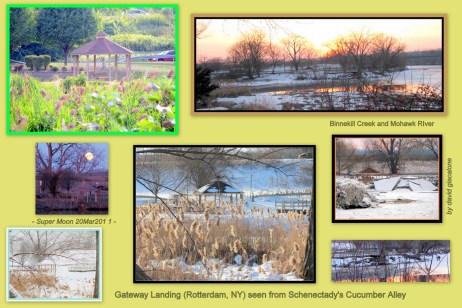
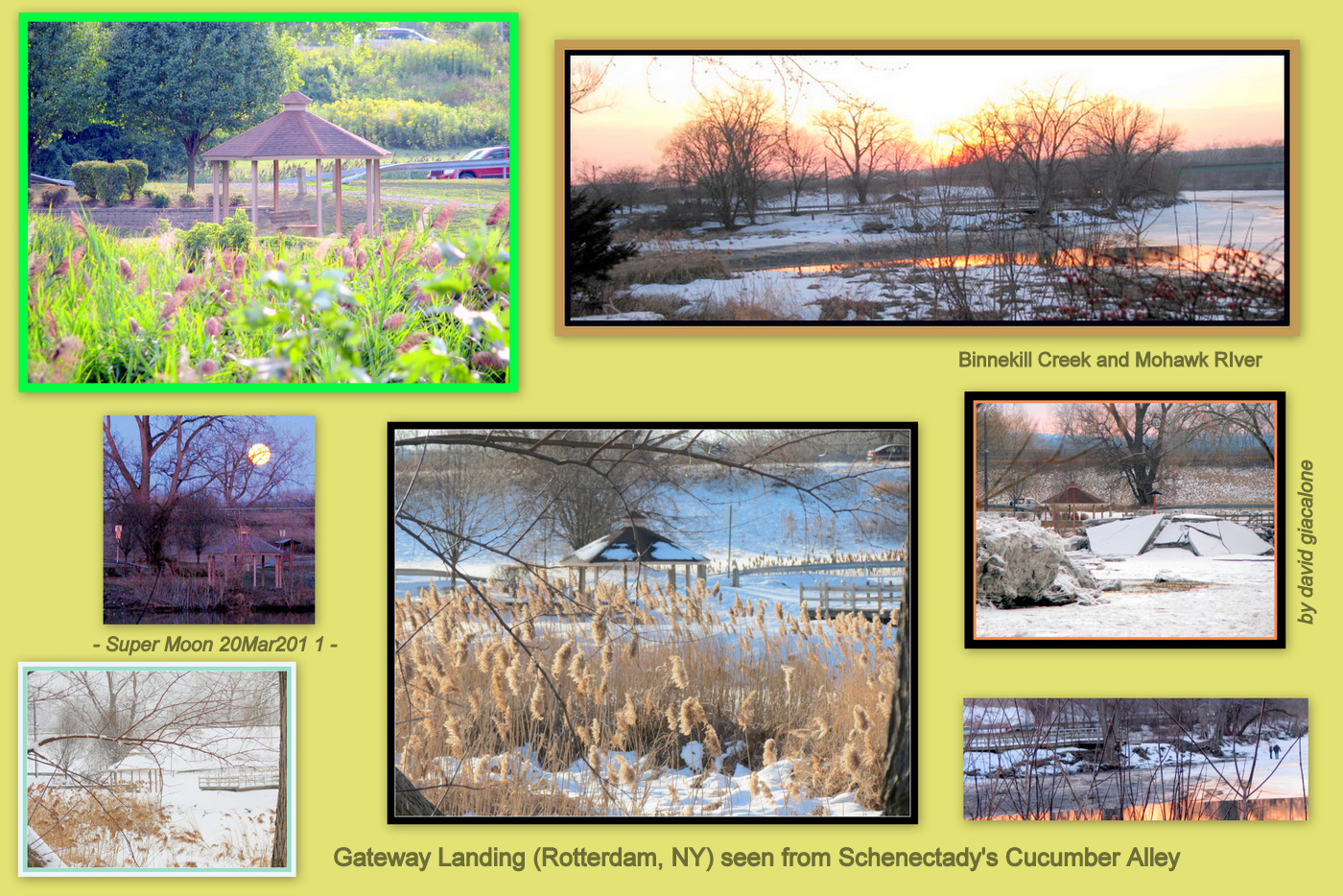
– Cucumber Alley is perhaps the best place for viewing Gateway Landing, at the extreme eastern point of Rotterdam, NY, across the Binnekill:
.
. sunsets:
.
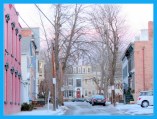
 . . with clear views west and east, and reflections in the River from the Isle of the Cayugas and Western Gateway Bridge, beautiful sunsets and sunrises are almost commonplace on Cucumber Alley:

 . . . . orange and pink, yellow and purple, are hues we often see on Cucumber Alley:

.
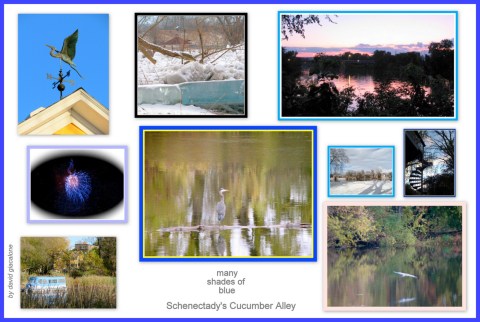
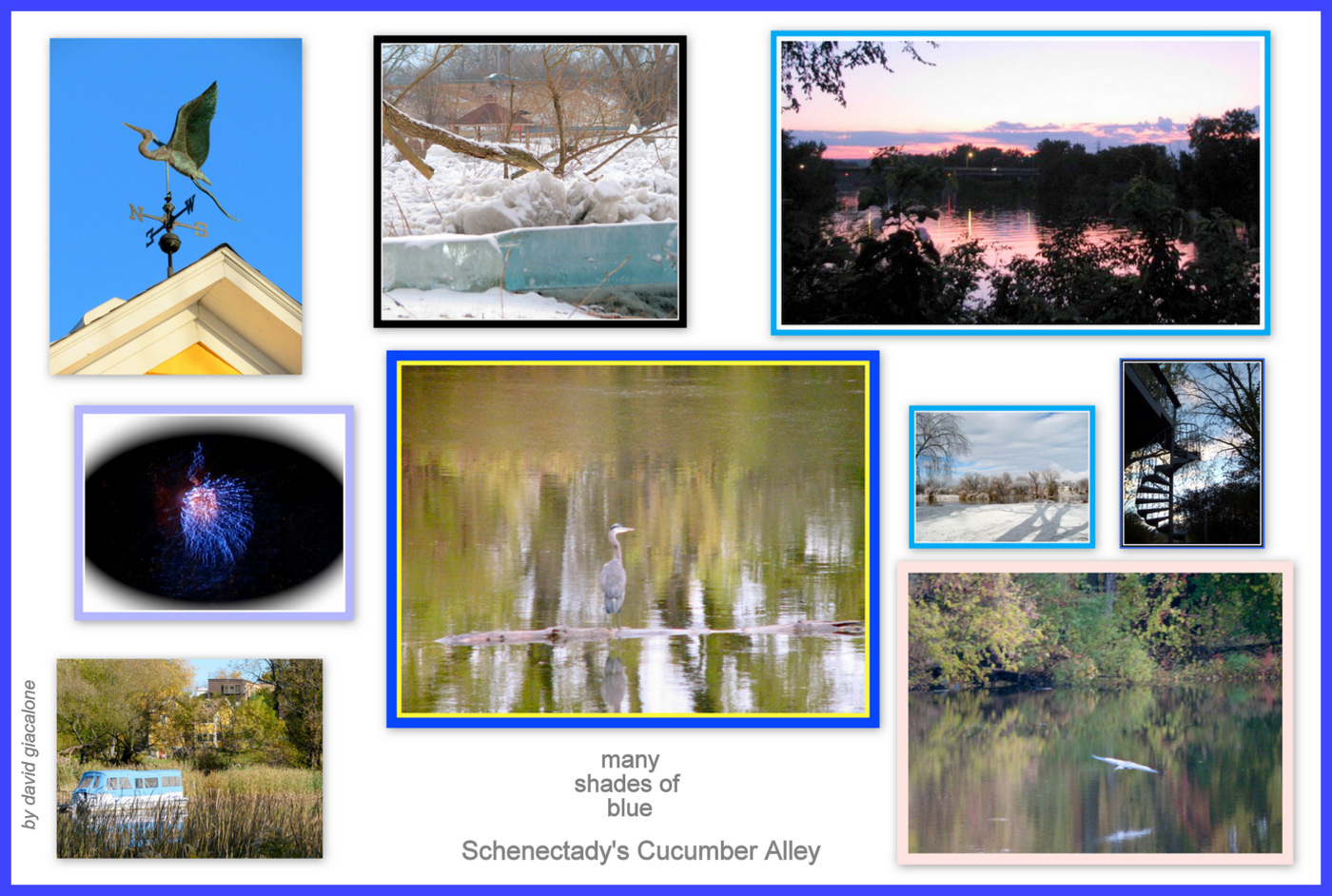
. if blue’s your favorite color, you’ll find that on Cucumber Alley, too:
blue heron, ice floes, fireworks, boats, sky, and more –
.

.
 You get the picture, I hope: Cucumber Alley, its residents and visitors, have a lot to celebrate — far too much to document here.
.. share this posting with this short URL: http://tinyurl.com/cucalley
 At 6:30 AM, the Mohawk River is just below the flood level and does not seem to be rising at Schenectady’s Riverside Park. See the Slideshow below.
 8:30 AM update: The River appears to be about a foot lower than it was at 6:30 AM, so I hope the worst is over and that all my Stockade neighbors have avoided any lawn or basement damage.






































 And see the wonderful burning (forsythia) bush in the Slideshow







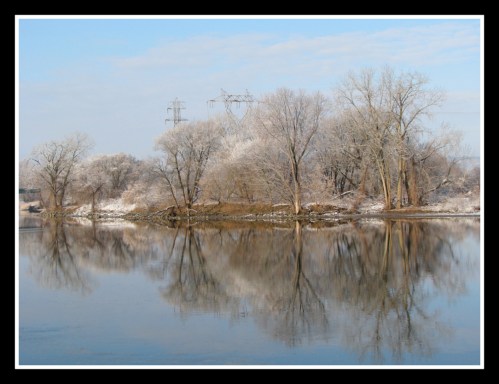
 suns along the Mohawk

Recent Comments